Hey everyone, it’s Jake here from Subframe Parts—someone who’s been working in the subframe game for over 8 years, talking to shops, DIYers, and mechanics every single day. One question I get more than any other? “Should I fix my beat-up subframe parts, or just swap ’em out entirely?” I get it—when you’re staring at a subframe with rust, a bent mounting tab, or a crack, it feels like a coin flip. But let’s cut the BS here, no generic auto blogs with vague “it depends” lines. I’m gonna break this down like we’re leaning on a parts shelf, talking through what actually works, what doesn’t, and how that ties back to what I supply for folks just like you. Subframe Parts

First off, let’s get one thing straight: not every damaged subframe part is worth saving. I’ve seen way too many DIYers try to patch a subframe that’s been crumpled in a crash, or left out in the rain for 10 years so the rust ate through 40% of the material, and wonder why their alignment was off a week later. Subframes aren’t just pretty metal frames—they’re the backbone of your car. They hold your engine, transmission, suspension, all the stuff that makes your car drive straight. So if you mess with a repair that should’ve been a replacement, you’re not just wasting time—you’re risking your own safety.
That said, there are definitely cases where repairing makes total sense. Let’s start with the most common damage I see: rust. Not the “subframe is so rusty it looks like Swiss cheese” kind, but surface rust on brackets, small spots on mounting flanges, or minor pitting that’s still less than 10% of the part’s thickness. Wait, let’s make that specific: metal thickness for most passenger car subframe brackets is around 3-5mm. If the rust is only eating through 0.3mm or less (so you can’t poke a hole through with a small drill bit), you can sand it back, treat it with a phosphate converter, and repaint it no problem. I actually stock a bunch of repair kits for these tiny rust spots—little sanding discs, converter, even a touch-up paint that matches OEM specs—because fixing that small stuff is way cheaper and faster than swapping the whole bracket.
Another super common issue: bent or twisted mounting tabs. Like, the tab that holds your sway bar link got crumpled when you hit a curb, or a bracket that bolts to the body got bent a little. A lot of people reach for a replacement, but here’s a trick I’ve used with shops a hundred times: you can gently heat the bent area (not so hot you warp the metal—stick to under 400°F, that’s just hot enough to soften the steel without ruining its strength), then bend it back using a vice or a spreader tool. But wait, rule number one here: don’t heat anywhere near welds or rubber bushings. Heat will make rubber turn to goo, and it can weaken factory welds. If the tab is broken off entirely, a lot of the time you can TIG weld a new one on—just make sure you use the same grade steel as the original subframe. I always tell folks: don’t use cheap mild steel for a repair tab, it’ll crack in a few months. Grab the same high-strength steel I supply for replacement parts, and you’re good.
Now, when should you skip repair and go for replacement? This is the part most blogs lie about, saying “always replace if it’s a crash” but that’s not the whole story. Let’s list the no-go zones: if your subframe has a crack in the main rail, not just a small bracket. The main rail is the thickest part, and if it’s cracked, even a tiny crack can spread like a weed under load—engine torque, hitting potholes, all that stuff. I once had a guy bring in a subframe with a 2-inch crack in the main rail, tried to weld it, and 2 weeks later it split down the whole length when he was driving on the highway. Bad time. Then there’s severe rust: if you can poke a hole through the subframe with a nail, or the rust has eaten through more than 15% of the main rail thickness, don’t waste your time. Rust weakens steel way more than most people think—15% rust thickness loss can drop the part’s strength by almost 40%, and that’s a risk you can’t take. Also, if the subframe was in a front-end or rear-end crash where the frame itself was crumpled, not just tabs bent. Crash damage isn’t just cosmetic—subframes are engineered to crumple in specific places, so a crash that bends the main rail means it’s already lost its intended strength, and a repair can’t fix that.
Wait, but let’s talk about aftermarket parts vs. OEM replacements, because that’s a big one for anyone picking a replacement. I’ve heard so many people say “OEM is the only way” but that’s not true. A lot of the subframe parts I supply are OE-equivalent, meaning they’re made in the same factory as the OEM parts, use the same materials, but cost 30-40% less. The problem with cheap no-name replacement parts is that they’re made from thinner steel, or have bad welds, so they bend or break way faster. I’ve had a shop tell me a guy bought a $50 replacement subframe from a big box auto store, and it bent after 2 months of normal driving. Don’t skimp on replacement parts, but you also don’t need to pay OEM markup if you’re getting a quality OE-equivalent part from a reputable supplier.
Another angle: cost. Let’s do quick math here to make it real. If you have a small rust spot on a bracket: repair kit from me is $15, plus an hour of a mechanic’s time. That’s around $100 total. If you replace the whole bracket (which is part of the subframe, not the whole subframe), that’s $120 for the bracket, plus an hour of labor, so $220. So repair saves you $120, no brainer. But if you have a main rail crack: welding repair is around $250 in labor, plus any supplies, and there’s still a risk it fails. Replacing the whole subframe (the main part, not just a bracket) is $450 for a quality replacement, plus 1.5 hours labor, so $700 total. Wait, that’s more expensive upfront, but it’s way safer, and you won’t be worried about it failing 6 months later. I’ve seen guys try to save $200 on a repair, then end up paying $1,500 to fix a failed subframe repair plus realignment.
What about DIYers? If you’re someone who’s got a garage, some tools, and experience working on cars, can you do the repairs yourself? Yeah, for small stuff. Sanding rust, bending tabs, even welding a broken bracket—those are doable with basic tools. But if the job is welding on the main rail, or dealing with a bent main subframe rail, that’s not a DIY job. You need a shop with a frame rack to make sure the alignment is perfect, otherwise your car will pull to one side, your tires will wear out fast, and your suspension will be off. I see so many DIY guys skip the alignment after a repair, and wonder why their car feels “off” a week later. That’s the most common mistake.
Wait, let’s address a myth I hear all the time: “If it’s not broken, don’t fix it.” That applies to small stuff, but not subframes. Subframes degrade over time, even if there’s no visible damage. Rubber bushings dry out, welds can crack from vibration, rust builds up on hidden spots under the car. A lot of people wait until their subframe has a visible crack or rust hole to do something, but by then, the damage is way worse. That’s why I recommend inspecting your subframe every time you get an oil change—lift the car, check for rust, look for bent tabs, listen for clunking when you go over bumps. If you catch small damage early, you can fix it for way less than if you wait until it’s a big problem.
Let me wrap this up with a clear breakdown, the stuff you can actually take to your mechanic:
- If damage is only on a small bracket/tab, less than 10% thickness loss from rust, or a minor bend: repair is safe, cheap, and works. Grab a repair kit if you’re DIYing, or ask your mechanic to do it—way faster than replacement.
- If damage is a broken tab you can weld, and you use the same high-strength steel as the original: go for repair, just make sure the weld is strong enough.
- If damage is a main rail crack, severe rust, or crash damage: replace the part (or the whole subframe if needed) with a quality OE-equivalent part—don’t risk safety or future costs.
At the end of the day, I’ve been doing this long enough to know that the worst calls are the ones where people cut corners on repairs or replacements. I’ve seen subframe repairs fail, I’ve seen cheap replacements bend, and I’ve also seen good repairs that last 10+ years. The key is knowing what type of damage you’re dealing with, and not being afraid to pay for a quality part if the repair isn’t worth it.
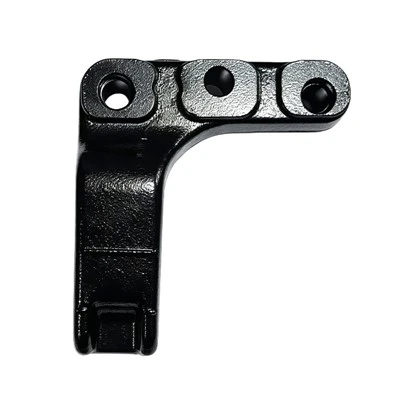
If you’re sitting here right now, staring at a damaged subframe part—whether it’s a small rust spot, a bent tab, or a bigger issue—don’t guess. Reach out to us at Subframe Parts. We can help you figure out if repair is possible, or point you to the right replacement part that fits your car and your budget. No pressure, no sales pitch—just actual advice based on what works for shops and DIYers every day.
Shock Absorber Parts References
- Society of Automotive Engineers (SAE) International. "Guidelines for Subframe Structural Integrity in Passenger Vehicles." SAE Technical Paper Series, 2021.
- Automotive Service Excellence (ASE). "Repair vs. Replacement Criteria for Suspension and Steering Components." ASE Education Foundation, 2022.
- International Iron and Steel Institute. "Corrosion Effects on Automotive Steel Components." World Steel Association, 2020.
Ninghai Zhengda Moulding Co., Ltd.
As one of the most professional subframe parts manufacturers and suppliers in China, we also support customized service. Please feel free to wholesale durable subframe parts in stock here from our factory. Welcome to contact us for pricelist.
Address: No.2088-3, Xuemian North Road, Taoyuan Subdistrict, Ninghai County
E-mail: xgs9425@outlook.com
WebSite: https://www.cn-zhengda.com/
