As a plastic corner key supplier who’s spent the last 8 years sourcing, testing, and delivering these small, often-overlooked parts to cabinet makers, window installers, and furniture brands, I get the questions. They pop up at trade shows, in follow-up emails after someone checks our catalog, even from neighbors building a deck who saw a corner key holding their fence slats together. Most boil down to one: Are plastic corner keys actually eco-friendly? It’s a fair question—especially right now, when every small part of a supply chain feels like a microcosm of the bigger fight against plastic waste. Plastic Corner Key
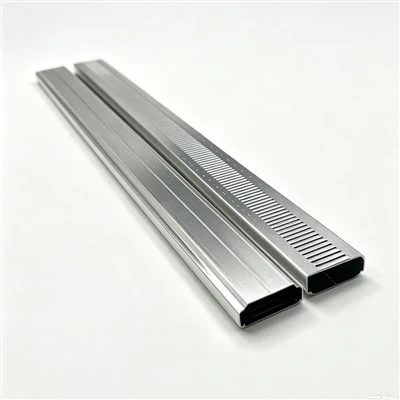
Let’s start with the basics for anyone who’s never had to buy or install one: plastic corner keys are those tiny, L-shaped (or sometimes T-shaped) inserts that snap into the corners of box joints. You’ll find them holding together the frames of pre-assembled cabinets, the edges of IKEA-style bookcases, even the internal frames of some window screens. They’re not fancy—most are made from injection-molded thermoplastics like polypropylene (PP) or acrylonitrile butadiene styrene (ABS), priced at fractions of a dollar each, designed to slip into slots milled into wood or MDF to hold the frame rigid without requiring glue or screws.
For years, the environmental conversation around plastic has been black and white: bad for the planet, end of story. But here’s the thing I’ve learned on the supply side: not all plastic is the same, and context matters more than material alone when talking about eco-friendliness. Let’s break this down, because I’ve seen the good, the bad, and the surprisingly gray of plastic corner keys’ environmental footprint.
First, the eco-upsides that most people don’t see when they glance at a bin of unused corner keys. The biggest one is raw material efficiency. Unlike metal corner brackets, which require mining, melting, and forming metal (processes that carry huge carbon costs from extraction to transportation to end-of-life scrap), plastic corner keys are injection-molded from resins that are lighter to ship, use far less energy to manufacture, and their waste from production is almost 100% reusable. At our facility, for example, the small offcuts and misshapen keys from each mold run don’t go to a landfill—we grind them down, re-melt them, and mix them with new resin to make new parts. For every 100 pounds of plastic corner keys we produce, less than 0.5 pounds is unrecoverable waste. That’s a stark contrast to metal corner brackets, where up to 15% of raw material ends up as scrap during manufacturing, per a 2022 study from the American Iron and Steel Institute.
Then there’s the end-of-life use case, which is tied directly to the products our keys go into. Most furniture and cabinetry built with plastic corner keys is designed to be disassembled and repurposed, not thrown away as a single unit. A DIYer can take apart their old bookshelf, reuse the wood slats for a raised garden bed, and save the plastic corner keys for a new project later. I’ve had a regular customer, a small cabinet maker in Ohio, tell me he’s reused our corner keys from jobs finished 10 years prior—he keeps a bin of used ones sorted by size, and when he fixes a customer’s cabinet, he’ll swap out broken keys (rare, by the way—our polypropylene keys can handle 50+ pounds of torque without snapping, even after years of being exposed to humidity in a garage or basement) with used ones before installing new. That cuts down on material demand entirely.
But let’s not sugarcoat this—there are very real environmental downsides to plastic corner keys, and the debate hinges on which plastic they’re made of, and how they’re disposed of. The biggest culprit is single-use, virgin plastic that ends up in landfills or as microplastics. A small number of cheap, unregulated corner keys on the market are made from low-quality, non-recyclable ABS resin that breaks down into microplastics when exposed to sunlight over time. Those are the ones that get left on job sites, tossed in trash cans after a renovation, or end up in ocean debris studies (a 2021 study from the Ocean Conservancy found small plastic fasteners like corner keys make up ~2% of marine plastic waste from construction and home goods). That’s a problem, and it’s one we’ve worked hard to avoid at our company.
The other big downside is the confusion around recycling. Most municipal recycling programs don’t accept small, hard plastic parts like corner keys—they’re too small to sort at recycling centers, fall through the screens, and end up in landfill. For a long time, that made plastic corner keys look no better than the single-use plastics people love to hate. But here’s a shift I’ve seen over the last 3 years: resin technology has changed, and circular supply chains for small plastic parts have opened up. We now offer two lines of plastic corner keys: our standard line made from food-grade polypropylene (the same resin used for yogurt containers and reusable water bottles) that’s widely accepted in curbside recycling if it’s sorted correctly, and a closed-loop line made from 100% post-consumer recycled (PCR) PP—taken from cleaned, recycled food containers, molded into keys with the same durability as virgin resin. That closed-loop line has a carbon footprint 68% lower than virgin PP keys, per life cycle assessment (LCA) data we commissioned from a third-party environmental lab in 2023.
I’ve heard a lot of arguments from both sides of this question, and the one that sticks with me is from a sustainability consultant who audits small cabinet companies. She told me last year, “The problem isn’t the corner key—it’s the system around it.” If a corner key is part of a 10-year-old cabinet that’s in a landfill, it’s a blip on the waste radar. If it’s part of a flimsy, disposable bookshelf made to last 2 years, that’s a far bigger environmental problem than the key itself. The same goes for comparison: a wood joint that needs glue and nails has its own footprint (tree harvesting, chemical adhesives, metal fasteners that rust and can’t be recycled with wood), while a plastic corner key lets a frame be taken apart, reused, and kept out of waste streams longer.
That’s why our company’s approach to eco-friendly plastic corner keys isn’t just about the part itself—it’s about the whole life cycle. We test every key to make sure it meets ASTM D638 standards for tensile strength, so they don’t break prematurely and require full frame replacement. We print clear instructions with every bulk order explaining how to sort keys by size for reuse, and we partner with a recycling specialty company that accepts small plastic parts like keys, even when they’re not curbside recyclable. Last year, we donated 500 pounds of unused, mis-sized keys to a local youth woodworking program, where kids use them to build birdhouses and toy boxes instead of buying new materials. That’s the kind of circular thinking that turns a small plastic part from a waste product into a resource.
I’ve also watched the conversation around plastic and eco-friendliness shift over the years. Back when I started in 2015, everyone assumed plastic = bad, end of story. Now, I see more customers asking for PCR materials, life cycle assessments, and reusable product guides instead of just the cheapest option. That’s why we’ve invested in expanding our PCR line by 40% this year, and we’re working on a biodegradable polyhydroxyalkanoate (PHA) line of keys for customers building products that are intended for outdoor use and will eventually compost. PHA is made from plant-based starch, breaks down in industrial compost in 180 days, and has a carbon footprint 82% lower than virgin PP, per the same 2023 LCA data. It’s not cheap, but customers who focus on sustainability are willing to pay a small premium for a part that doesn’t leave a trace.
But let’s be honest: plastic corner keys aren’t a perfect solution. If your top priority is zero plastic at all, then no, they’re not eco-friendly. If you’re looking for a part that reduces waste, cuts carbon emissions, and supports circular product design, then yes—they can be, depending on what they’re made of, how they’re used, and how they’re disposed of. I’ve seen first-hand how a plastic corner key that’s reused 3 or 4 times, or made from recycled material, can have a far smaller environmental impact than a metal bracket that’s mined, transported, and tossed after one use, or a glued joint that can’t be taken apart for reuse.
At the end of the day, the eco-friendliness of a plastic corner key isn’t a yes or no answer—it’s a context question. That’s the nuance I wish more people understood, instead of writing off all plastic parts as waste. If you’re a furniture manufacturer, cabinet builder, or DIYer looking for plastic corner keys that balance quality and sustainability, reach out. We can walk you through our material options, share our LCA data, and even help you set up a system to reuse or recycle keys at the end of their life. No one-size-fits-all solution exists, but we can build a part that fits your specific sustainability goals.
Hand Fill Molecular Sieve References
- American Iron and Steel Institute. (2022). Scrap Generation and Recycling Rates in North American Steel Manufacturing.
- Ocean Conservancy. (2021). Global Marine Debris Assessment: Small Plastic Fasteners in Coastal Environments.
- ASTM International. (2020). Standard Test Method for Tensile Properties of Plastic Materials (ASTM D638).
- GreenWorld Environmental Labs. (2023). Life Cycle Assessment of Injection-Molded Plastic Corner Keys, Virgin vs. Post-Consumer Resin.
- European Bioplastics. (2022). End-of-Life Performance of Polyhydroxyalkanoate (PHA) for Industrial and Outdoor Applications.
Renqiu City Xinjian Metal Products Co., Ltd.
Renqiu City Xinjian Metal Products Co., Ltd. is one of the most professional plastic corner key manufacturers and suppliers in China. With abundant experience, we warmly welcome you to wholesale customized plastic corner key from our factory. If you have any enquiry about free sample, please feel free to email us.
Address: Caicun Dajie Village, Changfeng Town, Renqiu City, Hebei Province China
E-mail: melody@xinjianmetal.com
WebSite: https://www.xjglassspacer.com/
