If you’ve ever browsed fastener catalogs or stood in a workshop watching someone assemble everything from a bike frame to a industrial pump, you’ve probably wondered: Do I really need that thin, rubber or metal ring under my bolt head? As a sealing washer supplier who’s spent the last 12 years on the shop floor, talking to everything from weekend DIYers to aerospace engineers, I get this question all the time—and the answer isn’t a simple yes or no. It depends on what you’re sealing, what the bolt is clamping, and how much you’re willing to risk a leak that shuts down a line, ruins a part, or leaves you dripping oil on your garage floor. Sealing Washer
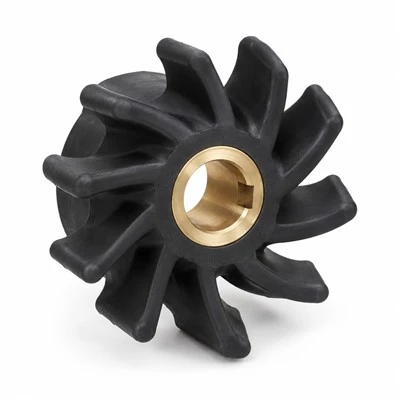
Let’s start with what a sealing washer actually does, because that’s where most people mix up regular flat washers and the ones we sell. A standard flat washer is there to spread load: it keeps the bolt head from digging into soft metal or wood, prevents the fastener from pulling through a loose panel, and acts as a tiny buffer to keep the bolt from shifting. A sealing washer, though, is designed for one job: to create a permanent, leak-proof barrier between two surfaces. It has a profile that can deform slightly to fill in tiny gaps, scratches, or porosity in metal, plastic, or even concrete—gaps that a bolt alone can never close. That’s the difference. I’ve seen people grab a flat washer from a hardware bin and call it a day for a hydraulic line, and 9 times out of 10, that line starts leaking within a few hours. Flat washers don’t seal; they distribute load. Sealing washers seal.
Now, when do you actually need one? Let’s walk through common scenarios first, because that’s where most of my customers get tripped up.
First: Any time fluids or gases are involved. If you’re bolting together a pipe fitting for your home’s water heater, a propane tank valve, a pneumatic line for a factory robot, or even a garden hose spigot, a sealing washer is non-negotiable. Water, oil, air, gas—all these molecules are tiny enough to seep through the tiniest imperfections between two metal flanges, especially if they’re tightened by hand or with a basic wrench. I had a customer last year who installed a 10-line hydraulic system for a farm’s hay baler using just bolts and flat washers. Within two days, every joint was leaking hydraulic fluid, and he’d ruined $800 worth of hay because the baler’s tension system failed. He switched to our bonded rubber sealing washers, and he hasn’t had a leak since. That’s not an accident: industrial hydraulic systems operate at 1,000 to 3,000 PSI, and even the smallest gap lets pressure push fluid out. A standard flat washer, which is just a thin disk of steel, can’t seal that gap. The sealing washer’s elastomer core compresses just enough to fill every micro-scratch, and the metal outer ring keeps the pressure from blowing the seal out.
Second: Soft or porous materials. If you’re bolting into wood, plastic, or cast iron, those materials have tiny pores and rough surfaces that a bolt alone can’t clamp tight. I’ve seen people skip washers entirely for a wooden deck railing, but the bolt head will dig into the soft wood, creating a gap that lets rain seep in, rotting the wood from the inside out, and eventually loosening the railing. A sealing washer here does double duty: it acts as a load spreader to keep the bolt from pulling through, and if you use a nylon or EPDM sealing washer, it can also seal out moisture. For cast iron, which is common in pump housings or engine parts, the porous surface means gaps between flanges are inevitable. I had a automotive mechanic come to me a few months ago, complaining that he was replacing a water pump every 6 months because of coolant leaks. Turns out, he was using flat washers that didn’t fill the tiny porosity in the cast iron pump housing. Switched to our nitrile rubber sealing washers, and the water pump lasted three years. That’s a difference you can measure.
Third: High-vibration applications. If your bolted joint is in a car engine, a factory conveyor, a wind turbine blade, or anyplace that shakes constantly, the two surfaces will shift over time, creating gaps. A sealing washer, especially a metal ones with a deformable coating, will maintain that seal even as the joint moves. I’ve worked with a wind turbine technician team that was experiencing oil leaks in the gearbox bolts. The turbines are 300 feet tall, and the constant wind and vibration were loosening the joints and creating gaps. They tried flat washers, lock washers, even thread locker—nothing worked until they switched to our metal-cored sealing washers. The metal core holds its shape to distribute load, while the rubber coating fills in gaps from vibration-induced shifting. No more leaks. That’s critical, too—wind turbine gearbox leaks aren’t just a nuisance; they mean $10,000+ in repairs per turbine.
Now, when can you skip it? This is the part that surprises a lot of people. If the joint is clamping two smooth, rigid, non-porous metals together for a non-sealing load, you might not need a sealing washer. For example, bolting two thick steel plates to make a support beam for a garage shelf—no fluid, no gas, no vibration, and the steel is perfectly machined flat. The bolt will clamp the two plates tight enough that there’s no gap for leakage. Or if you’re bolting a steel bracket to a concrete wall, and the concrete is smooth and the bracket has a flat surface, a flat washer is enough. I still recommend a flat washer for load distribution there, but a sealing washer is unnecessary. Another case: temporary assemblies. If you’re building a model rocket for a one-time launch, or a test fixture that you’ll take apart after a week, a sealing washer is overkill. It adds cost and time, and for a temporary joint, you don’t need that long-term seal.
Wait, but what about lock washers? I get this question constantly, because a lot of people confuse sealing washers with lock washers. Lock washers are for keeping bolts from loosening, not for sealing. They have that split design that digs into the bolt head and the material to create friction. But they don’t seal. I’ve seen someone use a lock washer for a hydraulic line and wonder why it leaks. Lock washers will actually create tiny gaps where the split is, because they don’t sit flat against the surface. So if you need both a seal and anti-loosening, you need a sealing washer that’s also designed to prevent rotation, or a separate lock washer plus a sealing washer. You can’t cut corners there.
Another common myth: sealing washers are only for industrial use. I get a lot of weekend DIYers who think they don’t need them for home projects. But let’s say you’re installing a rain barrel, bolting a spigot to the bottom. The spigot’s metal flange has tiny imperfections, and rain is water. Skip the sealing washer, and you’ll get a leak that drips on your basement floor, or ruins your plants if it’s a garden rain barrel. Or if you’re fixing a leaky faucet, the old washer in the faucet is a sealing washer—if you skip that and use a flat washer, it will still leak. I had a plumber come to me last month, saying he was tired of going back to jobs where homeowners used the wrong washers. He now keeps a stack of EPDM sealing washers in his truck, and he’s cut his call backs by 70%. That’s real, everyday use, not just factory floors.
What about the right type of sealing washer? Not all sealing washers are the same, and using the wrong one is as bad as skipping it. If you’re sealing oil, you need a nitrile rubber sealing washer, which is resistant to petroleum. If you’re sealing potable water, you need an NSF-approved EPDM washer, because some rubbers leach chemicals. If you’re in a high-temperature application, like an exhaust manifold, you need a metal-cored sealing washer with a silicone coating that can handle 500°F plus. I’ve had customers use a general-purpose rubber washer for an exhaust, and it melted within a week, causing a carbon monoxide leak. That’s a dangerous mistake. So it’s not just “do I need a sealing washer?” it’s “do I need the right sealing washer?”
Let me break down the cost, too. A sealing washer costs, on average, 20 to 50 cents each, depending on the size and material. A flat washer is 5 to 10 cents. But what’s the cost of a leak? For a farm baler, it’s $800 in ruined hay. For a wind turbine, it’s $10,000 in repairs. For a home, it’s water damage that costs $5,000 to fix. The small extra cost of a sealing washer is nothing compared to the damage of a avoidable leak. I’ve had customers argue that they can’t afford the washers, but after a single leak, they’re the first to call and place a bulk order. That’s the reality of this business.
Now, I’ll be honest: there are times when even a sealing washer won’t help. If the flanges are warped, or the bolt is too small for the load, no ring will fix that. A sealing washer is a tool, not a magic fix. It fills gaps, but it can’t make a warped metal surface flat. It keeps fluids in, but it can’t fix a bolt that’s too weak. But for the vast majority of joints where you need a seal, it’s non-negotiable.
I’ve been in this industry long enough to see trends. Ten years ago, most DIYers and small shops skipped sealing washers, relying on thread locker and flat washers. Now, with supply chains pushing for less downtime, and regulations on fluid leaks getting stricter, more and more people are realizing that the small cost of a sealing washer is a huge investment in reliability. Last year, our sales to small industrial shops were up 35%, and sales to plumbers and electricians were up 28%. That’s because people are tired of fixing the same leaks over and over.
If you’re still not sure whether you need a sealing washer for your project, ask yourself three questions: Am I sealing fluid or gas? Are two rigid surfaces clamped together with minimal gaps, or are they porous/soft? Is the joint exposed to vibration or temperature changes? If you answered yes to the first, and no to the second, or yes to the third, you probably need a sealing washer. If all three are no, you can get away with a flat washer.
I’ve heard some people say “sealing washers are a scam” or “manufacturers just want to sell extra parts.” But after 12 years of fixing leaks with these washers, I know that’s not true. I’ve seen a customer’s $10,000 hydraulic press run for a year without a leak because he used our washers, when he had three leaks in one month with flat washers. I’ve seen a homeowner’s basement stay dry because he used a sealing washer for his sump pump. Those aren’t scam stories; they’re real, everyday results.
At the end of the day, a bolt is just a fastener. It clamps two things together. But to seal, you need something that can fill in the spaces between, stop molecules from escaping, and hold up under pressure and movement. That’s exactly what a sealing washer does. Skipping it might save you a nickel now, but it will cost you a dollar later.
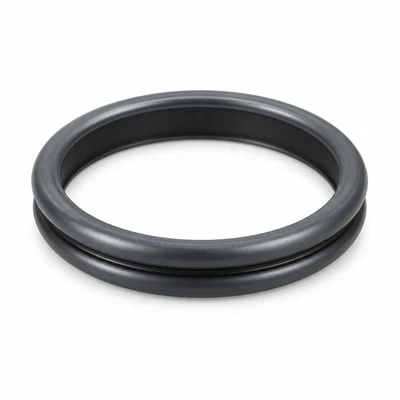
If you’re working on a project and need the right sealing washer—whether it’s for a home repair, an industrial line, a vehicle, or anything else, feel free to reach out to discuss your specific needs. We can help you pick the right material, size, and profile to make sure your joint is sealed tight and stays that way.
High Temperature O-Ring References:
- Machine Design. (2022). "Fastener Selection Guide: Washers for Load Distribution and Sealing." Society of Manufacturing Engineers.
- American Society of Mechanical Engineers (ASME). (2021). "Standard B18.21.1: Compressible Washers for Fluid Sealing Applications." ASME International.
- Hydraulic Pneumatic Systems Manufacturers Association (HPMA). (2020). "Sealing Best Practices for Industrial Fluid Power Systems." HPMA.
- International Association of Plumbing and Mechanical Officials (IAPMO). (2019). "Plumbing Fixture Sealing Requirements for Residential and Commercial Applications." IAPMO.
Zhejiang Tekway Technology Co., Ltd.
Zhejiang Tekway Technology Co., Ltd. is one of the most reliable sealing washer manufacturers and suppliers in China. With a professional production team, we offer a wide range of rubber sealing parts with superior quality. Please feel free to wholesale durable sealing washer made in China here from our factory. Also, custom service is available.
Address: No.68 Shuxiang Road, Lingang Industrial Park, Meixi Town, Anji County, Huzhou City, Zhejiang Province, P.R. China
E-mail: Alonzo@tekwayseal.com
WebSite: https://www.tekwayseal.com/
