Hey there! I’m a supplier of PMMA vacuum tanks, and today I wanna chat about whether a PMMA vacuum tank can be used for vacuum annealing. PMMA Vacuum Tank
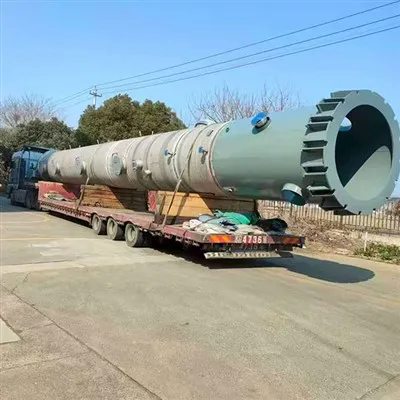
First off, let’s talk a bit about what PMMA is. PMMA, or polymethyl methacrylate, is a well – known thermoplastic. It’s got some great properties like high transparency, good weather resistance, and decent mechanical strength. Our PMMA vacuum tanks are made with high – quality PMMA materials, which are carefully crafted to meet various industrial needs.
Now, what’s vacuum annealing? Vacuum annealing is a heat – treatment process done in a vacuum environment. The main purposes are to relieve internal stresses, improve the material’s structure, and enhance its mechanical properties. During this process, the material is heated to a specific temperature and then cooled down slowly under vacuum conditions.
So, can our PMMA vacuum tank be used for this? Well, there are a few factors to consider.
Temperature Resistance
One of the most important things in vacuum annealing is the temperature. PMMA has a relatively low glass – transition temperature, usually around 100 – 120°C. Most vacuum annealing processes for metals and some other materials require much higher temperatures, often several hundred degrees Celsius. If we use our PMMA vacuum tank for a high – temperature vacuum annealing process, the PMMA might start to deform or even melt.
However, there are some materials that only need low – temperature vacuum annealing. For example, certain polymers or some soft metals that can be annealed at temperatures below the PMMA’s glass – transition temperature. In these cases, our PMMA vacuum tank can be a great choice. It provides a clear view of the annealing process due to its transparency, which is really handy for monitoring.
Vacuum Integrity
Another crucial aspect is the vacuum integrity of the tank. Our PMMA vacuum tanks are designed to maintain a good vacuum level. We use high – quality seals and fittings to ensure that there are no leaks. During vacuum annealing, a stable vacuum is essential. Any air leakage can introduce oxygen, which may cause oxidation of the material being annealed.
Our tanks can achieve and maintain a relatively high vacuum level, which is suitable for many low – temperature vacuum annealing applications. The PMMA material itself is also quite resistant to the effects of vacuum, so it won’t outgas significantly, which could otherwise contaminate the annealing environment.
Chemical Compatibility
The materials being annealed may have different chemical properties. Our PMMA vacuum tanks are generally chemically resistant to many common substances. But we need to be careful with some chemicals that can react with PMMA. For example, some strong solvents or acids might damage the PMMA.
Before using the tank for vacuum annealing, it’s important to check the chemical compatibility between the material to be annealed and the PMMA. If the material is chemically inert to PMMA, then there’s no problem using our tank.
Advantages of Using a PMMA Vacuum Tank for Vacuum Annealing
If the temperature requirements are within the PMMA’s range, there are several advantages to using our PMMA vacuum tank for vacuum annealing.
- Visibility: As I mentioned earlier, the transparency of PMMA allows you to see what’s going on inside the tank during the annealing process. You can easily observe the changes in the material, such as color changes or any physical deformations.
- Lightweight: PMMA is a lightweight material compared to metal vacuum tanks. This makes it easier to move and install the tank, which can be a big plus, especially in a laboratory or small – scale industrial setting.
- Cost – effective: PMMA vacuum tanks are generally more cost – effective than their metal counterparts. This can save you a significant amount of money, especially if you’re on a tight budget.
Limitations
Of course, there are also some limitations.
- Temperature Limitation: As I’ve said, the low glass – transition temperature of PMMA restricts its use in high – temperature vacuum annealing processes.
- Mechanical Strength: Although PMMA has decent mechanical strength, it’s not as strong as some metals. In some cases where there are high – pressure differentials or mechanical impacts, the PMMA tank might be more vulnerable.
Real – World Applications
There are actually quite a few real – world applications where our PMMA vacuum tank can be used for vacuum annealing.
In the electronics industry, some polymer – based components may need low – temperature vacuum annealing to relieve internal stresses and improve their performance. Our PMMA vacuum tank can provide a suitable environment for this process.
In the research field, especially in polymer science and materials research, scientists often need to anneal small samples at low temperatures. Our tank’s transparency and cost – effectiveness make it an ideal choice for these types of experiments.
Conclusion

In conclusion, a PMMA vacuum tank can be used for vacuum annealing, but it depends on the specific requirements of the annealing process. If the temperature is within the PMMA’s range, and the chemical compatibility is okay, then our PMMA vacuum tank can offer many benefits such as visibility, lightweight, and cost – effectiveness.
Distillation Column If you’re interested in using our PMMA vacuum tanks for your vacuum annealing needs, or if you have any questions about the product, feel free to get in touch with us. We’re always happy to have a chat and help you find the best solution for your application.
References
- Smith, J. "Introduction to Polymer Materials." 2018.
- Johnson, A. "Vacuum Heat Treatment Processes." 2020.
- Brown, C. "Chemical Compatibility of Polymers." 2019.
Wuxi Quansheng Industrial Equipment Co., Ltd.
As one of the most professional PMMA vacuum tank manufacturers and suppliers in China, we have world-leading production equipment and strong manufacturing capabilities. Welcome to buy high quality PMMA vacuum tank for sale here from our factory. For price consultation, contact us.
Address: No.10, Fulaiqiao Road, Hudai Town, Binhu District, Wuxi City, Jiangsu Province, China
E-mail: 397293586@qq.com
WebSite: https://www.pmmatech.com/
