What is the specific surface area of silica powder? If you’ve ever sourced materials for industrial processes—from paint and coatings to pharmaceuticals or construction—you’ve probably stumbled upon this question. As someone who’s spent the last 12 years as a silica powder supplier, I can tell you it’s not just a random number on a spec sheet. It’s one of the most critical properties that determines how your powder performs, and getting it wrong can derail even the most well-planned project. Let’s break this down in plain, practical terms, no overly complicated jargon that makes your eyes glaze over. Silica Powder

First, let’s define what specific surface area (SSA) actually means. In simple terms, it’s the total surface area of all the particles in a given mass of silica powder, measured in square meters per gram (m²/g). Wait, why does that matter? Because every reaction, interaction, or application your silica goes on happens at the surface of those particles. If you have two powders with the same chemical composition but different SSAs, they’ll behave like completely different materials. Think of it this way: a block of silica (like a quartz crystal) has a tiny surface area compared to the same amount of silica ground into a fine powder. The more you grind it, the more particles you get, and the more total surface area is exposed. That’s the core of SSA.
Now, let’s talk about what factors actually change the SSA of silica powder. As a supplier, I see this every day—customers often don’t realize that SSA isn’t a fixed property of silica itself, but something we can adjust during processing. The biggest factor is particle size distribution: finer particles mean higher SSA. But it’s not just about how small the particles are; their shape plays a role too. Irregular, jagged particles (from mechanical grinding) have more surface area than smooth, spherical ones (from processes like sol-gel synthesis). Pore structure is another big one. Some silica powders are porous—they have tiny holes inside the particles that add to the total surface area. That’s why you’ll see different SSA values even for powders with similar average particle sizes. For example, fumed silica, which is made by burning silicon tetrachloride, has an extremely high SSA (usually 50–400 m²/g) because of its tiny, chain-like agglomerates with lots of surface contact points. On the other hand, ground silica, which is made by crushing quartz rock, has a lower SSA (typically 1–20 m²/g) because its particles are larger, more irregular, and less porous.
I can’t tell you how many times a customer has come to me saying, “I need silica powder with a specific SSA, but I don’t know why.” Let’s get into the practical applications so you can see why this number matters. If you’re making water-based paint, for example, higher SSA silica powder acts as a better thickener and rheology modifier. The extra surface area allows the silica particles to interact more with the polymer binders in the paint, preventing sagging and improving coverage. But if you’re making a pharmaceutical tablet, too high an SSA might cause the silica to adsorb too much of the active pharmaceutical ingredient (API), reducing its effectiveness. In that case, you’d want a lower SSA to keep the API available where it’s needed. Another example: silicone rubber reinforcement. Adding silica with a controlled SSA boosts the rubber’s tensile strength and abrasion resistance. If the SSA is too low, the rubber will be weak; too high, and it might be too stiff or difficult to process.
Now, the next question people ask is: how is SSA measured? It’s not like measuring the size of a grain with a ruler. The standard method is the Brunauer-Emmett-Teller (BET) method, which uses gas adsorption—usually nitrogen at low temperatures. The nitrogen molecules stick to the surface of the silica particles, and we can calculate the total surface area based on how much nitrogen is adsorbed. This is the gold standard in the industry, and as a supplier, every batch of silica powder we ship comes with a BET SSA test report. I always tell customers to ask for this—don’t just take a label at face value. Some suppliers might estimate SSA from particle size, but that’s not accurate because of shape and porosity. For example, two powders with the same average particle size (measured by laser diffraction) can have different SSAs if one is porous and the other isn’t. BET gives you the actual surface area, which is what you need.
Let’s talk about common misconceptions I hear all the time. First, people think “higher SSA is always better.” No, it’s about matching the SSA to your application. A customer who makes insulation materials might want high SSA silica because it traps more air, improving thermal resistance. But a foundry using silica as a mold material would want lower SSA, because higher SSA can make the mold harder to bind and more prone to cracking. Second, people think SSA is the same as particle size. I already touched on this, but let’s clarify: average particle size is a measure of the diameter of the particles, while SSA is the total surface area. A fine powder with a dense, non-porous structure might have the same SSA as a coarser powder that’s porous. For example, a 10-micron porous silica particle could have a similar SSA to a 5-micron non-porous one because the pores add extra surface.
As a silica powder supplier, my job isn’t just to sell you a product—it’s to help you understand what you need. Over the years, I’ve worked with customers across industries, and I’ve seen that the biggest mistakes happen when someone picks a silica powder based on price or a generic spec without checking SSA. For instance, a construction customer came to me a few years ago complaining that their concrete additive wasn’t working as expected. They’d bought a low-cost silica powder with an incorrectly stated SSA—supplier had quoted 10 m²/g, but the actual SSA was 25 m²/g. That higher SSA made the concrete set too fast, causing inconsistencies in their pouring process. We worked with them to adjust their formulation and found a powder with a targeted 8 m²/g SSA, and their issue was solved. That’s why I always emphasize that SSA is a performance driver, not just a specification box to tick.
Now, let’s get into how we control SSA at our facility. We have a range of processing equipment that lets us adjust SSA to meet customer needs. For ground silica, we use different grinding media sizes and retention times in our mills. Longer grinding times and smaller media produce finer particles, increasing SSA. For fumed silica, we adjust the reaction temperature and gas flow rates during the combustion process to control the size of the primary particles and their agglomeration, which directly impacts SSA. We also offer surface-modified silica powders, where we treat the surface with chemicals to change how the particles interact with other materials—this doesn’t drastically change the total SSA, but it alters the effective surface in applications like polymers, where surface compatibility matters.
If you’re wondering what SSA range you should be looking for, here’s a quick reference from the most common uses:
- Ground silica for construction, fillers: 1–15 m²/g
- Fumed silica for rheology control, reinforcement: 50–400 m²/g
- Silica for pharmaceuticals, food additives: 2–50 m²/g (depends on the specific use—anti-caking agents need higher SSA, while carriers for APIs need lower)
- Porous silica for catalysts, adsorption: 100–1000 m²/g (these have significant internal pore surface area)
I should also mention that SSA is one of the parameters we test for in our quality control lab, alongside particle size distribution, purity, and moisture content. Every batch goes through BET analysis, and we provide the test certificate with every order. Transparency is important to me—if a customer has a unique application, I’ll work with them to develop a custom silica powder with the exact SSA they need. I’ve had customers who need SSA values outside these ranges, and we’ve been able to adjust our processes to meet those requirements.
Let’s circle back to why this matters for your business. Choosing the wrong SSA silica powder can lead to product failure, increased production costs, wasted materials, and missed deadlines. On the other hand, getting the SSA right means better product performance, consistent results, and less rework. As someone who’s been in this industry for years, I’ve built my reputation on helping customers find the right silica powder for their needs, not just selling the largest quantity. I’ve seen too many companies cut corners on spec testing and end up with costly mistakes—don’t let that be you.
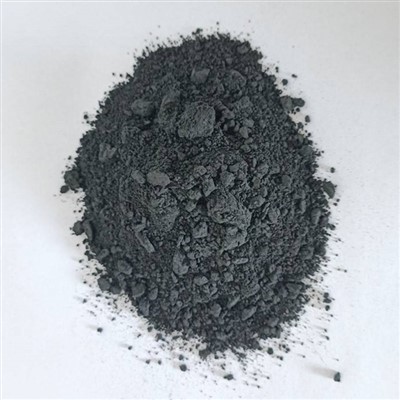
If you’re currently sourcing silica powder and aren’t sure about the SSA requirements for your application, or if you’ve had issues with a powder that didn’t perform as expected, I’d encourage you to reach out. Sharing details about your process, the final product, and any performance challenges you’re facing will help me or my team guide you to the right silica powder with the precise specific surface area you need. We don’t do one-size-fits-all here—every customer’s needs are unique, and we tailor our products to match.
Mineral Fibers References
- Brunauer, S., Emmett, P. H., & Teller, E. (1938). Adsorption of gases in multimolecular layers. Journal of the American Chemical Society, 60(2), 309–319.
- Jones, K. H., & Smith, A. L. (2015). Silica powder: Properties and industrial applications. Industrial Minerals and Materials, 5th Edition, 456–482.
- OECD. (2006). Silica, amorphous: Concise international chemical assessment document 61. Organisation for Economic Co-operation and Development, 1–128.
- Her, R. K. (1979). The chemistry of silica. John Wiley & Sons, 1–566.
Lingshou County LM Mineral Products Co., Ltd.
As one of the most professional silica powder manufacturers and suppliers in China, we’re featured by quality products and good service. Please rest assured to buy customized silica powder made in China here from our factory. Contact us for more details.
Address: Dongzhuang Village, Nanyanchuan Township, Lingshou County, Shijiazhuang City, Hebei Province
E-mail: lmwtwz@163.com
WebSite: https://www.lmwtz.com/
