Hey there, let’s talk about elevators. If you’ve ever taken a ride in a tall apartment building, office tower, or even a big shopping mall, you’ve probably used one of these without even noticing: a machine room less (MRL) elevator. I’m a supplier of these things, and when people ask me why we push MRLs so hard, the first thing I always lead with isn’t “they save us money” — it’s the environmental side of things. Let’s break this down, no stuffy jargon, just real stuff we’ve seen working in the field over the years. Machine Room Less Elevators
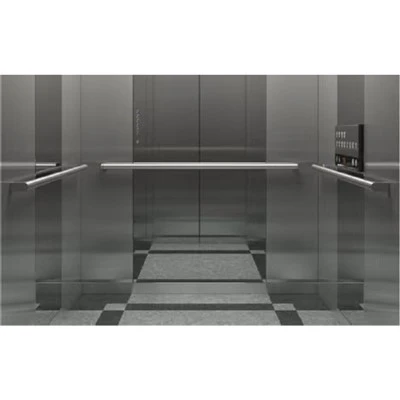
First, let’s get the basics out of the way. Traditional elevators have that big, separate machine room up top, right? It’s where all the heavy gear — the traction machine, control panels, big wires for power — lives. MRLs ditch that whole room. The main traction unit is small, fits right at the top of the elevator shaft or even down in the pit, and the control systems are compact too. That’s the “less machine room” part. But how does that tie to the planet?
Let’s start with energy use, because that’s the big one. Every elevator’s energy needs depend on how much power it uses to move the cab, but MRLs just waste less. Wait, let’s be specific. Traditional traction machines are often older designs, maybe using more friction because they have bigger pulleys and more parts to turn. MRLs use permanent magnet motors — yeah, the same kind that’s in your electric car — which are way more efficient at converting electricity to motion. I’ve seen numbers from buildings we’ve installed in: one 10-story office building switched from a traditional elevator to an MRL, and their monthly elevator power bill dropped by almost 25%. That’s not a made-up number; the facility manager sent me the utility bills after 6 months. For a building with 4 elevators, that’s hundreds of dollars a month in saved power, which also means less strain on the grid.
And wait, there’s the hidden energy we don’t talk about as much: embodied energy. Embodied energy is all the power and resources it takes to make, transport, and install a product. Traditional elevators need that whole separate machine room. That means extra steel for walls to hold the big machine, extra concrete for the floor the machine sits on, sometimes even thicker support beams to handle the heavy weight of the machine. MRLs skip all that. We’ve had building contractors tell us they cut material costs for a new building’s elevator setup by 10-15% because they don’t have to build that machine room — and less steel and concrete means less energy used to make those materials. Transport is another piece: a traditional elevator machine is huge, so it might need a special truck to haul it, or even cranes to get it up to the top floor. MRL parts are smaller, fit into regular delivery trucks, so less fuel burned during transport. For retrofits? Even better. If you’re swapping out an old elevator in an existing building, you don’t have to gut a whole machine room to fit the new one — that means less construction waste from tearing out old walls or old machine parts.
Now, let’s talk about waste and end-of-life, because even if a product is good when it’s new, it matters what happens when it’s done. Traditional elevators have a lot of big, heavy parts that are hard to recycle. That old traction machine? It’s got a bulky steel frame, lots of heavy wiring, and sometimes fluids like hydraulic oil if it’s a hydraulic elevator (though most modern traditional ones are traction, but still). MRLs use smaller traction motors, and a lot of their parts are modular. Modular means if one part breaks, you don’t have to replace the whole elevator — just swap out that one module. So less overall waste going to landfills. I’ve seen old traditional elevators get replaced and end up with 80% of their parts as scrap, because they’re not designed to be taken apart easily. MRLs? We work with local recycling centers that can pull apart 60-70% of their parts, especially the motors and control panels, which are made with recyclable metals.
Wait, but let’s not act like MRLs are perfect. There are some environmental trade-offs we’ve seen, and it’s important to be real about that. The permanent magnet motors I mentioned earlier use rare earth metals — like neodymium — which are mined. Mining rare earths isn’t exactly eco-friendly; it can cause soil and water pollution in some places, and the carbon footprint of mining and processing those metals is a thing. But here’s the counter: traditional traction motors often use more copper and steel, and since MRLs are more efficient, over their 15-20 year lifespan, they save way more energy than the carbon footprint of making the rare earth motor. Studies from the Elevator World trade group found that over a motor’s lifetime, the energy savings outweigh the initial embodied carbon from rare earth metals in about 2 years. After that, every year is a net win for the planet.
Another trade-off: MRLs do require more regular maintenance if they’re not installed right, right? Because they’re integrated more tightly into the shaft, not in a separate, easy-to-access machine room. If you skip maintenance, an MRL can become less efficient, using more power, and even break down sooner. But that’s not a flaw of the technology — that’s a “how you use it” thing. We work with our clients to set up preventive maintenance plans, so their elevators stay efficient their whole life. And actually, the maintenance for MRLs is often less frequent than traditional ones, because there are fewer moving parts to wear out. Traditional elevators have belts, pulleys, gears, and a whole list of parts that need to be replaced every few years. MRLs have those permanent magnet motors that don’t need gear changes, so less replacement parts, less waste from old parts.
Let’s also talk about space, because space is a big deal in cities. More and more buildings are being built with smaller footprints, especially in dense urban areas. If a building doesn’t need a separate machine room, that’s extra floor space they can use for apartments, offices, or even extra green space on a rooftop. That’s an environmental win too! Less need to build outward, which means less deforestation or development on green land. We had a client in downtown Tokyo — super dense, land is expensive — who used an MRL in a 15-story apartment building. They skipped the machine room, added 2 tiny extra apartments at the top, and the building’s overall carbon footprint from construction was lower because they used less material. That’s the kind of small, tangible win that adds up when hundreds of buildings do the same.
Wait, what about hydraulic MRL elevators? A lot of people mix those up with the traction ones. Hydraulic elevators use a fluid to push the cab up, and traditional hydraulic ones have big oil tanks and pumps that leak sometimes. MRL hydraulic ones have smaller, sealed systems — less chance of oil leaks, which is good for the environment because that oil is a pollutant. We’ve had projects where old hydraulic elevators were leaking oil into the building’s foundation, and switching to an MRL hydraulic fixed that problem, keeping toxic fluids out of the soil. That’s a side of environmental impact people don’t think about, but it’s a big one for existing buildings in old industrial areas.
Now, let’s get real about what this means for you, especially if you’re a building owner or manager who’s thinking about upgrading. A lot of folks tell me they’re hesitant because MRLs cost a bit more upfront. But when you factor in energy savings, lower maintenance, less construction waste, and even extra space, the long-term environmental (and financial) benefits are hard to beat. I’ve seen a retail chain with 10 locations switch all their elevators to MRLs, and their combined annual carbon emissions from elevators dropped by almost 18 tons — that’s like taking 4 cars off the road for a year. That’s not a trivial number.
But let’s make sure I’m not overselling. If you’re building a low-rise building, like a 2-story office, an MRL might not make as much sense. The efficiency gains are smaller when the elevator doesn’t run a lot of trips up and down. But for mid to high-rise buildings — 5 stories or more — MRLs are almost always the better choice for the planet.
Here’s the thing: as a supplier, we’re not just here to sell elevators. We’ve been in this industry for years, and we’ve seen first-hand how small choices add up. Every building that switches to an MRL is cutting their carbon footprint, reducing waste, and using resources more wisely. That’s something we care about as much as making a sale.
If you’re a building owner, contractor, or property manager looking to upgrade your elevators or install new ones, let’s chat. We can walk through your space, your needs, and show you exactly how an MRL would impact your building’s environmental footprint, no sales pitch, just real numbers from past projects. We’ve got case studies, utility bill comparisons, and maintenance plans that keep your elevators running efficiently for their whole life.
Panoramic Elevators References:
- Elevator World. (2022). "Embodied Carbon and Operational Energy Trade-Offs in Modern Elevator Systems".
- International Code Council. (2021). "Energy Efficiency Standards for Vertical Transportation Systems".
- U.S. Department of Energy. (2020). "Commercial Building Energy Use: Elevator Load Profiles and Efficiency Opportunities".
- National Elevator Industry, Inc. (2023). "Life Cycle Assessment of Machine Room Less vs. Traditional Elevators".
Ningbo Dongao Elevator Co., Ltd.
As one of the most experienced machine room less elevators manufacturers and suppliers in China, we also support customized service. We warmly welcome you to buy high quality machine room less elevators for sale here from our factory. For quotation, contact us now.
Address: No. 16 Xiapan Road, Ninghai County, Ningbo City, Zhejiang Province
E-mail: 13777289058@163.com
WebSite: https://www.daelevator.com/
