If you’ve ever walked through a factory packaging fragile electronics, held a disposable takeaway foam tray, or admired the lightweight protective packaging around a new appliance, chances are you’ve interacted with parts of a product made using EPS (Expanded Polystyrene) shape molding. As a supplier of EPS shape molding machines, I get asked a lot by new customers, factory owners, and even fellow industry peers: “Are there any well-known brands of these machines that actually stand the test of time and deliver consistent quality?” It’s a fair question—your EPS machine is the backbone of your production line, and cutting corners on reliability, efficiency, or after-sales support can sink even the most promising small manufacturing operation. I’ve spent over a decade working with these machines, sourcing parts, troubleshooting, and collaborating with factories across North America and parts of Southeast Asia, so I can speak from hands-on experience instead of just marketing brochures. EPS Shape Molding Machine
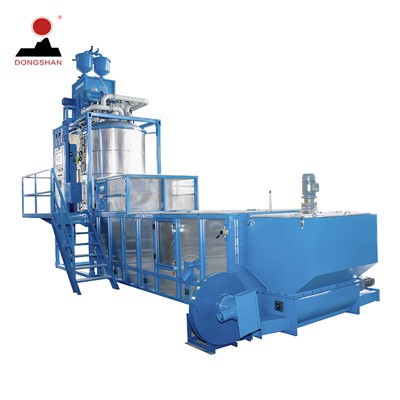
Let’s start with a quick refresher on what EPS shape molding machines do, just to ground this conversation. Unlike simple EPS foam blocks, shape molding machines take raw expanded polystyrene beads and heat them in custom steel molds to create exact, three-dimensional parts—think packaging inserts, furniture components, or even construction blocks. A good machine needs precise pressure control, consistent heating, and fast cycle times to keep production flowing, and that’s where the best brands separate themselves from the rest.
First up, in the top tier of well-known brands, there’s the European players. For many years, European manufacturers set the global standard for EPS technology, and one name that comes up repeatedly is KraussMaffei. This German brand has been a powerhouse in plastics machinery for over 180 years, and their EPS molding lines are used by large-scale automotive packaging, electronics, and construction companies around the world. What sets KraussMaffei apart, in my experience, is their engineering durability. I’ve seen machines from them running 24/7 for 15 years with only regular part replacements, no major overhauls. Their control systems are also user-friendly even for operators with limited technical training, which is a big deal for factories that struggle to find skilled labor. The downside, though, is that their machines carry a higher price tag, and lead times can stretch to 12 months or more—so they’re mostly a fit for mid-to-large operations with steady, high-volume production.
Another European brand I’ve worked closely with is Henkelman, a Dutch company that specializes in EPS machines focused on energy efficiency. A few years back, I supplied replacement parts for a small packaging factory that switched to Henkelman’s line after struggling with sky-high utility bills from their old machine. The difference was night and day: their new machine used 25% less steam and electricity per cycle, which translated to thousands in annual savings. Henkelman is a great pick for medium-sized operations that want to balance quality with operational costs, though their range is a bit more limited than KraussMaffei’s, so they’re not ideal for very custom, low-volume parts.
Moving to Asia, where most of the world’s EPS production happens today, there are a handful of brands that have earned global recognition without the hefty European price tag. Dongxu, based in China, is a brand that’s exploded in popularity over the last decade, especially among small to mid-sized factories. I’ve sold their machines to a dozen clients over the years, and while they don’t have the same legacy of European engineering, they’re reliable for standard products like food service foam trays and generic packaging inserts. Their after-sales support is another strong point—they have service hubs in most major manufacturing regions, so if a part breaks down, you can get a replacement in 48 hours instead of waiting weeks. The key with Dongxu is to specify your exact needs; their basic models work well for high-volume, simple parts, but for more complex custom molds, you’ll want to opt for their premium line with upgraded pressure controls.
Another Asian brand that’s worth mentioning is Jinan Sanjin, also a Chinese manufacturer, which has carved a niche in EPS machines for the construction and furniture industries. If you’re making insulation blocks, decorative EPS trim, or molded furniture components, Sanjin’s machines are built to handle larger molds and higher heat tolerance than standard packaging-focused models. One of my clients that makes custom EPS insulation for residential construction switched to Sanjin’s line three years ago, and they’ve reported a 10% reduction in defective parts compared to their previous machine. The biggest advantage here is customization: Sanjin will work with you to adjust mold sizes and cycle times to fit your specific product, which is a huge plus for factories that don’t make standard EPS parts.
I should also note a few “emerging” brands that are worth keeping an eye on, especially for small startups that can’t afford big-ticket machines. Brands like EPS Tech (based in Taiwan) and FoamForm (a U.S.-based startup that manufactures in Mexico) offer entry-level machines with smaller footprints, designed for low-volume, custom production. I’ve tested a prototype of FoamForm’s compact machine last year, and while it’s not ideal for 24/7 high-volume runs, it’s perfect for startups that want to test a new EPS product before investing in a larger line. That said, they do have some kinks to work out in their control systems, so I’d recommend waiting 12-18 months if you’re looking for a long-term machine with zero headaches.
Now, before you get swayed by a brand name, here’s what I always tell my clients when they’re choosing an EPS machine—because even a “well-known” brand isn’t the right fit for every operation. First, ask yourself: what’s your production volume? If you’re running 10,000 parts a day, a mid-tier Asian brand like Dongxu or Sanjin will give you the best balance of cost and reliability. If you’re running 50,000+ parts a day, go with KraussMaffei or Henkelman—they’ll waste less material and have fewer downtime issues. Second, consider your spare parts access. Some small brands will fold after a few years, leaving you with a machine that you can’t fix. All the brands I’ve mentioned have global distribution networks, so you can order parts anywhere in the world. Third, don’t overlook after-sales support. A cheap machine is useless if it takes two weeks to get a technician out to fix it. I’ve had clients go with a no-name brand to save $5,000, only to spend $10,000 in lost production during a two-month wait for a replacement part.
As an EPS shape molding machine supplier, I work with all these brands, but my job isn’t just to sell you a machine—it’s to make sure you’re buying the right one for your business. Whether you’re a small startup testing a new product, a mid-sized packaging factory looking to scale, or a large construction company needing custom EPS parts, I can help you assess your needs, compare brands, and find a machine that fits your budget and production goals. I also offer ongoing support, from installation and operator training to regular maintenance checks and part replacement, to keep your line running smoothly.
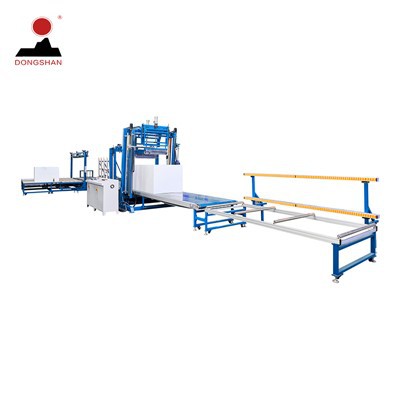
If you’re in the market for an EPS shape molding machine, or if you have questions about maintaining your current one, feel free to reach out to discuss your specific needs. Whether you’re looking for a compact entry-level model, a high-volume industrial line, or a custom machine for specialized parts, I can provide tailored recommendations and transparent pricing to help you make the best choice for your manufacturing operation.
Vacuum System References
- Plastics Technology Magazine. (2022). "Global Trends in Expanded Polystyrene Shape Molding Machinery."
- European Plastics and Rubber Machinery Association. (2021). "Annual Report on EPS Molding Machine Performance and Reliability."
- China Plastics Machinery Industry Association. (2023). "Survey of Domestic EPS Machine Brands and Global Market Penetration."
- KraussMaffei Group. (2023). EPS Molding Systems: Technical Specifications and Operational Data.
- Henkelman B.V. (2022). Energy Efficiency in EPS Shape Molding: Case Studies and Performance Metrics.
Hangzhou Fuyang Dongshan Plastic Machinery Co., Ltd.
Hangzhou Fuyang Dongshan Plastic Machinery Co., Ltd. is one of the most professional EPS shape molding machine manufacturers and suppliers in China, featured by quality products and low price. Please feel free to wholesale advanced EPS shape molding machine made in China here and get quotation from our factory. Customized orders are welcome.
Address: 101 Guanting, Baiqian Villige, Luzhu Town, Fuyang District, Hangzhou City, Zhejiang Province, China
E-mail: xu@dong-shan.cn
WebSite: https://www.epseppmachinery.com/
