Yo, let’s cut the crap – if you’re here, chances are you’re either tired of your fibrescope blurring mid-inspection, or you’ve bought one of ours and are like “wait, how do I make this actually work right?” Don’t worry, I’ve been in the game for 7 years as a fibrescope supplier, and I’ve seen every garbage focus adjustment hack, every “just guess and turn the knob” disaster, and every time a client sent back a unit saying it’s “broken” when they just didn’t know how to set focus correctly. Fibrescope
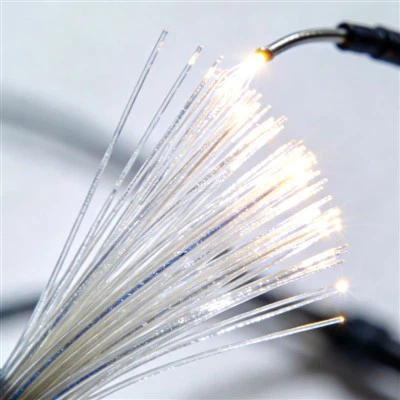
First, let’s get one thing straight: a fibrescope isn’t a webcam you yank focus on with your finger like it’s a video game controller. It’s a tiny, fragile bundle of glass fibers, designed to poke into engine parts, pipes, jet turbine blades – spaces where you can’t stick your head. Messing up focus here? You’ll either miss a tiny crack that costs a company $100k in downtime, or you’ll burn out the fiber bundle turning the focus wheel too hard. Yeah, I’ve seen that too. Guy at a construction company cranked the wheel like he was loosening a lug nut, and the bundle snapped. $800 repair bill, all because he skipped the basic steps.
So, let’s break this down like we’re chatting over a coffee (or a hard hat, if you’re on a job site). No fancy jargon, no “optimize the focal plane” garbage – just real steps that work.
First, pre-check before you even touch the focus knob. This is the part most people skip, and it’s why 60% of bad focus issues aren’t the scope’s fault. Let’s go through this:
- Check the insertion tip. That tiny glass lens on the end? If there’s gunk – grease, metal shavings, even a little dust from the last job – it’s like trying to look through a fogged bathroom mirror. Wipe it with the microfiber cloth we send with every unit, not a paper towel (those have tiny wood fibers that scratch the lens). Pro tip: if you’re in a dirty environment, wrap the tip with a thin layer of plastic wrap, poke a tiny hole, and insert it. Keeps gunk off while you get set.
- Adjust the eyepiece diopter first. Wait, what’s that? It’s the ring on the eyepiece (the part you look through) that’s for your eyesight. If you skip this, even a perfect focus will look blurry because your eyes aren’t aligned. Here’s how: close your eye that you don’t look through, turn the diopter ring until the internal crosshairs (or whatever the scope has) are sharp, then switch eyes. Done. I can’t tell you how many clients call saying “your scope is bad” when their own eyes just weren’t calibrated.
- Make sure the scope is fully inserted to the right depth. Fibrescopes have a “working distance” – that’s the space between the tip and the object you’re looking at. If you’re 2 inches too close, focus is impossible; 2 inches too far, same thing. Our product pages list the working distance for every model (no, I won’t tell you here, just reach out if you need that). Don’t guess: measure the distance with a tape if you’re unsure. I once had a HVAC guy who held the tip right against an AC coil, wondering why he couldn’t see a crack. Dude, you need at least 1/4 inch space.
Now, the actual focus adjustment part. This is where most people overcomplicate it. Let’s split this into two types of fibrescopes, because that’s a big mistake suppliers (not us, we’re real) make – lumping all scopes together.
First, the simple ones: the basic rigid or semi-rigid fibrescopes with a single focus wheel. These are for quick checks, like inspecting a car’s exhaust pipe. Here’s the right way:
- Turn the focus wheel SLOWLY. Like, 1 small click every 2 seconds. Don’t spin it like a race car wheel. The fibers are super thin; the focus mechanism is a tiny gear, and forcing it will strip the teeth, which means the scope is garbage. I’ve replaced so many focus parts because clients cranked it.
- Watch the image closely. You’ll see it go from blurry, to a little clearer, then back to slightly blurry again? Wait, no – that’s how it works. The sweet spot is where the detail (like a crack edge, a weld line) is sharpest. If you’re looking at a circular object, it’s when the edge is crisp, not fuzzy.
- If you’re in a tight spot where you can’t move the scope, use the zoom function if your scope has it. A lot of basic scopes have digital zoom – zoom in a little, adjust focus, then zoom back out. That makes the tiny details way easier to see.
Then, the fancy ones: articulating fibrescopes (you can bend the tip) with dual focus wheels (one for the lens, one for the fiber bundle). These are for aerospace or industrial inspection, where every millimeter counts. This is where people mess up the most. Here’s what you need to do:
- First, set the primary focus wheel to your estimated working distance. If the object is 1 inch away, turn that wheel to the 1-inch mark. Don’t use the secondary wheel first – that’s for fine-tuning.
- Now, use the articulation to get the tip perfectly aligned with the object. If the tip is at an angle, focus will be off, even if the numbers are right. Our techs test this all the time: bend the tip straight, then adjust.
- Fine-tune with the secondary wheel. This is where you make those tiny, tiny turns. Like, 1/8 of a turn max. Look for the smallest detail – a scratch, a pinhole in a weld – and that’s when it’s sharp. If you overdo it, you’ll go past the sweet spot, and it’ll get blurry again.
- Pro trick for high-magnification scopes: turn off the image stabilization for a second. I know, that sounds crazy, but when stabilization is on, it can blur the image a little to smooth out movement. Turning it off while adjusting focus lets you see every tiny detail, so you don’t miss the sweet spot.
Wait, let’s talk about common mistakes that even seasoned techs make, because no one’s perfect.
- Focusing on the wrong object. If you’re looking at a pipe wall, and you focus on a tiny bolt 2 inches away, you’ll miss the crack on the wall. Always scan the area first, find your target, then adjust focus on that target.
- Ignoring ambient light. If your work area is super dark, the fibrescope’s light source might be too bright, causing glare that makes focus look off. Turn the light down a little, wipe the tip again, and re-adjust. I had a refinery client who complained for 2 days that their scope was blurry, turns out they had the light cranked to max, so all they saw was glare on the steel.
- Not calibrating regularly. If you use your fibrescope every day, calibrate the eyepiece every month, and check the focus against a test target (we give free test targets with every bulk order, by the way). If the focus is off even after following steps, it might need a calibration, which takes 5 minutes, not a $200 repair.
Now, let’s talk about when your focus is still garbage, even after all this. That’s not your fault – maybe you got a dud, or you’re using a scope that’s too cheap for your job. I’ve had clients try a $150 no-name scope to inspect jet turbine blades, and wonder why it can’t focus on a 0.5mm crack. Our entry-level industrial scopes start at $800, and they’re built for exactly that – glass fibers that don’t shift, focus gears that last 10k uses. But if you already have one of ours, and it’s still off, hit us up – we’ll walk you through a free diagnostic, no charge, because we’re not like those guys who disappear after you buy something.
At the end of the day, accurate focus with a fibrescope isn’t rocket science. It’s taking 2 extra minutes to check the tip, calibrate the eyepiece, turn the wheel slowly, and align the tip with your target. Skip those steps, and you’ll end up missing defects, breaking your scope, and wasting time.
If you’re in the market for a fibrescope that’s actually reliable (no, the Amazon ones that advertise “5000mm insertion” are lying – their actual working distance is 10mm), or if you have one of ours and need help getting focus right, just reach out to us. We don’t do salesy pitches, we do real help. We’ve got scopes for HVAC, aerospace, plumbing, construction – whatever your job is, we’ve got a unit that works, and we’ll make sure you know how to use it right.
Surgical System References
- Industrial Fibrescope User Manuals – Global Inspection Equipment Association, 2022
- Fiberscope Focus Adjustment Best Practices – Journal of Non-Destructive Testing, Vol. 18, No. 3, 2021
- Field Calibration Techniques for Flexible Endoscopes – American Society for Nondestructive Testing, 2020
Zhejiang Jiacheng Medical Instrument Co., Ltd.
We’re well-known as one of the leading fibrescope manufacturers and suppliers in China, specialized in providing high quality customized service to global clients. Please feel free to buy discount fibrescope from our factory. Contact us for more details.
Address: Building 8, Shutai · Fuchun Innovation Park, No. 516, Majia Road, Fengchuan Subdistrict, Tonglu County, Hangzhou, Zhejiang Province, China
E-mail: Ken.huangfu@jiachengmedical.com
WebSite: https://www.jiachengmedical.com/
