Hey everyone, it’s [Your Company Name] here—your go-to PET board supplier, and today we’re answering one of the most common questions we get from our customers, both new and repeat: Can you cut PET board with a laser? If you’ve been working with PET (that’s polyethylene terephthalate, for anyone new to the game) and trying to figure out the best way to cut it without ruining the material, you’re in the right spot. I get it—you don’t want to waste expensive PET sheets, and you want clean cuts that work for whatever project you’re tackling, whether it’s custom displays, industrial parts, packaging, or something totally out of the box. Let’s break this down like we’re chatting over a coffee (or a warehouse energy drink, more like) and skip all the stuffy jargon that makes your eyes glaze over. PET Board

First, let’s get one thing straight right off the bat: Yes, you can cut PET board with a laser—but it’s not as simple as grabbing any old laser cutter and hitting “start.” I’ve seen it go both ways: some projects turn out perfect, no burn marks, no warping, just crisp edges. Other times? You end up with a smelly, charred mess that makes you question your life choices (and your laser cutter’s quality). The difference is all in the details, so let’s dive into what makes laser cutting PET work, when it’s a bad idea, and how to nail it every time.
Let’s start with the science behind it, but keep it super basic, promise. PET is a thermoplastic, right? That means it melts when heated, which is exactly how laser cutting works. A laser cutter uses a focused beam of high heat to melt or vaporize material along a pre-drawn line, and then usually a stream of air blows the melted debris away to leave a clean edge. For most thermoplastics like acrylic (PMMA) or PETG, this works great. But PET has a few properties that make it a little finicky compared to those other plastics—stuff like its melting point, how it releases fumes when heated, and its tendency to warp if the heat’s not applied evenly.
Wait, let’s talk about fumes for a second, because this is a big one that a lot of new folks miss. When you heat PET to the point where it melts, it doesn’t just turn to liquid—it releases volatile organic compounds (VOCs) and tiny plastic particles. If you don’t have a good ventilation system on your laser cutter, those fumes don’t just smell like burnt plastic (which is already bad); they can also leave a sticky, oily residue on your cuts, and even damage your laser cutter’s lens over time. That’s why I always tell our customers: if you’re going to laser cut PET, don’t skip the fume extractor. We actually include fume filter recommendations when we ship bulk PET board orders, because we’ve seen too many people skip that step and end up with ruined cuts and broken equipment.
Next, what kind of laser should you use? Not all lasers are created equal here. I’d say the best bet is a CO2 laser—those are the most common for plastic cutting, and they work really well for PET, especially for thicker boards (up to like 1/4 inch, maybe even a bit more if you crank the power, but don’t push it). Fiber lasers? Those are for metals mostly, and while I’ve heard of people using them on thin PET, it’s not ideal—they tend to leave rougher edges and more residue. Then there’s the power setting, which is make-or-break. If your power is too high, you’ll get charred edges, maybe even holes in the parts you don’t want to cut. If it’s too low, the laser won’t melt all the way through the board, so you’ll have to go over the line a second time, which can cause warping.
Here’s a quick pro tip I picked up from a customer a few years back who runs a custom sign shop: test your settings on a scrap piece of the exact same PET board you’re using. Not all PET is the same—some is virgin PET (that’s new, not recycled), some is post-consumer recycled (PCR) PET, and each type has a slightly different melting point. For example, virgin PET usually needs around 15-25 watts for thin (1/8 inch) boards, while PCR might need a little more power, like 20-30 watts, because recycled plastics can have impurities that change how they react to heat. Don’t just guess—do a test cut, check the edge, smell it (if it smells like sweet, burnt plastic instead of acrid, chemical, you’re good), and adjust accordingly.
Now, when is laser cutting PET not the best idea? Let’s be real—laser cutting isn’t for every job. If you need super thick PET board (like over 1/2 inch), forget it. You’ll need a water jet cutter or a mechanical saw (like a band saw) because a laser won’t penetrate that thick material evenly. Also, if you need totally transparent, no-sign-of-cut edges, laser might leave a tiny bit of residue that you’ll have to buff off, whereas a precision knife cut or a router might be cleaner for ultra-high-end projects. Oh, and if you’re cutting very intricate, tiny details—like parts smaller than, say, 1/8 of an inch—laser cutting can cause the PET to warp, because the heat is concentrated in such a small area. So for tiny, delicate stuff, mechanical cutting might be better.
Wait, speaking of warping—let’s talk about that, because it’s the most common complaint we hear from customers who try laser cutting PET and mess it up. Why does it warp? Because when the laser heats a narrow line of PET, that section expands, and the surrounding cooler PET doesn’t, so it pulls the material out of shape. How do you fix that? Two main things: first, use a lower power setting with a faster speed. Instead of blasting high heat for a short time, a lower power that moves across the material more evenly heats the PET uniformly, so less expansion. Second, make sure your PET board is lying flat when you cut it. A lot of people leave their sheets rolled up (which is how we ship most PET board, to save space) and try to cut it without unrolling and flattening it. Even a little curl in the sheet will make the laser heat it unevenly, leading to warping. So let your PET board acclimate to your workshop temperature for a few hours, unroll it, and weight the edges down so it’s totally flat before you start cutting. We always include a note about that in our packing slips too—small tip, big difference.
Another thing: edge quality. When done right, laser-cut PET edges are surprisingly smooth. No rough, splintered edges like you get from a saw, so you don’t have to do a lot of post-processing, which saves time. But if you do get a little char or residue, it’s easy to wipe off with a soft cloth and some rubbing alcohol, no sanding needed. That’s a huge win for anyone who’s short on time for their projects.
Let me share a quick real example to make this concrete. A few months back, we had a customer who makes custom medical device housings reach out. They were using 1/8 inch virgin PET board, and they’d been trying to cut it with a 40-watt laser, but kept getting warped parts and charred edges. They almost switched to a different material entirely, but they came to us for advice. We told them to drop the power to 22 watts, increase the speed from 100 mm/s to 180 mm/s, use a fume extractor, and let the sheet sit flat for 4 hours before cutting. That did it! They came back a week later with a box of their finished housings, saying the cuts were perfect, no warping, and the edges were clean enough to assemble without extra work. That’s the kind of win we love to see.
Now, let’s address the elephant in the room: is laser cutting PET safe? That’s a question we get a lot, especially from people who work in smaller workshops or have teams on site. As long as you follow the right steps, it’s totally safe. The main risks are fumes (which is why the fume extractor is non-negotiable) and eye damage from the laser beam (so always wear proper safety goggles for CO2 lasers). If you’re working in a well-ventilated space, have the right safety gear, and use the correct settings, there’s no reason you can’t laser cut PET safely at home or in a small business. Just don’t skip the fume extractor—trust me, I’ve seen the after-pictures of what happens when you cut PET without one, and you don’t want that residue all over your equipment.
Wait, what about recycled PET? Our company is big on sustainability, so a lot of our customers ask about cutting PCR PET with a laser. The good news is, PCR PET works just as well as virgin PET for laser cutting, as long as you adjust the settings a tiny bit. Like I mentioned earlier, PCR can have small amounts of other plastics or additives, so you might need to bump the power up by 5 watts or so to get a full cut through. We’ve tested our PCR PET board extensively with laser cutters, and the settings we recommend for our sheets are right in our product specs, so you don’t have to guess—just reach out and we’ll send over the quick guide.
Now, let’s wrap this up with some actionable takeaways, because I know you don’t want to leave here with just a bunch of theory. If you’re planning to laser cut PET board, here’s your quick checklist:
- Use a CO2 laser (not fiber) for best results, 15-30 watts for thin sheets, up to 50 watts for 1/2 inch.
- Test settings on scrap PET of the same type (virgin vs PCR) before your final cut.
- Use a fume extractor—no exceptions.
- Let your PET acclimate and flatten for a few hours before cutting.
- Start with lower power, higher speed, and adjust as needed.
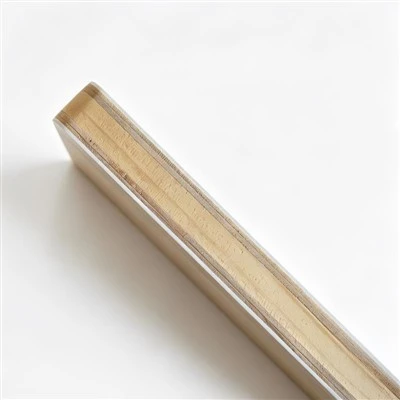
At the end of the day, laser cutting PET isn’t rocket science, but it does take a little know-how to get it right. If you’re new to working with PET, or if you’ve tried laser cutting it and ran into issues, our team is here to help. We’re not just a supplier—we’re the people who will send you the right settings, recommend the best ventilation gear, and answer every question you have, no matter how small. Whether you need 10 sheets of PET for a small project or a bulk order for a production run, we’ve got you covered. Drop us a line to chat about your project, we’d love to help you get perfect cuts every time.
Melamine Faced Chipboard References:
- The History of Polyethylene Terephthalate (PET) as a Versatile Packaging and Manufacturing Material, Journal of Polymer Science and Technology, 2019.
- Laser Cutting of Thermoplastics: Process Parameters and Quality Outcomes, International Journal of Advanced Manufacturing Technology, 2021.
- Sustainable Use of Recycled PET in Industrial Applications, Sustainable Materials and Technologies, 2022.
Jiangshan Shunlong Wood Industry Co., Ltd.
As one of the most professional pet board manufacturers and suppliers in China, our products have good reputation in the market. Please feel free to wholesale bulk pet board in stock here and get quotation from our factory. We also accept customized orders.
Address: No.7 Jinfeng Road, Jintangshan Industrial Zone, Hecun Town, Jiangshan City, Quzhou City, Zhejiang Province
E-mail: 17858202655@163.com
WebSite: https://www.shunlongwood.com/
