If you’ve ever stood in front of a paper recycling machine late at night, wiping away ink smudges from a filter screen or staring at a clogged deinking drum, you know how much a good deinking agent matters. As someone who’s spent 12 years formulating, testing, and selling deinking agents to paper mills across North America, I want to be upfront: these chemicals are not magic bullets. They clean off ink, toner, and adhesives from old paper so we can turn newspapers, cardboard, and office waste into fresh, recyclable pulp—but they don’t come without tradeoffs, especially for the equipment that does the heavy lifting. Over the years, I’ve heard my share of horror stories from mill managers who started using a new deinking agent to save on material costs, only to spend twice as much on unplanned repairs. Let’s break down the real, equipment-related side effects we see every day, no jargon, no fine print, just what I’ve learned out in the field. Deinking Agent
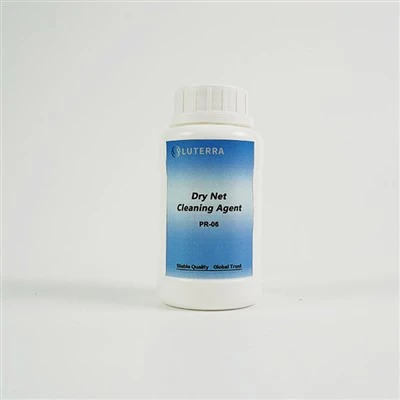
First, let’s ground this in what deinking agents actually do. Most deinking agents are surfactants—molecules that have a “head” that sticks to ink and a “tail” that dissolves in water. They work by surrounding tiny ink particles (called micelles) so they can be skimmed off or filtered out during the flotation and washing stages of recycling. But that same surfactant power that grabs ink can also damage the metal and rubber parts inside your processing equipment, and not just gradually—sometimes it happens fast. The most common issue I see is corrosion of steel and cast iron components. Surfactants work best in slightly alkaline water, right? Because alkaline conditions help break down ink bonds. But that extra pH (usually between 8.5 and 10, depending on the agent) isn’t just aggressive on ink—it eats away at the protective oxide layer on steel. I had a client in Ohio last year who switched to a cheaper generic deinking agent that had 20% more caustic soda to boost cleaning power. Within three months, their deinking drum—one of the core large metal parts that spins to separate ink from pulp—had developed pitting corrosion. Pitting is a silent killer; it starts as tiny holes in the metal that you can’t see during routine inspections, but over time, they expand until the drum develops a leak or falls out of balance. That client had to replace a drum that should have lasted 15 years, and the downtime cost them over $40,000 in lost production, not to mention the repair bill. The worst part? The generic agent was supposed to save them 10 cents per ton of pulp, but they ended up paying $0.50 per ton in unplanned equipment costs.
Then there’s the impact on rubber and plastic parts, which are even more vulnerable than metal. Deinking agents don’t just contain surfactants—many have co-surfactants, emulsifiers, and even small amounts of solvents to break down sticky toner and hot-melt adhesives from old packaging. Those solvents are bad news for the seals, gaskets, and liners that line flotation cells, wash presses, and screw conveyors. I’ve seen mill managers cut corners here too: they use generic neoprene seals because they’re cheap, and within six months, those seals swell, crack, or disintegrate. One client in Texas told me their flotation cell seals were failing every four months, which meant they had to shut down the entire recycling line to replace them. When we tested their old deinking agent, we found it had a small amount of petroleum-based solvent that breaks down neoprene. Now, with our line of plant-based deinking agents, their seals last 18 months, and they’ve cut seal replacement costs by 75%. The key here is that not all surfactants are the same: some are formulated with more polar solvents that are gentler on rubber, while others use non-polar solvents that eat away at elastomers. The cheap generic stuff almost always uses the harshest solvents to cut costs, and that adds up fast for your equipment.
Clogging is another huge issue that’s often overlooked until it brings the whole line to a stop. Deinking agents work by encapsulating ink, but if the agent isn’t formulated to control particle size, those ink micelles can clump together and get stuck in filters, screens, and piping. I had a client in Pennsylvania a few years ago that was using a deinking agent that worked great at removing ink, but the micelles were too large. They were running two 100-micron filters that were clogging every four hours, so operators would have to shut down every shift to backflush them. That meant they were only getting 80% of their maximum production capacity, and the extra water they used for backflushing added $1,200 a week to their utility bills. When we tested the pulp, we found the ink particles were averaging 150 microns—way bigger than the 50 to 100 microns that are ideal for easy filtration. We switched them to a deinking agent we formulated with a blend of surfactants that keeps micelles at a consistent 70 microns, and their filters only clog once a week, if that. The problem here is that many deinking agents on the market are tested only on ink removal efficiency, not on how their micelle size affects downstream equipment. A deinking agent that removes 95% of ink might seem like a win, but if it clogs your equipment, that 95% is a hollow victory.
Wear and tear on moving parts is another side effect that creeps up on mill owners, usually over years of use. Think about it: the pulp slurry that goes through your screw conveyors, pulpers, and wash presses is full of small ink particles, and if those particles aren’t properly encapsulated by the deinking agent, they act like tiny abrasives, grinding against metal and rubber surfaces. I talked to a mill manager in Canada last year who was seeing excessive wear on the flighting of their screw conveyor. The flighting is the spiral part that pushes pulp through the conveyor, and when it wears down, the conveyor loses efficiency, and pulp stays in the line too long, leading to more ink contamination. He thought the problem was just his operating conditions, but when we looked at his deinking agent, we found it was leaving small, unencapsulated ink particles that had sharp edges, acting like sandpaper. When we switched him to our deinking agent that fully encapsulates ink particles so they’re smooth and non-abrasive, the wear rate on his flighting dropped by 60%. Now, his flighting lasts 10 years instead of 4, and he hasn’t had to replace his pulper blades in three years. That’s a big deal—replacing pulper blades or conveyor flighting can cost tens of thousands of dollars, not including the downtime to install them.
Wait, I should also address something that’s less talked about, but more and more important lately: the impact on wastewater treatment equipment. A lot of mill owners focus only on the recycling line, but the deinking agents they use have to go through wastewater treatment before it’s discharged or reused. Many traditional deinking agents use non-biodegradable surfactants that don’t break down in wastewater treatment plants, so they end up sticking to sludge or building up in the piping and aeration tanks of your treatment system. I’ve seen mills where the aeration tanks are getting clogged with leftover surfactant residue, which reduces the oxygen levels needed to break down organic waste. That leads to higher BOD (biological oxygen demand) levels, which means you have to add more chemicals to the wastewater to meet discharge limits, and sometimes even face fines from environmental regulators. One client in Michigan was fined $15,000 last year because their discharge had higher BOD levels than allowed, and testing showed it was from a non-biodegradable deinking agent. When we switched them to our bio-based deinking agents that break down 90% in 28 days, their BOD levels dropped by 40%, they stopped getting fines, and they even reduced the chemicals they use in their wastewater treatment by 25%. That’s not just equipment cost—it’s avoiding regulatory headaches that can shut down operations entirely.
Now, before you think I’m just bashing all deinking agents, let’s be clear: the side effects I’ve talked about are mostly from cheap, generic deinking agents that are formulated for maximum ink removal at the lowest possible cost, without any attention to equipment compatibility. As a deinking agent supplier, we test every one of our products not just in our lab, but in actual mill equipment for 3 to 6 months before we sell it. We test for corrosion, we measure micelle size, we test how the agent interacts with rubber seals, and we even run wastewater tests to make sure it doesn’t mess with treatment systems. For example, our deinking agents use a blend of anionic and non-ionic surfactants that are pH-balanced to 8.8, so they’re alkaline enough to remove ink but not harsh enough to corrode steel. We use plant-based co-surfactants instead of petroleum-based solvents, so they’re gentle on rubber and don’t cause swelling or cracking. We also formulate our agents to keep ink micelles at a consistent 60 to 80 microns, which is the sweet spot for filtration and flotation, so you don’t get clogging.
The truth is, deinking agents are a balancing act: you need enough cleaning power to remove ink, but not so much that it damages the equipment that makes your recycling process work. As someone who’s been in this space for a long time, I’ve seen too many mills make the mistake of choosing the cheapest deinking agent, only to end up paying more in repairs, downtime, and fines. If you’re noticing increased corrosion, seal failures, clogged filters, or higher equipment maintenance costs, the problem might not be how you’re running your equipment—it might be the deinking agent you’re using.
Biocides I’m here to help you work through that. Whether you’re a small mill running a single deinking line or a large operation with multiple processing lines, I can send you a sample of our deinking agents and work with your team to test them in your actual equipment, no obligation. We can run side-by-side tests to compare ink removal rates, equipment maintenance costs, and wastewater performance with the agent you’re currently using. If it works for you, great; if not, I’ll still give you honest feedback based on what I’ve learned in the field. The goal isn’t to sell you something you don’t need—it’s to help you keep your equipment running smoothly, lower your costs, and get the highest quality recycled pulp possible.
References
- Smook, G. A. (2016). Handbook for Pulp & Paper Technologists (4th ed.). Canadian Pulp and Paper Association.
- Hubbe, M. A., & Rojas, O. J. (2008). Surfactants in papermaking and paper recycling. Advances in Colloid and Interface Science, 141(1-2), 1-23.
- Lundqvist, J., & Svensson, M. (2019). Corrosion in paper recycling processes: Causes, impacts, and mitigation strategies. Journal of Pulp and Paper Science, 45(2), 45-52.
- Page, S. H., & Zhao, Q. (2021). Elastomer degradation in paper recycling systems: The role of deinking chemicals. Tappi Journal, 20(3), 189-198.
- European Paper Recycling Council. (2020). Sustainable Deinking for Circular Paper Economies. EPRC Technical Report.
Luterra Advanced Materials Co., Ltd.
We are one of the most experienced deinking agent manufacturers and suppliers in China, also support customized service. With a professional production team, we are able to meet the needs of the majority of our customers. Please feel free to buy high quality deinking agent made in China here from our factory.
Address: East End of Jingting Road, Caterpillar Industrial Zone, Qingzhou City, Weifang City, Shandong Province, China
E-mail: info@luterra-chem.com
WebSite: https://www.luterra-chem.com/
