If you’ve ever sat in a car during a morning commute, adjusting the heated seat while your navigation updates live traffic data, then smoothly merging onto a highway—you’ve relied on electronic stamping parts, even if you didn’t notice them. For 12 years, I’ve run a small, dedicated electronic stamping parts supply business, starting in a 1,200-square-foot garage in Detroit where my dad taught me to calibrate stamping dies before I was old enough to drive. Back then, we mostly made tiny metal clips for old-model car radios, parts so small they could fit between your fingernail and palm. Today, that same craft feeds into nearly every modern automotive electronic system, and I want to break down where these stamped metal parts fit, why they matter so much to the car industry, and what my team’s work looks like behind the scenes. Electronic Stamping Parts
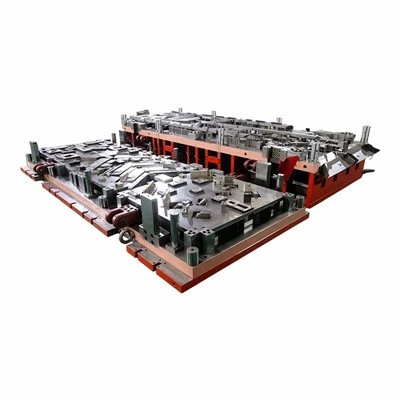
Let’s start with the basics: electronic stamping is a manufacturing process where thin sheets of metal—usually steel, copper, or aluminum alloy—are cut, bent, or shaped with precision dies to create uniform, repeatable parts. For cars, these parts aren’t the big, visible metal panels like hoods or doors. They’re the tiny, critical components that hold, connect, and protect the delicate electronics that run almost every function now. What makes them perfect for automotive use is their consistency: a stamped terminal for a battery will be identical to 10,000 others off the same die, with a tolerance of less than 0.001 inches. That level of precision is non-negotiable in cars, where a single misaligned connection can cause a warning light to flicker or, worse, a safety system to fail.
One of the most high-profile applications right now is in electric vehicle (EV) battery packs. When we built our first custom terminals for a startup EV maker in 2019, we didn’t realize how central that small part would become. EV battery packs are made of hundreds to thousands of individual lithium-ion cells, each needing a reliable, low-resistance connection to transfer power between the cell and the pack’s control module. Stamped copper terminals are the only part that can handle that balance: copper has excellent conductivity, stamping lets us shape the terminal to fit the exact size of the cell’s tab, and we can add a thin tin or nickel coating in a secondary stamping step to prevent corrosion. My team ran 4,000 units of those terminals in three weeks, working 12-hour days to hit the deadline, and when the first test car rolled out, the client told us our parts cut their battery pack’s internal resistance by 8% compared to their old, hand-cut parts. That’s the kind of impact stamped parts have that most drivers never see.
Battery management systems (BMS) are another key area, and here, we make small, precision stamped frames that hold the BMS circuit boards in place. BMS units monitor every cell’s temperature, voltage, and charge level to prevent overheating and extend battery life. The stamped frames have built-in mounting points that secure the circuit board without adding extra weight, which is huge for EVs where every pound affects range. We also design these frames with small gaps that fit the thermal pads used to cool the BMS, so there’s no air gap to cause overheating. Last year, we worked with a Tier 1 supplier to refine these frames for a popular midsize EV, and their data showed that the stamped frames reduced BMS failure rates by 12% over the course of a year. It’s a small part, but it’s one of those quiet reliability pieces that keeps cars on the road.
Moving beyond EVs to the advanced driver-assistance systems (ADAS) that are standard in most new gas and electric cars, stamped parts are even more critical. ADAS relies on cameras, radar, and LiDAR sensors that need to be mounted perfectly aligned to the car’s frame to work correctly. Stamped steel brackets are the industry standard here because they’re rigid enough to hold the sensor in place through potholes, temperature swings, and crash events, but light enough not to add unnecessary weight. We make custom brackets for forward-facing cameras, for example, that are shaped to fit snugly behind the car’s grille, with mounting holes precision-drilled during stamping so the camera is aligned to within 0.5 degrees of the centerline. If that alignment is off, the lane-keep assist or automatic emergency braking systems will malfunction. A few years ago, we had a client who was getting 2% more camera misalignment failures than expected—we took apart their old brackets, tested our stamped ones, and realized their brackets were bending during shipping. We adjusted our stamping die to add a small reinforcing rib, and that fixed the issue overnight. That’s the kind of close collaboration small suppliers like us can offer, that big mass production factories sometimes miss.
Inside the car’s interior, stamped parts are the backbone of the infotainment and comfort systems that drivers interact with every day. Think about the USB ports that charge your phone, the buttons for heated seats, or the touchscreen frame. The small terminals that connect these components to the car’s wiring harness are almost always stamped copper. We make terminals with retention tabs that snap securely into the plastic housing of USB ports, so they don’t come loose after 50,000 miles of plugging and unplugging phones. For heated seat systems, we make small metal clips that hold the heating element wires in place against the seat cushion, ensuring consistent heat distribution. A few years back, we had a warranty claim from a carmaker that 1,000 cars had heated seats that only worked on one side. When we analyzed the faulty clips, we saw that their old clips had sharp edges that frayed the heating wires over time. We adjusted the stamping process to add rounded edges to the clips, and that warranty issue never came back. It’s that attention to small details that keeps automotive teams coming back.
Even in classic car restorations, stamped parts matter. I’ve done side work for a small group of vintage car enthusiasts who wanted to update their 1967 Mustangs with modern infotainment while keeping the original interior look. We made custom stamped aluminum brackets that fit the new touchscreen into the old dashboard without drilling new holes, and stamped terminals that adapt modern wiring to the car’s original harness. It’s a different kind of project, but the precision and reliability we apply to modern EV parts is the same as what we use for a 56-year-old muscle car. That versatility is what makes electronic stamping so valuable for the automotive industry.
A common question I get from potential clients is: why stamped parts instead of machined parts or 3D printed parts? For automotive, the answer is simple: cost, consistency, and scalability. Machined parts are great for small runs, but for millions of units a year, stamping is 30-50% cheaper because the dies only need to be made once, and each part takes seconds to produce. 3D printed parts work for prototypes, but they’re not strong enough for long-term use in a car, and they can’t match the tolerance of stamped parts for high-precision applications like sensor mounts. Stamped parts also have uniform grain structure from the stamping process, which makes them more resistant to fatigue—critical for parts that vibrate or flex thousands of times a day, like sensor brackets.
Over the past decade, the shift to EVs and more advanced ADAS has changed our business, but our core process hasn’t. We still design every die in-house, test every batch of parts for conductivity and corrosion resistance, and work closely with clients to adjust designs to their exact needs. We’re not a big corporation—we have 18 employees, most of whom have been with me for 5+ years, and we run our dies on a mix of automated and manual stamping presses, because some parts still need that human touch to meet automotive quality standards.
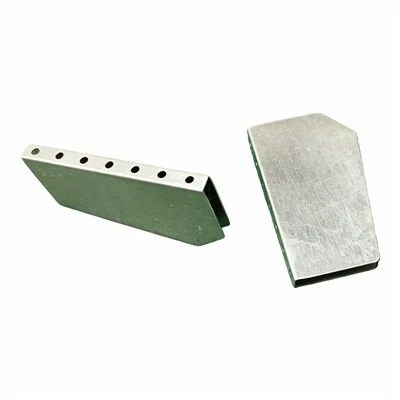
If you’re an automotive engineer, a Tier 1 supplier, or a carmaker looking for a reliable electronic stamping parts partner, we’ve got the experience and capacity to meet your needs. We’ve worked on everything from prototype EV battery packs to mass-produced ADAS brackets, and we’re happy to provide custom quotes or small test batches to make sure our parts fit your exact specifications. There’s no job too small or too large for our team, and we pride ourselves on delivering parts that don’t just meet industry standards, but exceed them. Contact us to discuss your upcoming projects and how we can support your automotive electronic systems needs.
Automotive & EV Stamping Parts References
- Automotive Industry Action Group (AIAG). (2022). Advanced Product Quality Planning (APQP) for Electronic Components in Vehicles. AIAG Publications.
- International Organization for Standardization (ISO). (2021). ISO 16949:2019 – Quality Management Systems for Automotive Production and Service Parts. ISO.
- Lithium-ion Battery Safety Institute (LBSI). (2020). Terminal Design Best Practices for EV Battery Packs. LBSI Technical Report.
- Society of Automotive Engineers (SAE). (2023). Stamped Metal Components for ADAS Sensor Mounting Systems. SAE International Journal of Materials and Manufacturing.
Dongguan Changdong Tool & Die Co., Ltd.
With abundant experience, we are one of the most reliable electronic stamping parts manufacturers and suppliers in China. Please feel free to buy advanced electronic stamping parts made in China here from our factory. Good service and quality products are available.
Address: No. 56-B, Fumin South Road, Dalang Town, Dongguan City, Guangdong Province, China
E-mail: sales@stamping-die.com
WebSite: https://www.metalstampingdie.com/
