If you’ve ever stood under a crisp, brightly lit sports field at 2 a.m. watching a local baseball practice or tuned into a weekend soccer league game on a clear night, you might have taken the lights for granted. But for anyone running a sports facility, maintaining those lights isn’t just about visibility—it’s about budget, game-day readiness, and long-term operations. As an LED sports lighting supplier, I get asked this question every week: “How long do these lights actually last?” The answer isn’t a simple number. It’s a balance of physics, how you use the lights, and the choices you make when you buy them. LED Sports Lighting
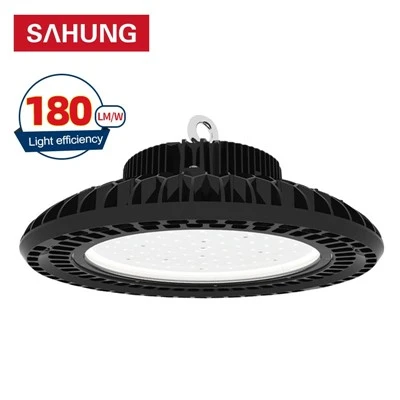
Let’s start with the core metric everyone hears about: lumen maintenance. Unlike incandescent or even HID (high-intensity discharge) lights that burn out abruptly, LED lights degrade slowly over time. Lumen maintenance is the measure of how much brightness an LED retains compared to its original output. Most lighting standards, like the IES (Illuminating Engineering Society) NA, define a useful life as the time it takes for an LED to drop to 70% of its initial brightness—that’s what we call L70. For high-quality LED sports lights designed for outdoor, heavy-use settings, that L70 lifespan usually lands between 50,000 and 100,000 hours. But wait, that number isn’t set in stone. A light run 24/7 will hit 50,000 hours much faster than one that runs 12 hours a day, only during games and practices. That’s a key point I always stress to clients: the advertised lifespan is a benchmark, not a hard deadline.
To put that 50,000-hour number in perspective for sports facilities: a high school soccer team that plays two hours a night, five nights a week, plus weekend tournaments, will get roughly 20 years of use out of a set of lights at that L70 mark. A college football stadium that runs its lights 16 hours a day, 7 days a week for game days, practices, and events? That same 50,000-hour L70 lifespan translates to about 8.5 years. It’s not that the lights stop working after that—they’ll just dim to a level that no longer meets sports league visibility standards, which is why L70 is the practical end of their useful life for athletic use.
Now, why is there such a big range between 50,000 and 100,000 hours? The answer comes down to two big factors: build quality and operating conditions. Cheaper LED lights often use lower-grade diodes, flimsy heat sinks, and generic power supplies. Heat is an LED’s biggest enemy. Every 10 degrees Celsius the internal temperature of an LED driver or diode rises, its lifespan cuts in half. That’s not an exaggeration. I’ve seen a budget set of LED sports lights installed at a local middle school burn out completely after just 12,000 hours—about 7 years of evening use—because their cheap heat sinks couldn’t dissipate the summer Texas heat, leading to thermal degradation that fried the diodes. High-quality suppliers like ours engineer lights with precision-machined aluminum heat sinks, isolated power supplies that stabilize voltage, and diodes tested to resist high temperatures and vibration (critical for outdoor fields, where wind and temperature swings are constant).
Vibration is another often-overlooked factor. Lights mounted on tall poles for football or baseball fields aren’t just sitting still—high winds, moving equipment, and even the rumble of vehicles around the facility can create vibration that loosens internal components. A poorly built light will develop loose connections over time, leading to flickering or total failure, even if the diodes themselves are good. That’s why when we design our sports lights, we add vibration-dampening mounts and secure every internal component with locking screws, not just standard fasteners.
Then there’s operating conditions that are specific to sports venues. Do you run your lights at full power every game, or can you dim them for practice when only a handful of teams are on the field? Sports leagues often set minimum brightness requirements, but adjusting light output to match activity cuts down on heat buildup, which extends lifespan. Similarly, areas with high humidity, salt air (if you’re near a coast), or dust (like a desert climate) require lights with sealed enclosures. IP65-rated enclosures, which are dust-tight and can withstand high-pressure water jets, don’t let moisture or debris get inside to corrode internal parts—something that cuts lifespan for unprotected lights in half, easy.
I also get asked a lot: “What about warranty?” A lot of suppliers will advertise a 5-year warranty, but the best LED sports lighting suppliers offer 10-year warranties, and that warranty is tied directly to lifespan. Our lights, for example, come with a 10-year warranty that guarantees they’ll reach at least 70,000 hours of L70 under normal operating conditions. That’s not a random number—it’s based on thousands of hours of testing we do in our lab, and real-world data from hundreds of facilities we’ve installed across North America. If a light fails within that warranty, we replace it no questions asked, which tells you we stand behind the build.
It’s also important to bust a common myth: LED lifespan isn’t dependent on how many times you turn them on and off. Old HID lights would degrade quickly if you cycled them on and off frequently, but LEDs are solid-state devices—they don’t have a filament that wears out when turned on. You can turn an LED light on and off as much as needed, even for quick practice sessions, and it won’t impact its lifespan. That’s a huge win for sports facilities that only need lights for occasional evening use, saving energy and extending life at the same time.
So, when is the right time to replace your LED sports lights? It’s not just when they “burn out” like incandescents. You’ll start to notice when brightness drops below league requirements—for example, a 50,000-hour L70 light might dim to 60% of original brightness after that point, which is too low for a high school playoff game. Or you’ll start seeing more frequent flickering, which usually points to a failing power supply, the most common part to replace in an LED light before the diodes themselves. The good news is that replacing a power supply is way cheaper and easier than replacing the entire light, so that can extend your investment even further.
Now, if you’re a facility manager, a coach, or someone looking to upgrade your sports lighting, this matters because it ties directly to your budget. A cheap set of LED lights might cost $20 per fixture less upfront, but if they only last 15,000 hours, you’re replacing them every 3-4 years, adding up to far more cost long-term. A high-quality set with a 75,000-hour L70 lifespan might cost $50 more upfront, but they’ll last 15-20 years, saving you thousands in replacement and maintenance costs. That’s the value we focus on as a supplier—helping facilities choose lights that work for their specific use case, so they don’t have to deal with constant breakdowns or frequent replacements.
At the end of the day, the lifespan of LED sports lights isn’t a number on a box—it’s a promise. It’s the promise that your lights will be bright enough for a championship game tonight, and still working for your kid’s rec league game 15 years from now. It’s the difference between a facility that’s reliable, low-maintenance, and a good investment, and one that’s always scrambling to fix broken lights.

If you’re considering upgrading your sports lighting, or have questions about which lights will work best for your field, reach out to discuss your specific needs. We’re here to walk you through options, answer questions about lifespan and maintenance, and help you find a solution that fits your budget and your schedule.
LED Explosion Proof Light References
- Illuminating Engineering Society (IES). "IES LM-80: Measuring Lumen Maintenance of LED Light Sources." 2020.
- Department of Energy (DOE). "LED Lighting for Outdoor Applications." 2022.
- American National Standards Institute (ANSI). "ANSI C136.31: LED Roadway and Area Lighting Equipment." 2021.
- National Sports Turf Managers Association (NSTMA). "Lighting Guidelines for Athletic Facilities." 2023.
- Lighting Research Center (LRC) at Rensselaer Polytechnic Institute. "Heat Effects on LED Lifespan and Performance." 2019.
Hangzhou Shanghong Electronic Technology Co., Ltd.
We are one of the most experienced led sports lighting manufacturers and suppliers in China. With a professional production team, we offer a wide range of products with superior quality. Please feel free to wholesale custom made led sports lighting from our factory.
Address: 5F, Building A, No.7 Xiyuan 2nd Road, Xihu District, Hangzhou City, Zhejiang, China.
E-mail: sales3@sahung.com
WebSite: https://www.sahung-light.com/
