Hey folks, let’s cut to the chase—if you’re running a healthcare campus, you know that HVAC isn’t just a “nice-to-have.” It’s a lifeline. Operating rooms, NICU wings, sterile processing units, even patient recovery suites—all of ‘em need tight, reliable climate control that never skips a beat. No “oops, the AC’s out” mid-surgery, no sweltering waiting rooms where patients wait for hours. That’s where district energy chiller plants for healthcare campuses come in. And as someone who supplies integrated chiller plants specifically for these environments, I’ve seen firsthand how they fix problems regular stand-alone units can’t. Healthcare Integrated Chiller Plant
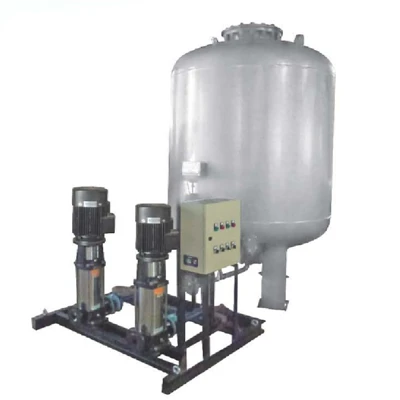
First, let’s break down what “district energy” even means here, plain and simple. It’s not one big chiller sitting in a basement of a single hospital. It’s a central chiller plant that pumps chilled water (or sometimes heated water, but we’re focused on chillers here) through insulated pipes to every single building on your campus—main hospital, outpatient centers, medical offices, even the staff parking garage’s climate-controlled equipment shed. Way back when, most hospitals ran their own small chillers in each building. But that’s like every office in a 10-story building running its own tiny heater in winter: inefficient, hard to maintain, and prone to breaking when you most need it.
So how does our integrated chiller plant actually work for a healthcare campus? Let’s walk through the day-to-day, because it’s not rocket science, but it’s designed for the messiest, most high-stakes environments. Start with the core: our integrated plant uses a set of high-efficiency centrifugal chillers (the workhorses for big spaces like hospitals) paired with variable-speed drives, not the old on/off units that waste energy. On a slow day, like a holiday when only the ER and a few clinics are up, the drives dial the chillers back—no blasting full power when you don’t need it. On a busy flu season or a heatwave, they ramp up fast, no lag.
But wait, healthcare has quirks no other building has. A regular office might run AC 9-to-5, five days a week. A campus has 24/7 loads: ER is always on, the lab’s freezers and diagnostic machines need consistent cooling, the sterile processing department runs shifts around the clock. Our integrated plant is built to handle that constant, varied demand. Let’s talk about distribution: we bury those insulated pipes deep, not above ground. Why? Because on a campus, you’ve got delivery trucks, maintenance equipment, landscaping crews driving over the ground all day. Above-ground pipes get damaged, leak, and take forever to fix—time you can’t afford when your NICU’s cooling system is on the line. We also add built-in backup loops, so if one section of pipe has a small leak, the system can reroute chilled water to keep every critical unit running. No shutdowns, no scrambling to patch a hole at 2 a.m.
Another big thing for healthcare: reliability is non-negotiable. I’ve had clients tell me their old stand-alone chiller broke during a thunderstorm, and it took the whole orthopedic wing down for 12 hours. That’s not just inconvenient—it’s dangerous. Our integrated plants come with redundant chillers, not just one backup. If a main unit goes down, a second kicks in before you even notice. We also add a dedicated emergency power hookups—directly tied to your campus’s generator, so you don’t have to rely on grid power that might falter during an outage. For hospitals, that’s a game-changer. No more relying on portable AC units cranked by noisy generators that disrupt patients.
Wait, let’s get a little specific about how chilled water gets from the plant to the building. When the chillers cool the water down to 40-45 degrees F, pumps push it through those insulated pipes to each building’s air handling units (AHUs). The AHUs blow that cold air through ducts, and the now-warmed water cycles back to the central plant to get re-chilled. It’s a closed loop, so almost no water is lost—way better than stand-alone units that have to drain and refill constantly, wasting water and money. And because it’s integrated, we can monitor every part of the system from a single dashboard—no climbing on roofs or crawling through basements to check a unit. Our techs get alerts if a pump is running slow, or a chiller’s efficiency is dropping, before it becomes a problem. That’s predictive maintenance, not reactive. I can’t tell you how many times we’ve caught a small issue on a Monday morning before it turned into a 24-hour outage on a holiday.
Now, let’s talk about the perks that matter for healthcare, not just the “it’s efficient” stuff. First, patient comfort is a big one. If a patient is recovering from surgery, they need a consistent 72 degrees, not a swing from 68 to 75 every time a floor’s stand-alone unit cycles. Our integrated system balances the temperature across every room, so no patient is too hot or too cold. Staff hate being too hot in scrubs, too—happy staff means better care, right?
Then there’s compliance. Healthcare has a ton of rules from OSHA, CDC, and state health departments about air quality and energy use. Our integrated plants are designed to meet all of those standards. For example, the AHUs can tie into your building’s air filtration systems, so the chilled air also goes through HEPA filters. That’s huge for infection control—especially during flu seasons or outbreaks, when you don’t want contaminated air circulating through the building. Old stand-alone systems often can’t connect that well to filtration, so hospitals have to add extra equipment, which is more expensive.
Cost savings are another big win, and I don’t just mean utility bills. Sure, the variable-speed drives cut energy use by 20-30% compared to stand-alone units, that’s a given. But maintenance costs? Our integrated plant has fewer moving parts total, because you don’t have 5-6 small chillers across campus to fix, just 2-3 in the central plant. Less stuff to service means less downtime for repairs, and lower parts costs. We also offer long-term service contracts tailored to healthcare campuses—24/7 on-call techs, because if something breaks at 3 a.m., you can’t wait until 9 a.m. for a repair.
Wait, let’s address a common myth: some folks think a central chiller plant is too big for a small campus. Nope. We build systems for every size—from a 2-building outpatient campus to a 10-building medical center with a research lab. We tailor the size of the chillers, the pipe network, and the backup systems to exactly what you need, no overkill. For example, a small campus might only need two 50-ton chillers, not the 200-ton units we use for big centers.
Another myth: district energy is only for new construction. We’ve retrofitted tons of old hospitals, too. I worked on a 50-year-old medical campus last year that had 8 different stand-alone chillers, all breaking every other year. We pulled them out, installed a central integrated plant, and within a year, their maintenance costs dropped by 40%. The old pipes were already there, so we just added insulation and upgraded the distribution loops—no need to tear up the whole campus, which would have been way more disruptive.
Let’s talk about a real example, no names, just a recent client. They had a 3-building campus with a main hospital, a cancer center, and a physical therapy clinic. Their old system had a chiller in each building, and last summer, two of them broke at the same time during a heatwave. The ER had to bring in 12 portable AC units, and the cancer center’s chemo wing got so warm they had to move patients to a cooler building. They reached out to us, and we designed an integrated plant with three chillers, redundant pumps, and a direct generator hook-up. Install took three weeks during a slow period, and now, last month’s heatwave? They didn’t even notice—system ran smooth, no outages, no portable units. That’s the kind of thing we live for.
Now, let’s get into the nuts and bolts of how it actually operates day in and day out. Let’s say it’s a Tuesday in October. The campus has 120 patients, 50 staff in the main hospital, the cancer center has 30 chemo patients, and the physical therapy clinic is closed for the evening. The central plant’s dashboard reads: total cooling load is 1,200 tons. We’ve got two 600-ton chillers running, each on variable speed, so they’re only using 80% power, not full blast. The chilled water is at 42 degrees, pumps are moving at 70% speed, because only the ER, NICU, and cancer center are running at full capacity. The other buildings are using less, so the system adjusts automatically—no one has to flip a switch. If the ER load spikes because of a car accident, the system cranks the chillers up 10% in 2 minutes, no lag. That’s the automation we build into every integrated plant—specifically tuned for healthcare’s uneven loads.
What about water conservation? Healthcare uses a ton of water for sterilization, lab tests, and staff use. Our closed-loop system uses 90% less water than stand-alone units, because we don’t have to drain and refill the pipes every few months. That’s not just good for the environment—it’s good for your water bill, which is a huge expense for hospitals. We also add water treatment systems to the closed loop, so the pipes don’t get scale buildup, which makes the chillers less efficient. No scale means longer life for the equipment, fewer repairs.
Now, let’s talk about what makes our integrated plants different from other suppliers. A lot of companies sell generic chiller units, but we specialize exclusively in healthcare campuses. That means we know the unique problems you face: 24/7 critical loads, infection control rules, tight budgets, and the need for zero downtime. We don’t just sell you a plant—we work with your facilities team during design, during installation, and for the life of the equipment. We train your staff to monitor the dashboard, so you don’t have to wait for us to call for small fixes. And our service team is on call 24/7, 365 days a year—no weekends off, no holidays, no “we’ll get to it next week.”
Wait, let’s be honest: there is an upfront cost to installing a central integrated chiller plant. It’s not cheap. But when you add up the savings on energy, maintenance, and avoided downtime, it pays for itself in 5-7 years. For example, the client I mentioned earlier with 8 old stand-alone chillers: they were spending $180,000 a year on maintenance and energy. After switching to our integrated plant, that dropped to $95,000 a year. That’s $85,000 a year in savings, which means the system paid for itself in 6 years. And that’s without counting the cost of downtime—when their old system broke, they lost an estimated $50,000 in patient rescheduling, overtime for staff, and emergency equipment rentals. Avoiding that kind of cost is a big part of the value.
Another thing: scalability. If your campus is growing—adding a new outpatient wing, a research lab, or a parking garage—our integrated plants are easy to expand. You don’t have to rip out the whole system, just add an extra chiller or extend the pipe network. We design the plants with extra capacity built in, so you can grow without a full overhaul. That’s perfect for healthcare campuses that are always expanding to meet patient needs.
Now, let’s wrap this up. If you’re reading this, you’re probably a facilities director, operations manager, or administrator at a healthcare campus. You know the stress of keeping the HVAC running when every second counts. District energy integrated chiller plants aren’t just a fancy upgrade—they’re a solution to the problems that cost you time, money, and even patient care.
But don’t just take my word for it. I’ve seen it work, over and over, for all different sizes of healthcare campuses. The key is working with a supplier who gets your needs, not just selling you a piece of equipment. If you’re tired of dealing with stand-alone chillers that break at the worst possible time, overpaying for energy and maintenance, and worrying about outages that put patients at risk, let’s chat. We can walk through your campus, look at your current system, and design a chiller plant that fits exactly what you need—no guesswork, no overkill, just reliable cooling when you need it.
Data Center Cooling Systems References
- American Society of Heating, Refrigerating and Air-Conditioning Engineers (ASHRAE). “HVAC Design Guidelines for Hospitals and Healthcare Facilities,” 2021.
- U.S. Department of Energy. “District Energy Systems for Healthcare Facilities: Efficiency and Reliability Benefits,” 2022.
- Centers for Medicare & Medicaid Services (CMS). “Healthcare Facility Safety and Compliance Standards for Mechanical Systems,” 2023.
- National Fire Protection Association (NFPA). “NFPA 99: Health Care Facilities Code,” 2024.
- Facility Management Journal. “Retrofitting Stand-Alone Chillers to District Energy Systems for Small to Mid-Size Healthcare Campuses,” 2023.
Hangzhou Dayu HVAC Engineering Co., Ltd.
As one of the most professional commercial hvac system manufacturers and suppliers in China, we have world-leading production equipment and strong manufacturing capabilities. If you’re going to buy customized commercial hvac system made in China, welcome to get quotation from our factory. For price consultation, contact us.
Address: Room 1004, Building 1, Xicheng Business Tower, Xihu District, Hangzhou City, Zhejiang Province, China
E-mail: info@hi-hvac.com
WebSite: https://www.hi-hvac.com/
