As a flame proof cable supplier, I get this question every single day from electrical engineers, project managers, and even small business owners who are trying to spec the right cable for their hazardous area installations: “What’s the bending radius for flame proof cables?” It’s not a trivial question, either—get it wrong, and you can damage the cable’s insulation, compromise its flame proof rating, and end up with a safety hazard that could cost you thousands in downtime, or worse. Flame Proof Cable
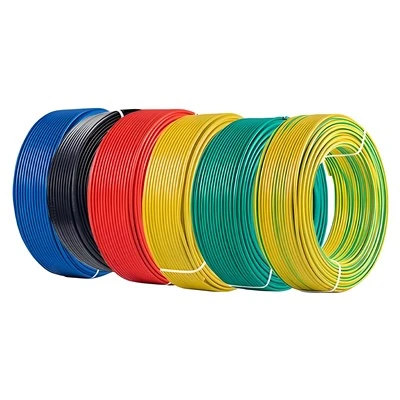
Let’s start with the basics. Flame proof cables (often called explosion-proof cables) are built for environments where flammable gases, vapors, or dust are present: oil refineries, chemical plants, mining operations, offshore platforms, even grain silos. Their construction is different from standard industrial cables. They have multiple layers: a conductive core, insulation, a jacket, and sometimes armor, all engineered to contain a flame inside the cable if a short circuit occurs, preventing it from igniting the surrounding hazardous atmosphere. That specialized construction is exactly why bending radius can’t be a one-size-fits-all number.
First, let’s define bending radius for anyone who might be new to the term. Bending radius is the minimum radius a cable can be bent around without causing permanent damage to its internal structure. For a cable laid straight, the radius is infinite; if you bend it into a perfect circle, the radius is half the distance across that circle. Too tight a bend, and you’ll stretch the outer insulation, crimp the inner conductors, or crack the armor—any of which can break the cable’s flame proof integrity.
Now, here’s the part that trips a lot of people up: there’s no single bending radius for all flame proof cables. The correct value depends on three key factors: the cable’s construction, its size, and whether it’s being bent during installation or in a long-term fixed position.
Let’s break down construction first. For example, a small 2-core flame proof control cable (used for low-power signals in a refinery) has a much more flexible core than a large 3-core power cable with steel armor, designed to carry 10kV for heavy machinery. Flexibility comes from how conductors are built: stranded conductors (made of multiple small wires twisted together) are more flexible than solid conductors. But even stranded conductors have limits. If you bend a cable too tight, the strands can separate, leading to uneven current load and overheating over time. Then there’s the jacket and insulation. Flame proof jackets are usually made of materials like PVC, chlorosulfonated polyethylene (CSPE), or cross-linked polyethylene (XLPE), all of which are rigid enough to contain flames. Bend them too sharply, and they can crack, especially in cold temperatures. Armor is another big one: steel or aluminum armor adds mechanical protection, but it’s stiffer. A cable with steel armor will almost always have a larger minimum bending radius than a similar unarmored cable of the same size.
Next, cable size. Smaller cables (10mm² or less) can usually be bent tighter than larger ones. A common rule of thumb I share with customers is that for unarmored flame proof cables, the minimum bending radius is 10 times the cable’s outer diameter (OD) for installation, and 5 times the OD for fixed, in-service use. Wait, let’s test that with an example: a 6mm² unarmored flame proof cable might have an OD of 8mm. That would mean a minimum installation bending radius of 80mm, and a fixed radius of 40mm. That makes sense—small, flexible control cables can handle a tighter bend than big power cables. For armored cables, though, that number jumps to 15 times the OD for installation, and 7.5 times for fixed use. A 50mm² armored flame proof power cable might have an OD of 30mm, so installation bending needs to be at least 450mm, and fixed at 225mm. If you try to bend that 50mm cable around a 300mm radius, you’re almost certainly going to kink the armor and damage the inner conductors.
But here’s the catch: those are general rules. The only official, correct number for any specific flame proof cable is the one listed in its technical data sheet. I’ve seen customers cut corners by using the standard 10x OD rule for an armored cable, only to find out the manufacturer’s spec says 20x OD—and when they test it after installation, the cable fails the flame proof integrity test. That’s a costly mistake. Technical data sheets are non-negotiable here. They’re written by the cable’s manufacturer based on rigorous testing: pulling, bending, thermal cycling, and flame exposure tests to make sure the cable meets standards like IEC 60079 (the international standard for explosion-proof equipment) or NEC Article 505 (for hazardous locations in the U.S.).
Let’s also talk about installation vs. in-service bending. A lot of people mix these two up. During installation, when you’re pulling cable through conduits, around equipment, or between racks, you’re going to make bends that are temporary? No, actually, most installation bends are permanent once the cable is terminated. But during installation, the cable is under mechanical stress from pulling. A tighter bend during pulling can cause more damage than a bend the same radius once it’s in place and not under tension. That’s why the installation bending radius is always larger than the fixed in-service radius. For example, a 4-core flame proof instrument cable might have a spec of 12x OD for installation and 6x OD for fixed use. Bend it at 8x OD during installation, and you risk damaging the conductors while pulling. Bend it at 8x OD once it’s secured, and you’re fine.
Another common question I get: what about cold temperatures? If you’re installing a flame proof cable in a mining site in winter, where temperatures drop to -20°C (-4°F), does the bending radius change? Yes, it does. Cable materials get stiffer in cold, so the minimum bending radius needs to be increased by at least 10% for installation in temperatures below 0°C (32°F). I learned this the hard way a few years back: we had a customer installing our flame proof power cables at an oil field in Alberta, Canada, in January. They followed the standard 15x OD for armored cables, but when they bent it at that radius, the XLPE insulation cracked. We checked the weather log—temp was -18°C, so we told them to bump the radius to 17x OD, and that fixed the issue. They later told us that mistake would have delayed their project for two weeks, so it was worth adjusting the spec for temperature.
Now, let’s address what happens if you bend a flame proof cable below the minimum radius. It’s not just a cosmetic issue. First, you can get mechanical damage to the conductors, leading to high resistance. That means when current flows through the cable, it generates more heat, which can be a fire hazard in a hazardous area. Second, the insulation or jacket can crack. If a flame breaks out inside the cable (from a short circuit), a cracked jacket means that flame can escape into the surrounding area, igniting flammable gases or dust—exactly what flame proof cables are supposed to prevent. Third, for armored cables, kinking the armor can break its continuity. The armor is often used as a ground path for the cable, so a broken ground path can lead to electrical faults, and also means there’s an extra point where the flame could escape. I’ve seen cables that looked fine after a tight bend pass a continuity test, but fail a flame test because the inner insulation was cracked. It’s not something you can see just by looking—you have to test it to confirm.
As a supplier, we make sure every one of our flame proof cables comes with a clear technical data sheet that lists both installation and fixed bending radii, plus temperature adjustments. But we also don’t just hand over a spec sheet and walk away. A lot of our customers are small companies with one or two engineers who don’t deal with flame proof cables every day, so we offer free technical consultations to help them size the bend correctly. For example, last month a customer in Mexico was installing our flame proof control cables for a new chemical plant. They had to route the cables around a large pump, and they weren’t sure what radius to use. We pulled up the cable’s spec, calculated the OD, and helped them figure out that a 25cm radius was enough for the fixed position, and 50cm for installation. That saved them from having to re-route the cables later, which would have cost them time and money.
There are also some common misconceptions I want to clear up. Some people think that all flame proof cables are flexible, so they can be bent as tight as standard industrial cables. That’s wrong. Flame proof cables have to meet stricter construction standards, so their core is often more rigid. Others think that bending radius only matters for power cables, not for control or instrument cables. No—signal cables in hazardous areas are just as important. If you bend a control cable too tight, you can damage the conductors that run safety instrumented systems, like gas detectors or shut-off valves. A faulty signal cable can lead to a delayed shut-off, which is a safety risk.
Another point: when multiple cables are routed together, the bending radius applies to the individual cables, not the group. You can’t bunch three 10mm² cables together and bend them around a radius that works for one cable. Each cable has its own minimum, so the radius has to be large enough for all of them when they’re placed side by side. For example, if three cables each need a 80mm minimum bend radius, the total radius needed when they’re grouped is still 80mm, not 240mm. That’s a good rule to remember to save space in cable trays.
Let’s also talk about standards, because that’s where the bending radius guidelines come from. IEC 60079-1 is the standard for flame proof enclosures (including cables), and it specifies that cables must be able to withstand bending without damage to their flame proof properties. NEC 501 and 505 (for Class I, Division 1 and Class I, Zone 1 hazardous locations) also reference bending radius in their installation guidelines. These standards aren’t arbitrary—they’re developed by engineers and tested in real-world hazardous conditions to make sure that if a cable is installed correctly, it will perform as intended.
So, putting this all together, the answer to “what is the bending radius of flame proof cables?” is: it depends, but the correct number is always the one listed in the cable’s technical data sheet, adjusted for installation vs. fixed use and temperature. If you’re not sure, don’t guess—reach out to a trusted supplier who specializes in flame proof cables, like us. We’ve been working with flame proof cables for over a decade, and we’ve helped hundreds of customers avoid costly mistakes with bending radius.
At the end of the day, flame proof cables are a critical safety component in hazardous areas. Getting the bending radius right isn’t just about making sure the cable fits through a conduit—it’s about protecting your workers, your facility, and the environment. Cutting corners on bending radius might seem like a small cost-saving measure, but it’s a risk that no one can afford to take.

If you’re planning a project that involves flame proof cables, whether it’s a new refinery, a mining expansion, or a chemical plant upgrade, we’re here to help. We can share technical specs, answer questions about bending radius, and help you source the right cables for your specific environment. Don’t hesitate to reach out for a consultation and procurement discussion.
Control Cable References:
IEC 60079-1: Explosive atmospheres – Part 1: Equipment protection by flameproof enclosures "d"
National Electrical Code (NEC) Article 505: Hazardous Locations – Class I, Zone 1, Class I, Zone 2
IEEE Standard 1580: Standard for Power Cables and Accessories for Use in Petroleum and Chemical Plants
Hebei Hualun Cable Co., Ltd.
As one of the leading flame proof cable manufacturers and suppliers in China, we offer a wide range of products with superior quality. We warmly welcome you to buy cheap flame proof cable for sale here from our factory. For price consultation, contact us.
Address: XINGBIEYING INDUSTRIAL ZONE, HEBEI PROVINCE CHINA
E-mail: steven@hualunchcable.com
WebSite: https://www.hualuncables.com/
