If you’ve ever ordered custom industrial parts for things like automotive components, machinery housings, or consumer electronics casings, you’ve probably heard the term “die casting mold” thrown around a lot. But let’s be real—most folks don’t stop to think about what goes into making those molds. I’m part of a team that supplies die casting molds for industrial parts, and let me tell you: polishing isn’t just a final step to make a mold look shiny. It’s a make-or-break process that directly affects how many good parts you get, how long the mold lasts, and even the cost of every unit you produce. Today, I’m breaking down exactly what we do when we polish one of our molds, no stuffy jargon, just the real deal from someone who’s done this for years. Industrial Parts Die Casting Mold
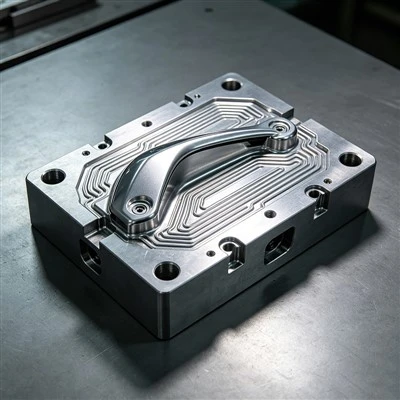
First, let’s set the scene right after a mold comes off the machining line. We’re talking brand-new, hot off the mill, rough as a cob. The machining leaves all sorts of bumps: tool marks, tiny burrs, slight surface inconsistencies that you can barely see with the naked eye. But when you pour molten metal—like aluminum, zinc, or magnesium—into that mold, those little imperfections turn into flaws on the finished part. A burr on the mold can make your part stick, or leave a rough edge that you have to grind off later, adding time and money to your production run. And if the surface is too rough, the metal can’t flow smoothly, leading to voids or incomplete fills that scrap parts left and right. So polishing starts here, but it’s not just grabbing a buffer and going to town—there’s a step-by-step process we follow to get it right.
Wait, first thing we do after machining: a quick clean. All that metal shavings, coolant residue, and machining grime? If we start polishing with that stuff still on there, it’ll scratch the surface worse than anything. We blast the mold with compressed air first, get all the loose gunk off, then wipe it down with a specialized degreaser that won’t leave a film. No shortcuts here—we’ve had guys skip this step before, and we ended up ruining a mold that cost thousands to make. Not worth it.
Next up: rough polishing. This is where we take care of the big stuff first, the visible tool marks and burrs. We use what’s called a flexible abrasive pad, usually a coarse one—like 80 or 120 grit—for this step. It’s not a big industrial buffer, by the way. For the actual mold surfaces, especially the cavities that shape the part, we use handheld tools because molds have all sorts of angles, curves, and undercuts that big machines can’t reach. Some might think we’d just run a grinder over it, but that’s how you remove too much material or create uneven spots. The key here is to follow the grain of the machining marks, not fight against them. If you go crosswise, you’ll leave tiny scratch lines that are way harder to fix later. We work methodically, moving the pad in the same direction as the mill’s tool path, making sure every inch of the surface gets the same amount of pressure. Too much pressure and you’ll deform the mold, too little and you’ll miss the marks. It’s kind of like sanding a piece of furniture, but way more precise because one wrong move and a mold is useless.
Once the rough polishing is done, we move to medium polishing. This is where we swap out the coarse pad for a medium one, usually 240 to 400 grit, depending on the mold’s material. Most of our molds are made from tool steel, which is hard enough to handle thousands of casting cycles but needs a delicate touch when polishing. Medium polishing is more about evening out the surface than removing big flaws. We’re still using handheld pads, but now we’re switching directions a little to blend out the rough marks from the first step. We also use a bit of cutting compound here—nothing too aggressive, just enough to get rid of the faint scratches left by the coarse pad. This step might sound small, but it’s crucial because if you skip it, the fine polishing after won’t work. You can’t polish a bumpy surface smooth, no matter how good your tools are.
Now, fine polishing. This is where the mold starts to look almost finished, and it’s the step that separates a good mold from a great one. We use fine grit pads, usually 600 to 1200 grit, and now we’re working in tiny circular motions instead of straight lines. Wait, why circular? Because circular motions don’t leave direction-specific scratches, so the surface is more uniform. For curved areas or tight corners, we might use abrasive films adhered to small sticks—like popsicle sticks, but ones that are rigid enough to hold the film and flexible enough to fit curves. We also switch to a polishing compound here, a mild one that’s fine enough to get a mirror-like finish without leaving residue. This step takes the longest, usually a few hours per mold, depending on its size. A small cavity for a phone cover is easy, but a big mold for a car engine housing has multiple cavities, undercuts, and small details that all need polishing. We can’t rush it—if we do, the mold will cause part defects, which means our clients are losing money every time they use it.
Then there’s superfinishing, which is the final step before the mold goes to quality control. This is where we get that ultra-smooth surface that makes metal flow like butter and parts slide out easily. We use even finer abrasives, sometimes as fine as 2000 grit, and often a felt wheel with a polishing paste. For parts that need an even higher finish—like medical device components or decorative parts for appliances—we might even use chemical polishing or electropolishing here. Chemical polishing uses a mild acid solution that eats away a tiny, uniform layer of the surface, removing any microscopic roughness that even the finest grit pads can’t reach. Electropolishing uses electricity to do the same thing, but it’s more controlled, so we can get a super consistent finish without damaging the mold. This step also helps with corrosion resistance, which is huge because molds are exposed to hot metal and coolant every single cycle. A corroded mold will wear out way faster, so a good superfinish adds years to a mold’s lifespan.
Wait, let’s talk about something that a lot of people don’t mention: we don’t just polish the flat surfaces. Every single part of the mold—even the tiny ejector pin holes, the vent slots, the corners of the cavities—needs to be polished. If you have a vent slot that’s rough, air can get trapped in the mold cavity, leading to incomplete parts. Ejector pins that are too rough will scratch the part when they push it out. We actually have little tools called “dent stones” and small abrasive brushes for those hard-to-reach spots. I once had a client come back to us because another supplier had made a mold where the vent slots were rough, and they were getting 20% scrap parts. We re-polished those vents, and their scrap rate dropped to less than 1%. That’s the stuff that matters, not just making the main surface shiny.
Now, after all that polishing, we do a full inspection. We use a microscope to check the surface for any remaining scratches or imperfections, and we also do a test run with a small piece of metal to make sure the part comes out smooth. If there’s a tiny flaw, we go back and fix it—no exceptions. We’d rather take an extra hour to polish right than have a client complain about a bad mold later.
So why does all this matter for our clients? Let’s break it down. A well-polished mold can produce up to 30% more good parts than a poorly polished one. Less scrap means lower production costs, faster lead times, and happier end customers. Also, a smooth mold surface makes parts easier to eject, which reduces wear on the ejector pins and other mold components, so the mold lasts longer. We’ve had clients use our molds for over 500,000 cycles before needing a refurb, whereas they were only getting 200,000 from a cheaper, less polished mold from another supplier. That’s a huge difference in cost over time.
I know a lot of companies try to cut corners on polishing to save money, but that’s a false economy. Sure, you might save a few bucks upfront, but every bad part you make, every mold that wears out early, every time you have to rework a part, ends up costing way more. We’ve built our business on supplying molds that are polished right the first time, so our clients don’t have to deal with those headaches.
If you’re in the industrial parts business—whether you’re making automotive parts, machinery components, consumer goods, something else entirely—you know that the mold is the backbone of your production. A good mold doesn’t just make parts; it makes your production run smooth, cheap, and reliable. If you’re looking for a supplier that gets that, that knows polishing isn’t just a step but a critical part of mold quality, we’re here to help. We can walk you through the whole process, help you pick the right mold for your parts, and make sure every mold we supply is polished to the highest standard so you can focus on your business, not fixing mold problems.
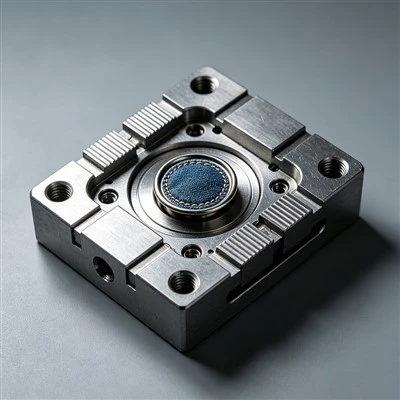
If you’re ready to chat about your die casting mold needs, just reach out. We don’t do generic one-size-fits-all molds—every project we take is tailored to your specific parts, and we’ll make sure the polishing process is customized to what you need, whether that’s a basic mold for high-volume parts or a precision mold for something like medical equipment. No sales pitches, no confusing jargon, just honest advice from people who’ve been in the die casting game for years.
Industrial Parts Die Casting Mold References
- Die Casting Mold Design and Manufacturing, Society of Die Casting Engineers, 2021.
- Surface Finishing for Die Casting Molds, Industrial Tooling Association, 2022.
- Cost-Benefit Analysis of Mold Polishing in High-Volume Die Casting, Journal of Manufacturing Processes, Volume 45, 2022.
Hangzhou Pullbull Technology Co., Ltd.
As one of the most professional industrial parts die casting mold manufacturers and suppliers in China, we also support custom service. Please feel free to wholesale advanced industrial parts die casting mold from our factory. Quality products and reasonable price are available.
Address: Rm 805 Gemini Build 1, #1785 JiangHan Rd, BinJiang, Hangzhou, China 310052
E-mail: markdan@menovo.cn
WebSite: https://www.pb-mold.com/
