If you’ve ever walked into a semiconductor fabrication facility, a pharmaceutical manufacturing suite, or a research lab developing life-saving medical devices, you’ve stepped into a clean room—but what makes those spaces more than just “extra-clean rooms”? For over a decade, I’ve helped design, build, and validate these controlled environments, and one of the most common questions I get from first-time clients is: Why do we need a dynamic test when we already do a static one? Let me break down what a clean room dynamic test is, why it matters, and how as a clean room supplier, I work with teams to make sure their spaces don’t just pass initial tests—they perform consistently when production or research is underway. Clean Room
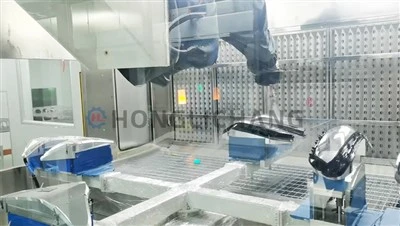
First, let’s define the basics to set the stage. A clean room is a space engineered to maintain extremely low levels of particulate contamination—think dust, microbes, or even stray chemical particles that could ruin sensitive products like microchips, injectable drugs, or laser components. These spaces are rated by the maximum number of particles per cubic meter (or cubic foot) of a given size; for example, an ISO Class 5 clean room allows only 3,520 particles of 0.5 microns or smaller per cubic meter, while a regular office space hovers around ISO Class 8, which is 352,000 particles of the same size.
Now, there are two core tests used to validate a clean room: static and dynamic. A static test is performed when the clean room is fully built, all filtration systems are running, but no equipment, personnel, or materials are inside. It’s the “empty room” check—it confirms that the HVAC system is delivering the correct airflow, pressure, and filtration performance when there’s no real activity. It’s important, but it’s not enough. That’s where the dynamic test comes in.
A clean room dynamic test is the validation process that simulates real-world activity inside the space to measure how the clean room performs when it’s being used for its intended purpose. The key here is “dynamic” — it’s not testing a static, unused space; it’s testing the space in operation, with all the variables that come with daily work. That’s why it’s the most critical step to ensure a clean room will actually protect your products or research.
Let me walk you through what a dynamic test actually looks like, because it’s not just counting particles randomly. First, we start by mapping the clean room’s layout: where workstations will be, where equipment (like chemical fume hoods, production machinery, or lab balances) will sit, where personnel will move, and how materials will be transported in and out. All of these factors affect airflow and contamination levels.
Next, we introduce what’s called “point sources” of particles to simulate real activity. This could mean having operators move in and out of the space (each person sloughs off about 100,000 particles per minute, even with clean room garments), running production equipment that generates small particles, opening and closing pass-through hatches for material transfers, or turning on local exhaust systems like fume hoods that pull air out of the clean room. Some clients also use what’s called a “particle counter mannequin” in certain types of clean rooms, especially those with strict ISO Class 1 or ISO Class 2 ratings, to mimic the particle output of a human without the variability of a live operator.
Once the test is running, we deploy multiple particle counters throughout the clean room—at breathing height for operators, near workstations, near airflow inlets and outlets, and at the clean room’s “exits” (like pass-throughs) where contamination could seep in. We measure not just particle count, but also airflow velocity and direction, room pressure (relative to adjacent spaces, which is designed to keep unfiltered air out), and even temperature and humidity, since many clean room operations require tight control of those too.
The results? A dynamic test will show you gaps that a static test misses. For example, I worked with a medical device manufacturer a few years ago who had a static test that passed with flying colors, but when we did a dynamic test with their production line running, we found that the air around one of their workstations had a 20% higher particle count than allowed. Turns out, their production equipment was creating a small “dead zone” where air wasn’t circulating properly, and when the operators were at the station, their movement was stirring up particles that got trapped in that zone. A quick adjustment to the workstation’s airflow diffuser fixed the issue, but if they had launched production without that fix, they would have been wasting thousands of dollars in defective product every month.
Another example is pharmaceutical clean rooms, where microbial contamination is a bigger risk than just particulate matter. A dynamic test for a drug manufacturing space would include monitoring for viable (living) microbes, not just non-viable particles. We’d simulate operations like vial filling, where tiny droplets of liquid can become airborne and carry microbes, and check that the clean room’s HEPA filters and air changes per hour (ACH) are enough to keep those levels below regulatory limits set by the FDA or EMA. I’ve seen a client almost miss a regulatory audit because their static test looked good, but the dynamic test showed that when their autoclave door was opened (a normal part of batch processing), it released a spike in microbial contamination that would have violated their quality standards.
Now, as a clean room supplier, my role in the dynamic test process is different from just running numbers. I don’t just show up with a particle counter and leave a report— I work hand-in-hand with the client’s engineering, operations, and quality teams to tailor the dynamic test to their specific use case. That means asking questions like: What equipment will you run? How many operators will be in the space at once? How often will materials be transferred? What are your critical process parameters that can’t have contamination?
For example, a semiconductor client building a clean room for 3nm chip manufacturing has way more stringent requirements than a university lab doing small-scale research. Their dynamic test has to account for tools like lithography machines that generate extreme levels of particulate matter, and the air changes per hour need to be calibrated to neutralize that. For the university, the test might simulate a small research team working on a prototype, with fewer particle sources.
One of the biggest mistakes I see clients make is trying to skip the dynamic test to save time or money. A static test costs a fraction of a dynamic test, and it’s easy to look at a perfect static report and think the job is done. But here’s the thing: clean rooms are only effective when they’re in operation. I had a startup client a few years back who cut corners on the dynamic test, launched their bioproduction clean room, and within two weeks, their yield dropped 30% because of unaddressed contamination hotspots. It cost them more to fix the dynamic-related issues and rework their production than if they’d just done the test right the first time.
Regulatory bodies around the world also agree with this. The FDA’s Current Good Manufacturing Practices (cGMP) require that clean rooms used for drug manufacturing are tested in a dynamic state, not just static. The International Organization for Standardization (ISO)’s 14644 series of standards— which govern clean room design and testing— specifies that dynamic testing is mandatory for final validation of any clean room used for controlled production. Skipping it isn’t just a bad idea; it’s a violation of regulatory requirements that can lead to product recalls, fines, or even shutdowns.
Let’s also talk about what happens after the dynamic test. It’s not a one-and-done event. Most clean rooms require periodic revalidation— usually annually, or after any major change to the space, like moving equipment, adding new machinery, or reconfiguring workstations. We also do “routine dynamic monitoring” during normal operations, which uses the same particle counting methods as the initial test to make sure the performance stays consistent over time. Last year, a client of mine noticed a slight increase in defective products and used our routine dynamic monitoring to find that one of their HEPA filters was partially clogged, which was reducing airflow in a critical area. They replaced the filter before any major issues, saving them hundreds of thousands of dollars in lost product.
Now, if you’re new to clean rooms, this might feel overwhelming. There are a lot of terms, a lot of standards, and a lot of variables to account for. That’s why working with an experienced clean room supplier isn’t just about installing walls and filters—it’s about guiding you through every step, from design to validation to ongoing monitoring. We’ll help you define what your dynamic test needs to include, based on your specific products, regulations, and operations. We’ll also translate the test results into actionable steps, not just a list of numbers. If there’s a contamination hotspot, we’ll adjust the airflow, reposition workstations, or recommend additional filtration to fix it, so you don’t have to figure it out on your own.
Whether you’re building a new clean room, upgrading an existing one, or struggling with contamination issues in your current space, the dynamic test is the backbone of ensuring your space does what it’s supposed to: protect your products, meet regulatory requirements, and keep your operations running smoothly. It’s not just a test—it’s an investment in the quality and consistency of your work.

If you’re ready to make sure your clean room performs when it counts, and you’re looking for a partner who understands both the science of clean rooms and the unique needs of your industry, I’m here to help. Let’s talk through your project, answer your questions, and make sure your clean room is built and validated to meet your goals.
Clean Room References:
- International Organization for Standardization. ISO 14644-1:2015, Cleanrooms and associated controlled environments — Part 1: Classification of air cleanliness by particle concentration.
- U.S. Food and Drug Administration. (2023). Guide to Inspections of Sterile Drug Products.
- American Society of Heating, Refrigerating and Air-Conditioning Engineers. (2021). ASHRAE Standard 52.2: Method of Testing General Ventilation Air-Cleaning Devices for Removal Efficiency by Particle Size.
- World Health Organization. (2020). Good Manufacturing Practices for Pharmaceutical Products.
Shenzhen Honglichang Machinery Manufacturing Co., Ltd.
We are one of the most professional clean room manufacturers and suppliers in China, also support customized service. Please feel free to buy advanced clean room for sale here from our factory. Welcome to contact us for quotation.
Address: No.A802, Building 2, Tianan Digital Plaza, Longgang, Shenzhen, China
E-mail: victor@honglichang.com
WebSite: https://www.honglichang-paint.com/
