If you’ve ever wandered into a distillation plant – whether it’s for spirits, industrial solvents, or even crude oil – you might spot a messy, tall column with metal trays stacked evenly inside, and wonder what those flat, holey plates are actually for. I’ve been a distillation plant supplier for over a decade, and I can’t tell you how many times clients (or even curious new hires) have asked me this: aren’t trays just… just placeholders? Nope. They’re the unsung workhorses that make separation work efficiently, and skip them, and you’re basically running a distillation column on fumes. Distillation Plant
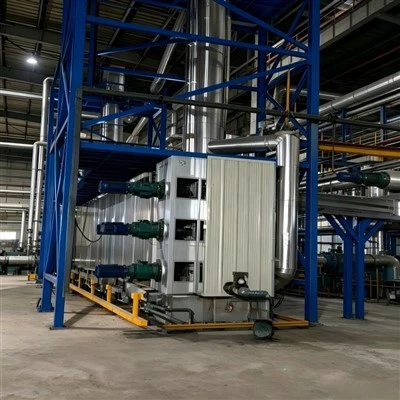
Let’s start with the basics, super quick. Distillation works because different liquids have different boiling points. If you mix two, say, ethanol (boils at 78°C) and water (boils at 100°C), heating them will turn ethanol into vapor way before water does. The goal is to pull the pure ethanol (or whatever your target product is) out, and leave the rest behind. That’s where trays step in.
Here’s how they actually work, in plain English. Each tray sits inside the column, spaced a few feet apart, and has two key things: holes (usually called “valves” or “sieve holes”) on the bottom, and a weir – a little raised lip around the edge that keeps a thin layer of liquid sitting on top of the tray at all times. Vapor from the tray below (or reboiler, which heats the bottom of the column) shoots up through those holes, and bubbles straight through that liquid layer. Think of it like blowing a straw through a glass of soda – you’re creating tiny bubbles that mix the vapor and liquid together. That mixing is everything. When vapor (rich in the lower-boiling stuff) hits the cool liquid on the tray, it gets stripped of any heavier, higher-boiling compounds it picked up from below. At the same time, the liquid on the tray absorbs some of the lower-boiling compounds from the vapor above it. This constant back-and-forth happens on every single tray. By the time vapor reaches the top of the column, it’s almost 100% your target product, and liquid at the bottom is thick with the heavy stuff you didn’t want.
Now, not all trays are the same, right? I see a lot of plants using sieve trays first – they’re simple, have tiny holes, no moving parts, super cheap to install and fix. But if you’re handling foamy liquids (like in a beer distillery), sieve trays can get clogged with foam, so we’ll usually switch to valve trays. Those holes have little metal covers that open when vapor pressure is high, and close when it’s low, stopping foam from building up. For really finicky processes, like separating super close-boiling chemicals, we use bubble cap trays – they have little caps over the holes that make the vapor bubble through the liquid extra evenly, though they’re pricier and need more maintenance.
Wait, let’s talk about what happens if you mess up tray design. I’ve seen this happen to small craft distillers, usually when they cut corners on their distillation plant. If you space trays too far apart, the vapor loses too much heat before it reaches the next one, so you get weak separation – your ethanol might still have a whiff of water or fusel alcohols. If you use the wrong tray type for your product, like using sieve trays in a plant that distills vegetable oil, the high viscosity of the oil doesn’t flow right off the weir, and the tray stops working. One client a few years ago tried to install a cheap, used distillation column with old bubble caps that were rusted – within a month, half the caps were blocked, so their yield dropped by almost 20%. That’s the thing: trays aren’t a “one size fits all” add-on, they’re tailored to your product, flow rate, and desired purity.
Another big role trays play: they let you control the column’s load, basically how much liquid and vapor are moving through it at once. If your plant is running at low capacity, like over a weekend when production is slow, tray holes can’t push enough vapor, and the liquid might start backing up – that’s called “flooding,” a nightmare where the whole column stops separating. Good tray design accounts for that, using valve trays specifically, so the little covers adjust to low vapor rates and keep mixing going. Conversely, if you’re cranking up production to meet demand, valves open wide, so you don’t get that backup. I always tell clients: if your column is unstable when you ramp up or down, it’s usually a tray issue, not a heater or pump problem.
Let’s shift to industrial distillation, not just spirits. For a crude oil refinery, the trays are way bigger, and they’re separating into fractions – gasoline, diesel, kerosene, all at different levels. Trays in a refinery’s atmospheric distillation column might be 10 feet wide, holding thousands of gallons of liquid. Here, the role of trays is even more critical: you can’t just separate gas from diesel; you need pure enough fractions to feed into the next process. Skip a tray here, and you end up with contaminated gasoline that won’t meet emissions standards, costing hundreds of thousands in fines. That’s why when we build industrial distillation plants, we don’t just spec trays – we run simulation tests to make sure each tray is doing its job.
Wait, what about structured packing? I know some plants now replace trays with that woven metal mesh, right? Yeah, it’s more efficient for some processes, but I still see trays as the workhorse for most plants, especially mid-sized ones. Structured packing is great for low-viscosity liquids, but if you’re dealing with dirty, high-viscosity streams, trays are way easier to clean and maintain. I had a client in the chemical industry who switched to packing for a while, but after a year, their packing got clogged with solid byproducts, and they had to shut down for two weeks to clean it. Swapping back to trays cost them a bit more upfront, but they’ve only had one 2-day shutdown in three years. Trays just hold up better in tough conditions.
Let me be real with you, as someone who’s built dozens of distillation plants. A lot of new plant owners focus on the big stuff – the column height, the reboiler size, the condenser – and overlook trays. But those are the parts that make separation actually work. You could have a 100-foot tall column, the best reboiler money can buy, but if your trays are the wrong type or poorly installed, you’re wasting 30-40% of your energy and material. I’ve seen small distillers who spent $50k on a fancy column, then cut $10k on cheap trays, and wonder why their product yield is 15% lower than it should be. It’s the trays, every single time.
Now, if you’re in the market for a distillation plant, or looking to upgrade your existing one, let’s talk. I don’t do generic off-the-shelf trays – I custom-design them based on your product, flow rate, and purity goals. Whether you’re a craft spirit maker needing valve trays that handle small batches, or an industrial refiner needing heavy-duty sieve trays, I can build them to fit your column perfectly. I also offer retrofits: if your current trays are failing, or your separation is off, we can swap them out without a full plant rebuild, saving you downtime.
Wait, a quick tip: if your plant is running, and you notice that the top product is still impure, first check your trays, not your equipment. A lot of operators will crank up the heater, which uses way more energy, when all they need is to unclog a tray or adjust the weir height. I get calls all the time from operators complaining about low purity, and once we check their trays, 9 out of 10 times, that’s the issue.
Let’s wrap this up, no jargon, promise. Trays in a distillation plant aren’t just metal plates inside a column – they’re the core of the separation process. They create the mixing between vapor and liquid that lets you pull out exactly what you want, when you want it. They adapt to your production load, hold up in tough environments, and directly impact your yield, purity, and energy costs. Mess with them, and your whole plant underperforms; get them right, and your process runs smooth, efficient, and profitable.

If you’re building a new distillation plant, or your current one isn’t delivering the results it should, let’s chat. I can help you spec the right trays, build a distillation plant that fits your needs, and make sure you’re not wasting money on parts that don’t matter. No sales pitches, just straight talk about what works for your process.
Batch Pyrolysis Plant References
- McCabe, W. L., Smith, J. C., & Harriott, P. (2005). Unit Operations of Chemical Engineering (7th ed.). McGraw-Hill.
- Kister, H. Z. (1992). Distillation Design. McGraw-Hill.
- American Institute of Chemical Engineers (AIChE). (2019). Distillation Tray Design and Operation Guidelines. AIChE.
Shangqiu Aotewei Environmental Protection Equipment Co., Ltd.
Shangqiu Aotewei Environmental Protection Equipment Co., Ltd. is one of the most professional distillation plant manufacturers and suppliers in China, also supports customized service. Please feel free to buy CE approved distillation plant at competitive price from our factory. Welcome to contact us for pricelist.
Address: No.88 Longhai Road, Liangyuan District, Shangqiu City, Henan Province, China
E-mail: colin@henanpower.com.cn
WebSite: https://www.aoteweitech.com/
