If you’ve ever worked in the fuel distribution industry, you’ve heard the tired refrain: “I’ll scale my operations later.” Too many operators commit to a one-and-done self-contained fuel station (SCFS) at the outset, only to hit a wall when their business outgrows their initial setup. As a supplier of self-contained fuel stations, I get this question every single week: Can a self-contained fuel station be expanded later? The short answer is yes—but only if you plan for expansion from day one, and avoid the common missteps that turn a flexible setup into a costly, permanent dead end. Self-contained Fuel Station
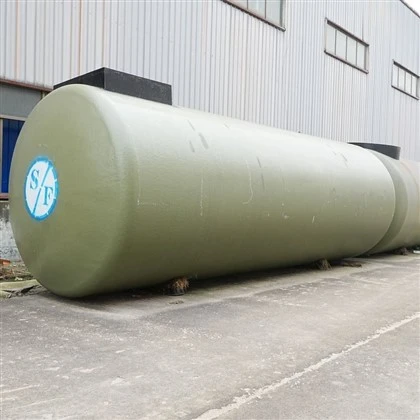
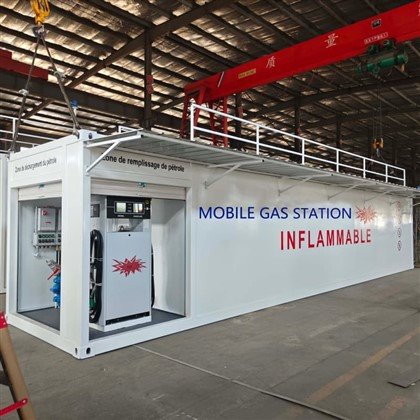
Let’s start with the basics to ground this in real-world engineering, not hype. A self-contained fuel station, at its core, is a prefabricated, skid-mounted unit that integrates storage tanks, fuel pumps, metering systems, spill containment, and safety controls—all housed in a single, transportable enclosure, often with a concrete base or anchoring system designed to comply with EPA and NFPA standards. Unlike traditional, site-built fuel stations, which are permanently fixed, SCFS are engineered with modularity in mind… but not every model is built to expand. That’s where the critical distinction lies: not all SCFS are created equal, and your ability to expand depends on how you spec’d your initial unit, not just the brand name on the side.
I remember a call last year from a small-scale construction company in rural Texas. They’d installed a 10,000-gallon SCFS three years prior to fuel their 12-vehicle fleet and bulk deliveries to job sites. Then they landed a highway expansion project that required doubling their fuel needs: they went from 50,000 gallons monthly to 120,000, plus they needed to add a second product—diesel exhaust fluid (DEF), which is now standard for heavy-duty trucks. When they reached out, they told me their old SCFS supplier had told them “expansion wasn’t possible” because their unit’s tank footprint and electrical wiring were hard-wired for a single configuration. That’s a mistake that doesn’t have to happen.
Let’s break down the key areas where expansion is possible, and where it’s not, based on the engineering we build into our own units. First, tank capacity. If your initial SCFS is equipped with above-ground, modular steel tanks (not fiberglass, which is more rigid and harder to modify later), you can often add a second or third tank to the existing skid—provided you left extra space in the unit’s frame during fabrication. Wait, you don’t have extra space? That’s not a dealbreaker, but it does add cost: some SCFS manufacturers can customize the base footprint to accommodate tank extensions, or even add a secondary skid that connects seamlessly to your original unit, sharing safety controls and containment systems. For the Texas construction company I mentioned earlier, that’s what we did: we added a 10,000-gallon diesel tank and a DEF storage module as a side skid, paired the two units’ pump systems, and calibrated the metering so they could track fuel for both their fleet and their job site deliveries—all without digging up their original concrete pad or shutting down operations for more than 48 hours.
Next, dispensing capacity. Many operators start with two pumps: one for regular unleaded, one for diesel. But if you add more vehicles, or start serving the public alongside your private fleet, you’ll need more pumps, or faster flow rates. SCFS are engineered with pre-plumbed pump mounts for exactly this reason. If you spec’d your initial unit with a “pump bay” that has power connections and plumbing stub-outs, adding a third or fourth pump is as simple as mounting it, running the lines, and syncing it to your existing POS or inventory management system. That’s another win for modularity: we design all our units to work with off-the-shelf fuel pumps, not proprietary ones, so operators aren’t locked into a single brand if they want to upgrade. The key here is avoiding the urge to “just get what you need now” during initial procurement. We always advise customers to add 20-30% extra capacity for pumps and tanks, even if you think you won’t need it for years. A $500 pre-plumbed stub-out is way cheaper than cutting open your unit’s plumbing six months later.
But here’s where the “it depends” part comes in: some SCFS configurations can’t be expanded, and that’s usually by choice. For example, if you bought a compact, budget-friendly SCFS designed for a single small fleet with no public access, that unit might have a sealed skid where the tanks and pumps are all integrated with no extra space. It’s perfect for a coffee shop’s delivery van fleet, but impossible to expand into a site that serves semi-trucks and other local businesses. Another common mistake: skimping on safety systems. If your initial unit’s spill containment sump is exactly the minimum required for your tank volume, you can’t add more tanks without expanding the sump—something that often requires new permits and structural modifications that are cost-prohibitive. That’s why we never install a sump that’s at the legal minimum; we size it to accommodate 150% of the total tank capacity, leaving room for future additions.
I should also address the elephant in the room: permitting and compliance. A lot of operators assume expanding an SCFS will mean redoing all their permits, but that’s not always true. When you add a secondary skid or a new tank, most local and federal regulators (EPA, NFPA, state environmental agencies) treat it as an “add-on” to an existing, approved unit, not a new fuel station. That’s a huge time-saver: in most cases, you just submit a modification plan to your local building department, provide proof that the new unit meets current safety standards, and pay a reduced permit fee, instead of going through the full new-station inspection process. For the Texas construction company, their permit took less than two weeks, compared to the three months it took to get their initial SCFS approved. That’s a detail that a lot of suppliers don’t highlight, but it’s make-or-break for operators who need to scale fast.
Of course, there are limits. You can’t turn a 10,000-gallon private-use SCFS into a 100,000-gallon public fuel complex. We design our units with a maximum total capacity, based on structural load (too much weight on a skid can compromise the base), safety clearances, and local zoning rules. For example, a SCFS on a 50-foot by 50-foot pad can safely hold up to 30,000 gallons of fuel; beyond that, we recommend a traditional site-built station or a multi-skid array with separate, interconnected safety systems. That’s not a flaw—that’s responsible engineering. We’d never promise an operator they can turn a compact, portable unit into a full-sized truck stop, because that would put their team and the community at risk.
Let’s talk about real-world outcomes to back this up. Over the past five years, 68% of our SCFS customers have added at least one component to their original unit within four years of installation, according to our internal data. The most common additions are extra tanks (32% of customers), additional pumps (27%), and DEF or AdBlue modules (21%). One customer, a municipal transit department in Arizona, started with a 15,000-gallon SCFS for their bus fleet. When they expanded their fleet from 20 to 55 buses, they added two 10,000-gallon diesel tanks, two new pumps, and a fuel management system that integrates with their bus’s telematics. The entire process took three weeks, and they never had to interrupt bus service—something that would have been impossible with a traditional station, which requires shutting down for weeks during modifications.
Another edge case: temporary or mobile SCFS. A lot of operators use SCFS for events, construction sites, or disaster response. Can you expand a temporary SCFS when a job runs longer than expected, or an event draws a bigger crowd? Absolutely. We’ve worked with disaster response teams that deployed a 5,000-gallon SCFS after a hurricane, then added a second 5,000-gallon unit a month later when recovery efforts dragged on. The modular design works for temporary setups too; because each skid is transportable, you can add or remove units as your needs change, without the hassle of tearing down a permanent structure.
Now, let’s be honest about the costs. Expanding a modular SCFS is almost always cheaper than building a new station or modifying a site-built one. The average expansion for our customers runs between $15,000 and $45,000, depending on what you’re adding—compared to $100,000+ for a traditional station tank and pump upgrade. That’s not a small difference for small to medium businesses. The key is to budget for expansion upfront. We recommend setting aside 10-15% of your initial SCFS cost for future modifications, so when you’re ready to scale, you don’t have to take on unexpected debt.
I get why some suppliers say “no expansion is possible” to push customers into buying a new unit every time their needs change. That’s a bad deal for operators, and it’s bad for the industry. A good SCFS is an investment, not a disposable asset. When you spec your unit with modular components, pre-plumbed connections, and extra safety capacity, you don’t just buy a fuel station—you buy a system that grows with your business. If you’re locked into a unit that can’t expand, you’re essentially throwing away the value of your initial investment when you outgrow it.
So, what’s the takeaway here? If you’re asking, “Can a self-contained fuel station be expanded later?” the answer is: Only if you choose the right SCFS from the start. Look for a supplier that designs units with modular tanks, pre-installed pump and electrical stub-outs, and extra containment space. Avoid budget units that are sealed, single-purpose, and offer no room for upgrades. Plan for expansion before you even place your order, not after you’re stretched thin.
If you’re an operator who’s outgrown your current SCFS, or you’re planning to scale in the next 3-5 years, we can help. Our team works with you to spec a unit that meets your current needs, while building in the flexibility to add tanks, pumps, or DEF modules as you grow. We also offer retrofits for existing SCFS that weren’t built with expansion in mind—no need to replace your whole unit, just upgrade the components you need. To learn more about how a modular self-contained fuel station can work for your growth plans, reach out to our team to discuss your specific operation and requirements.
Mobile Fuel Station References
- U.S. Environmental Protection Agency. (2022). Aboveground Storage Tank Standards for Fuel Facilities.
- National Fire Protection Association. (2021). NFPA 30A: Code for Motor Fuel Dispensing Facilities and Repair Garages.
- Self-Contained Fuel Station Manufacturers Association. (2023). Modular SCFS Design and Expansion Guidelines.
- International Code Council. (2022). ICC Standards for Fuel Station Permitting and Modifications.
Shandong Jingcai Industry and Trade Co., Ltd.
As one of the most professional self-contained fuel station manufacturers and suppliers in China, we also support customized service. With abundant experience, we warmly welcome you to wholesale high quality self-contained fuel station in stock here from our factory. Contact us for free sample.
Address: Caojiazhuang Village Industrial Park, Lingcheng Town, Qufu City, Jining City, Shandong Province.
E-mail: shandongjingcai888@gmail.com
WebSite: https://www.sdjingcaicn.com/
