As a seasoned supplier of fan impellers, I’ve witnessed firsthand the critical role these components play in various industrial and commercial applications. One of the most fascinating aspects of fan impellers is their dynamic response to load changes. Understanding this response is not only crucial for optimizing the performance of fans but also for ensuring their reliability and efficiency over time. Fan Impeller
The Basics of Fan Impellers
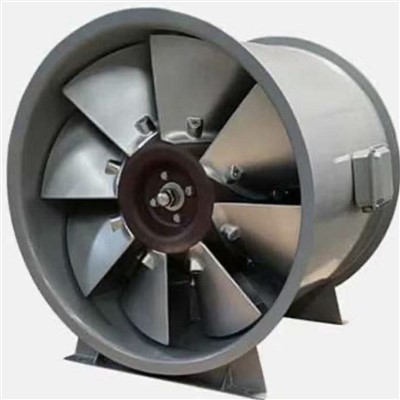
Before delving into the dynamic response of fan impellers to load changes, it’s essential to understand the basic principles of how they work. A fan impeller is a rotating component that consists of a series of blades attached to a central hub. When the impeller rotates, it creates a pressure difference that draws air into the fan and expels it in a specific direction. The shape, size, and number of blades on the impeller can significantly affect its performance, including its ability to generate airflow and pressure.
Dynamic Response to Load Changes
The dynamic response of a fan impeller to load changes refers to how the impeller behaves when the load on the fan changes. Load changes can occur due to various factors, such as changes in the system resistance, variations in the airflow requirements, or fluctuations in the power supply. When a load change occurs, the fan impeller must adjust its performance to maintain the desired airflow and pressure.
One of the key factors that affect the dynamic response of a fan impeller is its inertia. Inertia is the property of an object to resist changes in its motion. A fan impeller with a high inertia will take longer to accelerate or decelerate in response to a load change compared to an impeller with a low inertia. This means that a high-inertia impeller may experience a delay in its response to load changes, which can result in fluctuations in the airflow and pressure.
Another important factor is the design of the impeller blades. The shape and angle of the blades can affect the impeller’s ability to generate airflow and pressure. For example, blades with a more curved shape can generate more airflow but may also require more power to operate. On the other hand, blades with a flatter shape may be more efficient but may generate less airflow.
The type of motor used to drive the fan impeller also plays a role in its dynamic response. Different types of motors have different torque characteristics, which can affect the impeller’s ability to accelerate and decelerate. For example, a motor with a high starting torque can quickly accelerate the impeller to its operating speed, while a motor with a low starting torque may take longer to reach the desired speed.
Impact on Fan Performance
The dynamic response of a fan impeller to load changes can have a significant impact on the performance of the fan. If the impeller is unable to adjust quickly to load changes, it may result in fluctuations in the airflow and pressure, which can affect the efficiency and reliability of the fan. For example, if the airflow drops below the required level, it may cause the system to overheat, leading to equipment failure.
In addition, the dynamic response of the impeller can also affect the noise level of the fan. When the impeller experiences sudden changes in load, it can cause vibrations and noise, which can be a nuisance in some applications. By optimizing the dynamic response of the impeller, it is possible to reduce the noise level and improve the overall comfort of the environment.
Strategies for Optimizing Dynamic Response
To optimize the dynamic response of a fan impeller to load changes, several strategies can be employed. One approach is to use a variable frequency drive (VFD) to control the speed of the motor. A VFD allows the motor to operate at different speeds, which can help the impeller adjust more quickly to load changes. By adjusting the speed of the motor, the impeller can maintain a constant airflow and pressure, even when the load on the fan changes.
Another strategy is to design the impeller with a low inertia. This can be achieved by using lightweight materials or by reducing the size of the impeller. A low-inertia impeller can accelerate and decelerate more quickly, which can improve its dynamic response to load changes.
In addition, the design of the impeller blades can also be optimized to improve its dynamic response. For example, blades with a more aerodynamic shape can reduce the drag and improve the efficiency of the impeller. By using advanced computational fluid dynamics (CFD) simulations, it is possible to optimize the blade design to achieve the best possible performance.
Importance for Different Industries
The dynamic response of fan impellers to load changes is crucial in various industries. In the HVAC (heating, ventilation, and air conditioning) industry, fans are used to circulate air and maintain a comfortable indoor environment. The ability of the fan impeller to adjust to load changes is essential for ensuring the efficiency and reliability of the HVAC system.
In the industrial sector, fans are used for a variety of applications, such as ventilation, cooling, and material handling. The dynamic response of the fan impeller can affect the performance of these applications, which can have a significant impact on the productivity and profitability of the business.
In the automotive industry, fans are used to cool the engine and other components. The ability of the fan impeller to respond quickly to load changes is crucial for maintaining the optimal temperature of the engine, which can improve the performance and reliability of the vehicle.
Conclusion
Pump Impeller In conclusion, the dynamic response of a fan impeller to load changes is a critical aspect of its performance. By understanding the factors that affect the dynamic response and employing strategies to optimize it, it is possible to improve the efficiency, reliability, and comfort of fan systems. As a fan impeller supplier, we are committed to providing high-quality products that are designed to meet the specific needs of our customers. If you are interested in learning more about our fan impellers or have any questions about their dynamic response to load changes, please feel free to contact us. We look forward to the opportunity to discuss your requirements and provide you with the best possible solutions.
References
- Cumpsty, N. A. (2004). Compressor Aerodynamics. Krieger Publishing Company.
- Stepanoff, A. J. (1957). Centrifugal and Axial Flow Pumps: Theory, Design, and Application. John Wiley & Sons.
- White, F. M. (2011). Fluid Mechanics. McGraw-Hill.
Shandong Shunye Stainless Steel Co., Ltd.
Shandong Shunye Stainless Steel Co., Ltd. is one of the most professional fan impeller manufacturers and suppliers in China, also supports customized service. Welcome to buy bulk cheap fan impeller made in China here and get quotation from our factory. For price consultation, contact us.
Address: Shandong Province, Binzhou City, Wudi County, Liubao Town, Zhangdong Road, Duliucun Village
E-mail: sales@wdshunye.com
WebSite: https://www.shunyecasting.com/
