As a supplier of standard sprockets, I’ve had the privilege of delving deep into the world of these essential mechanical components. One question that often arises is, "What is the tooth profile of a standard sprocket?" In this blog post, I’ll explore this topic in detail, sharing insights based on my years of experience in the industry. Standard Sprocket

Understanding the Basics of Sprockets
Before we dive into the tooth profile, let’s briefly review what a sprocket is. A sprocket is a toothed wheel that engages with a chain, belt, or other perforated or indented material. Sprockets are commonly used in a wide range of applications, including bicycles, motorcycles, industrial machinery, and conveyor systems. They play a crucial role in transmitting power and motion from one component to another.
The Importance of Tooth Profile
The tooth profile of a sprocket is a critical factor that determines its performance and compatibility with the chain or belt it is designed to work with. A well-designed tooth profile ensures smooth engagement and disengagement of the chain, reduces wear and tear on both the sprocket and the chain, and minimizes noise and vibration during operation.
Types of Tooth Profiles
There are several types of tooth profiles used in standard sprockets, each with its own advantages and applications. The most common types include:
ANSI Tooth Profile
The American National Standards Institute (ANSI) tooth profile is one of the most widely used tooth profiles in the industry. It is designed to provide smooth and efficient engagement with ANSI standard roller chains. The ANSI tooth profile has a specific shape and dimensions that ensure proper clearance between the teeth and the chain rollers, reducing friction and wear.
ISO Tooth Profile
The International Organization for Standardization (ISO) tooth profile is another popular tooth profile used in sprockets. It is similar to the ANSI tooth profile but has some minor differences in dimensions and shape. The ISO tooth profile is designed to work with ISO standard roller chains and is commonly used in applications outside of North America.
Modified Tooth Profiles
In some cases, manufacturers may use modified tooth profiles to meet specific application requirements. These modified profiles may feature changes in the tooth shape, size, or angle to improve performance, reduce noise, or increase the service life of the sprocket and chain.
Design Considerations for Tooth Profile
When designing the tooth profile of a standard sprocket, several factors need to be considered, including:
Chain Compatibility
The tooth profile must be designed to be compatible with the specific type and size of chain it is intended to work with. This ensures proper engagement and disengagement of the chain, reducing the risk of chain skipping or derailment.
Load Capacity
The tooth profile should be able to withstand the load and torque transmitted by the chain without excessive wear or deformation. This requires careful consideration of the material properties, tooth size, and shape.
Speed and Efficiency
The tooth profile should be designed to minimize friction and wear, allowing for smooth and efficient operation at high speeds. This can be achieved through the use of proper lubrication and the optimization of the tooth shape and surface finish.
Noise and Vibration
The tooth profile should be designed to reduce noise and vibration during operation. This can be achieved through the use of a smooth and gradual engagement and disengagement process, as well as the optimization of the tooth shape and spacing.
Manufacturing Process of Sprocket Tooth Profile
The manufacturing process of a sprocket tooth profile typically involves the following steps:
Material Selection
The first step is to select the appropriate material for the sprocket based on the application requirements. Common materials used in sprocket manufacturing include steel, cast iron, and aluminum.
Machining
The sprocket blank is then machined to the required shape and dimensions using CNC machining centers or other precision machining equipment. This involves cutting, grinding, and drilling operations to create the teeth and other features of the sprocket.
Heat Treatment
After machining, the sprocket may undergo heat treatment to improve its hardness, strength, and wear resistance. Common heat treatment processes include quenching and tempering, case hardening, and induction hardening.
Surface Finish
The final step is to apply a surface finish to the sprocket to protect it from corrosion and wear. This may involve plating, painting, or coating the sprocket with a protective material.
Quality Control of Sprocket Tooth Profile
Quality control is an essential part of the sprocket manufacturing process to ensure that the tooth profile meets the required specifications and standards. This typically involves the use of precision measuring equipment and inspection techniques to verify the dimensions, shape, and surface finish of the teeth.
Dimensional Inspection
The dimensions of the teeth, such as the pitch, tooth thickness, and tooth height, are measured using calipers, micrometers, or other precision measuring tools to ensure that they are within the specified tolerance.
Profile Inspection
The shape of the tooth profile is inspected using profile measurement equipment, such as a coordinate measuring machine (CMM), to ensure that it matches the design specifications.
Surface Finish Inspection
The surface finish of the teeth is inspected using surface roughness testers to ensure that it meets the required standards for smoothness and quality.
Applications of Standard Sprockets
Standard sprockets are used in a wide range of applications across various industries, including:
Power Transmission
Sprockets are commonly used in power transmission systems to transmit power and motion from one component to another. They are used in applications such as bicycles, motorcycles, industrial machinery, and automotive engines.
Conveyor Systems
Sprockets are used in conveyor systems to move materials from one location to another. They are used in applications such as manufacturing plants, warehouses, and distribution centers.
Agricultural Equipment
Sprockets are used in agricultural equipment to transmit power and motion from the engine to the various components of the equipment. They are used in applications such as tractors, combines, and irrigation systems.
Marine Equipment
Sprockets are used in marine equipment to transmit power and motion from the engine to the propeller or other components of the vessel. They are used in applications such as boats, ships, and offshore platforms.
Conclusion
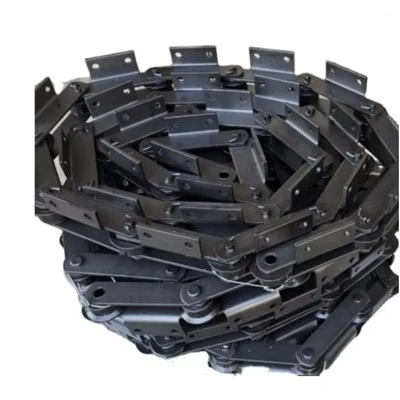
Leaf Chain In conclusion, the tooth profile of a standard sprocket is a critical factor that determines its performance and compatibility with the chain or belt it is designed to work with. A well-designed tooth profile ensures smooth engagement and disengagement of the chain, reduces wear and tear on both the sprocket and the chain, and minimizes noise and vibration during operation. As a supplier of standard sprockets, we understand the importance of providing high-quality products that meet the specific requirements of our customers. If you have any questions or need more information about our standard sprockets, please don’t hesitate to contact us. We will be happy to assist you with your procurement needs and discuss how our products can benefit your application.
References
- ANSI/ASME B29.1M-2011, Roller Chain and Sprockets
- ISO 606:2015, Roller chains, bush chains, link plates and associated components – Dimensions, types and characteristics
- Machinery’s Handbook, 31st Edition, Industrial Press Inc.
Anhui Huihuang Chain Transmission Co., Ltd.
Anhui Huihuang Chain Transmission Co., Ltd. is one of the most professional standard sprocket manufacturers and suppliers in China, also supports high quality customized service. Please feel free to buy discount standard sprocket made in China here from our factory. Welcome to contact us for pricelist and free sample.
Address: NO.3 YONGQIANG ROAD. JIXI.ANHUI.CHINA
E-mail: 754590660@qq.com
WebSite: https://www.hhchains.com/
