Hey there, load pin enthusiasts! I’m proud to be part of a top – notch load pins supply business. Today, I’m gonna dig deep into how the installation orientation can mess with the measurement accuracy of load pins. Load Pins

First off, let’s get clear on what load pins are. In simple terms, load pins are high – tech devices used to measure forces in various applications, like cranes, lift systems, and bridges. They’re kind of like the unsung heroes in the world of force measurement. They work by converting the mechanical force applied to them into an electrical signal, which can then be read and analyzed.
Now, let’s talk about installation orientation. You might think that as long as the load pin is properly attached, the orientation doesn’t really matter. Well, you’d be dead wrong! The way you install a load pin has a huge impact on how accurately it can measure the load.
Let’s start with the horizontal and vertical orientations. When a load pin is installed horizontally, it’s usually dealing with shear forces. Shear forces act parallel to the surface of the pin. Think of a seesaw; the forces acting on the pivot point of the seesaw are shear forces. When a load pin is installed horizontally, it’s designed to accurately measure these shear forces. But if it’s installed in an improper horizontal orientation, say at an angle instead of perfectly flat, the forces acting on the pin get all wonky. The load might get distributed unevenly across the pin, and the electrical signal produced won’t accurately represent the actual force being applied.
On the other hand, when a load pin is installed vertically, it’s mainly dealing with compressive or tensile forces. Compressive forces squeeze the pin, while tensile forces pull it apart. Take a construction crane’s cable system, for example. The load pin installed vertically in the cable anchor has to deal with the tensile forces as the crane lifts heavy objects. If the vertical load pin isn’t installed straight up and down, the forces acting on it will have components in other directions. This means that the measurement will include these unwanted forces, and the accuracy of the load measurement will take a nosedive.
Another thing to think about is the angular orientation. Even a small angular deviation during installation can lead to significant errors in measurement. For instance, let’s say a load pin is supposed to be installed at a 0 – degree angle relative to a specific reference point. If there’s a 5 – degree angular error, the forces acting on the pin will change in a non – linear way. The pin’s internal sensors are calibrated to work under specific force – direction conditions. When the angular orientation is off, these sensors detect forces that are a combination of the actual load and some unwanted force components due to the misalignment. As a result, the measurement can be way off from the real value.
The environmental conditions also play a role in how installation orientation affects accuracy. In a harsh industrial environment with a lot of vibrations, even a properly installed load pin can face challenges. But if the installation orientation is wrong, these vibrations can cause even more drastic problems. For example, a horizontally installed load pin that’s slightly tilted might be more susceptible to vibrations that could introduce additional forces and errors in the measurement. Similarly, in a high – temperature environment, thermal expansion can affect the load pin. If the installation orientation is incorrect, the effects of thermal expansion on the pin’s measurement accuracy can be exacerbated.
Now, I know all this might seem a bit overwhelming, but don’t worry. At our supply business, we’ve got you covered. We understand the importance of proper installation orientation, and that’s why we offer a ton of support to our customers. We’ve got a team of experts who can provide detailed installation guides and offer on – site training if needed. We’ll make sure that you know exactly how to install your load pins in the right orientation to get the most accurate measurements.
Besides just installation support, we also ensure that our load pins are of the highest quality. Our products are rigorously tested to ensure that they can withstand different installation conditions and still provide accurate measurements. We use advanced materials and state – of – the – art manufacturing techniques to make sure that each load pin is as reliable as possible.
So, if you’re in the market for load pins, whether you’re a small – scale operation or a large industrial company, we’re the ones to call. We’re not just about selling products; we’re about building long – term relationships with our customers. We want to help you solve your force – measurement problems and make sure that your projects run smoothly.
Investing in high – quality load pins and ensuring proper installation orientation is crucial for your business. It can save you time, money, and headaches in the long run. Don’t let inaccurate measurements derail your projects. Reach out to us today to discuss your specific needs. We’re eager to work with you and provide you with the best load pin solutions available.
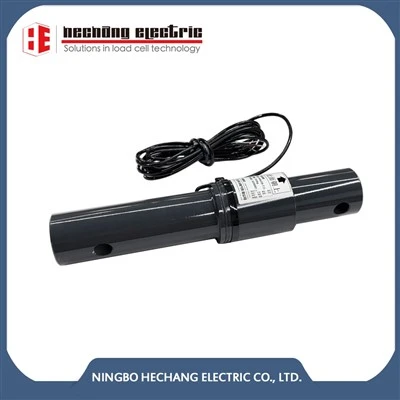
In conclusion, the installation orientation of load pins is a critical factor that can’t be ignored when it comes to measurement accuracy. As your go – to load pin suppliers, we’re committed to helping you navigate through all these challenges. So, what are you waiting for? Contact us now to start your journey towards more accurate force measurements.
Tension Load Cells References:
- "Force Measurement Handbook" by John A. Harris
- "Engineering Principles of Load Cells and Sensors" by David W. Wright
- Industry research reports on load pin applications and installation guidelines
Ningbo Hechang Electric Co., Ltd.
As one of the most professional load pins manufacturers and suppliers in China, we also support customized service. We warmly welcome you to buy advanced load pins for sale here from our factory. If you have any enquiry about cooperation, please feel free to email us.
Address: No.66 Yongmao West Road, Ningbo, China
E-mail: info@hcesensor.com
WebSite: https://www.hechangsensor.com/
