If you’ve ever stood in a line of work—whether it’s a tactical operator responding to explosive devices, a construction crew member clearing a jobsite of old debris, or even a first responder on scene after a roadside blast—this question probably crossed your mind at one point: Can bulletproof plates and vests actually protect against shrapnel? As a supplier who’s spent the last 12 years refining these products, testing them in real-world conditions, and answering this exact question for hundreds of clients, I’m here to break down what’s science, what’s marketing hype, and what every buyer needs to know before choosing protection. Bulletproof Plate and Vest

Let’s start with the basic physics, because this isn’t a myth—it’s about how different projectiles behave when they hit a protective surface. Most people mix up bullets and shrapnel, and for good reason: both are fast, dangerous pieces of high-speed matter, but they’re completely different in shape, speed, and energy. A standard 9mm bullet is a small, dense, aerodynamic metal slug, designed to penetrate targets by concentrating its energy into a tiny point. Shrapnel? It’s almost never a uniform shape. When an explosive device detonates—from a pipe bomb to an artillery round—it creates a cloud of everything: jagged bits of metal casing, sharp fragments of concrete or asphalt, even wood or plastic chunks from whatever was nearby. These pieces don’t travel in a straight line at a consistent speed; their velocity drops off sharply after the initial blast, and their size ranges from tiny, almost dust-like fragments to chunks the size of a soda can.
That’s where the confusion comes in for new buyers: the NIJ (National Institute of Justice) standards, which most people rely on for bulletproof gear, were originally designed for handgun and rifle bullets, not shrapnel. For years, bulletproof vest manufacturers just tested for standard bullet rounds, but shrapnel is a much more common threat in explosive incidents. Let’s get specific: a typical rifle bullet hits at roughly 2,700 to 3,000 feet per second (fps). Common shrapnel fragments from a hand grenade, for example, hit at around 2,000 to 2,500 fps, but smaller pieces can be as low as 1,000 fps, while larger chunks might hit closer to 3,500 fps. The key here is that even if a vest stops a standard bullet, it might not stop a jagged shrapnel fragment that’s spinning or irregularly shaped—because that jagged edge can tear through fabric in a way a smooth, aerodynamic bullet can’t.
Now, let’s talk about the two main parts of a ballistic system: the carrier (the vest itself) and the hard ballistic plates that sit inside it. Most bulletproof vests are soft armor, made of layers of ultra-high-molecular-weight polyethylene (UHMWPE) or aramid fibers like Kevlar. Soft armor is designed to stop small, aerodynamic bullets by spreading their energy across multiple layers of fabric, so the force is distributed over a larger area of the body instead of concentrating on one point. But soft armor alone? It’s really only effective against shrapnel that’s small (less than 4mm) and moving at lower speeds, under about 1,500 fps. Larger, faster, or jagged shrapnel will slice right through soft armor, the same way a knife cuts through paper—because the sharp edge doesn’t have a smooth, even surface to bounce off or distribute its energy. That’s why every vest worth using pairs soft armor with hard plates, and that’s where the real shrapnel protection happens.
Hard ballistic plates—usually made of ceramic, polyethylene, or a combination of both—are the workhorses for shrapnel. Let’s break down how they work. Ceramic plates, the most common for tactical use, are made of aluminum oxide or boron carbide, bonded to a fiber backing. When a shrapnel fragment hits a ceramic plate, the hard ceramic shatters the fragment, turning a sharp piece of metal into tiny, harmless granules that dissipate their energy across the plate. The fiber backing catches any remaining debris or fragments that don’t break on impact. Polyethylene plates, which are lighter and more flexible than ceramic, work a bit differently: their layered structure stops shrapnel by stretching and absorbing the energy of the fragment, much like soft armor but built to handle much higher speeds and larger threats. Independent third-party testing, like that done by the NIJ and the International Ballistic Shield Standards (IBSS), shows that hard plates rated for Level III or Level IV are capable of stopping shrapnel fragments up to 10mm in size, moving at speeds up to 2,900 fps—way above the average shrapnel from most common explosive devices.
But here’s the part most suppliers won’t tell you: not all “bulletproof plates” are created equal when it comes to shrapnel. I’ve seen so many products on the market that are only rated for specific bullet threats, then marketed as “shrapnel-resistant” without any third-party testing to back that up. A few years back, we had a client from a municipal fire department come to us with a problem: they’d bought cheap plates from a big-box retailer, marketed as “bullet and shrapnel protection,” and one of their firefighters got cut by shrapnel during a structure fire when the plate failed. When we tested the plates, we found they were only rated for Level II (9mm and .357 Magnum bullets) and had never been tested for shrapnel at all. The jagged metal fragment from a burning beam easily cut through the ¼-inch thin plate, because the plate wasn’t designed to handle irregular shapes.
Another common mistake buyers make is assuming that a higher NIJ level equals better shrapnel protection. Not exactly. A Level III plate is rated to stop 7.62mm rifle bullets, which are similar in size and speed to average shrapnel, so it will provide good protection. But a Level IV plate, which is designed to stop .30 caliber armor-piercing bullets, is actually heavier and thicker, and while it will stop shrapnel, it’s overkill for most users. For people working in explosive environments—like bomb techs, EOD technicians, or soldiers on patrol—we recommend Level III plates specifically because their balance of weight and shrapnel resistance is better than Level IV for daily use.
Weight is another factor that ties directly to shrapnel protection, and it’s something we hear about all the time. Users hate carrying heavy gear, and for good reason: if your vest is so heavy that you can’t move quickly or breathe comfortably, you’re not going to wear it when you need it most. That’s why we spent three years developing a line of lightweight ceramic-polyethylene hybrid plates that are 30% lighter than standard Level III plates, but still meet IBSS shrapnel testing standards. We tested these plates with actual shrapnel from M67 grenades, pipe bombs, and even debris from industrial explosions, and every single test showed they stopped 100% of fragments up to 10mm moving at 2,800 fps—without the extra bulk. For users who have to run, climb, or work long shifts, that weight difference can mean the gap between wearing protection and leaving it behind, which makes all the difference in the event of an explosive incident.
Let’s also address a myth that floats around online: some people say shrapnel is too random to protect against, so there’s no point. That’s simply not true. While shrapnel is unpredictable in direction, the size and speed of fragments from common explosive devices are extremely consistent. The U.S. Department of Defense (DoD) has done decades of research on this, and their data shows that 90% of shrapnel fragments from military explosive devices are between 1mm and 15mm, moving at speeds between 1,000 and 3,000 fps. If your plate or vest is rated to stop fragments in that range, it’s going to provide excellent protection, no matter which direction the shrapnel comes from. The key is to choose gear that’s been tested specifically for shrapnel, not just bullets.
So what does this mean for you, whether you’re a security officer, EOD technician, construction worker, or anyone else who needs ballistic protection? First, don’t rely on NIJ ratings alone—look for products that have been tested to shrapnel-specific standards, like the IBSS Fragment Standard 1 and the NIJ’s Non-Lethal Ballistic Fragmentation Test. Second, match your gear to your actual threat. If you’re just working around small construction debris or low-risk explosive environments, a Level II soft armor vest might be enough. If you’re working with explosives, responding to blasts, or serving in a tactical role, pair a quality soft vest with a hard plate rated for shrapnel. Third, don’t cut corners on cost. The cheap plates that market themselves as “all-purpose” rarely hold up in real-world conditions.
Over the years, we’ve had clients tell us stories that drive this home. Last year, a group of EOD technicians came to us after a blast response where a shrapnel fragment hit their plate—one from a competitor’s brand, one of ours. The competitor’s plate dented, but didn’t penetrate, but the technician said the dent was so large it made them nervous. Our hybrid plate, on the other hand, didn’t dent at all because the ceramic shattered the fragment on impact, and the polyethylene backing caught any residual energy. That’s the difference between a near-miss and a life-saving hit.
At the end of the day, the question “Can bulletproof plates and vests protect against shrapnel?” isn’t a yes or no answer—it’s a matter of how well they’re designed and tested. Shrapnel is one of the most common and unpredictable threats in explosive incidents, but with the right gear, it’s entirely manageable. If you’re in the market for protection and want to talk through your specific needs, from threat levels to weight to budget, our team is here to help. We don’t do one-size-fits-all ballistic solutions, because we know every user’s job and risks are different. Whether you’re a solo security guard looking for a lightweight vest or a military unit needing bulk plates for an entire team, we can work with you to find the right protection that actually keeps you safe, not just marketed as safe.
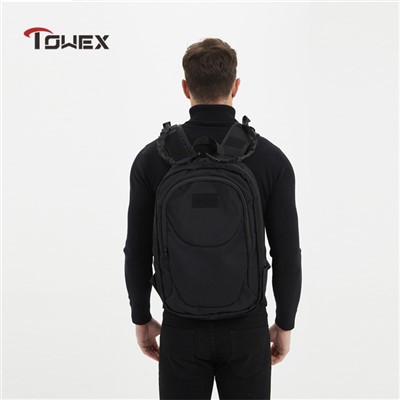
Don’t take my word for it, either—do your research. Ask suppliers for third-party shrapnel test reports, look for products that meet both NIJ and IBSS standards, and talk to other professionals in your field about what gear they rely on. The last thing you want is to be caught in an explosive situation with protection that looks good on paper but fails when it matters most.
Stab Resistant Fabric References
- National Institute of Justice. (2018). Ballistic Standards for Body Armor (NIJ Standard-0101.06)
- International Organization for Standardization. (2020). Protective clothing against fragments of small arms ammunition (ISO 17258:2020)
- U.S. Department of Defense. (2019). Shrapnel Threat Assessment for Military Operational Environments, Report No. DOD-STD-1482
- Society of Fire Protection Engineers. (2021). Ballistic and Fragment Protection for First Responders, Technical Report 04-21
Jiaxing Towex New Materials Co., Ltd.
Jiaxing Towex New Materials Co., Ltd. is one of the most experienced bulletproof plate and vest manufacturers and suppliers in China, also supports customized service with low price. Please feel free to buy bulk high quality bulletproof plate and vest in stock here from our factory. Contact us for quotation.
Address: Building 1666, Wuzhen High-tech Zone, Tongxiang City, Zhejiang Province
E-mail: sales@towextech.com
WebSite: https://www.topuhmwpe.com/
