If you’ve ever spent hours calibrating a moisture analyzer only to get inconsistent readings mid-test, or watched a melting point apparatus stall right before a critical run, you know that even the most reliable physical and chemical properties testing equipment only works as well as the care you put into troubleshooting its everyday hiccups. As someone who’s spent the last 12 years building, servicing, and supporting these tools, I’ve sat across from lab techs, quality control managers, and small-scale R&D owners who come to me frustrated by the same recurring issues—issues that don’t require a replacement part or a $10,000 service call, just a little know-how and a routine check. Today, I’m pulling back the curtain on the most common problems we see, how to fix them, and how we support customers when even these fixes don’t stick. Let’s dive in. Physical and Chemical Properties Testing Equipment

Inconsistent or Unreliable Readings: The #1 Headache We See
This is the complaint I hear most often: results that jump 0.5% one day, or vary between two identical samples run 10 minutes apart. The first thing I always ask lab teams to check isn’t the equipment’s calibration certificate—it’s the environment around the tool. Chemical and physical testing is hyper-sensitive to small changes, and most labs don’t account for this until something goes wrong.
Take moisture analyzers, for example. If your lab’s humidity is above 45% (a good baseline for most analytical work), the analyzer’s weighing pan will absorb ambient moisture even while it’s running a test, skewing final readings by 1-2%. I saw this last quarter at a food testing lab that was failing their monthly audits because their moisture content for grain samples kept coming in higher than the official standard. Their issue was a cracked window on the lab’s fume hood that let in humid air; once we sealed it, their readings stabilized within two runs.
Next, check the consumables. It sounds obvious, but I’ve seen a lab use filter paper that was left open on a bench for three days (absorbing moisture) in a gravimetric analysis for volatile solids. Or a melting point capillary that had tiny hairline cracks—enough to let air seep in and cool the sample before it reached its melting point. For titration systems, a dirty burette tip with dried reagent will cause inconsistent drop sizes, leading to volume errors. We always include a 10-page consumable checklist with every system we sell, and we send a free restock of critical items (like weighing pans and capillaries) to new customers after 90 days to catch this mistake early.
Another easy fix here: verifying the balance adjacent to your test equipment. Most physical tests require precise mass measurements, and if your analytical balance is off by even 0.001 g, it will throw off every related test (moisture, ash content, density) that uses it. We recommend a daily check with standard calibration weights, not just a monthly service—small shifts happen from moving a bench, a draft from a door opening, or even a new piece of equipment sitting next to the balance.
Equipment Failing to Power Up or Stall Mid-Run
I once got a frantic call at 7 a.m. from a cosmetics manufacturer whose viscosity analyzer died right as they were testing a new lotion formula for a regulatory submission. The issue? Their lab had installed a new surge protector that didn’t supply enough power to the analyzer’s heating element. Modern physical testing equipment, especially tools with heating modules (like melt indexers or Soxhlet extractors), draws a consistent, specific amount of current that generic surge protectors often can’t handle. The fix was swapping in a heavy-duty surge protector we recommend for all our heating-based systems, and that lab hasn’t had a power-related stall in 18 months.
If your equipment won’t turn on at all, skip the “reset the circuit breaker” step first (though that’s worth checking) and look for loose connections that are easy to miss. We see this all the time when lab staff move equipment to make room for new samples, or wipe down the bench and accidentally nudge a power cord or USB connection inside the unit. For test chambers that cycle temperature unevenly (another common stall issue), the culprit is often a clogged air filter. Over time, dust and lab particulates build up in the chamber’s ventilation system, forcing the unit to work too hard to reach set temperatures and causing it to time out or shut down. We recommend changing these filters every 6 months, a task that takes 5 minutes and avoids $500 service calls.
Temperature Drift in Heating or Cooling Systems
Temperature-related issues are the second-most common problem, and they fall into two buckets: tools that can’t reach their set temperature, or ones that overshoot by several degrees mid-test. For ovens, melt indexers, or boiling point apparatus, the first check is the thermocouple (or temperature probe) placement. Too many lab staff leave the probe sitting on top of a sample or close to the oven wall, instead of inserting it directly into the sample’s matrix, which is where the actual reading needs to be. Last year, a pharmaceutical R&D team was struggling to get consistent melt flow index (MFI) readings for a new polymer, because they had the thermocouple pressed against the oven wall instead of inside the polymer pellet. Once we showed them how to anchor the probe to the sample holder, their MFI values matched their supplier’s specs on the first run.
If temperature drift persists after checking placement, it’s often a calibration issue that doesn’t require a full service call. For most heating systems, you can run a quick verification test using a reference material with a known melting point (like caffeine, which melts at 238°C, or benzoic acid at 122.4°C). If the equipment’s reading differs by more than 0.5°C from the reference, a two-point calibration (set to the reference’s low and high end) will fix the drift. For cooling systems, like density meters that need to hold temperatures at 20°C for precise liquid measurements, the issue is often a dirty refrigerant line. A quick flush of the line and a recharge (we include this step in our free annual check for customers within 100 miles of our service team) solves most drift issues without the need for new parts.
Clogging in Fluid-Based Testing Equipment
For equipment that uses liquids—titration systems, Soxhlet extractors, Karl Fischer titrators, or viscosity baths—clogging is an almost daily problem if filters and lines aren’t maintained. A Karl Fischer titrator, for example, relies on a dry solvent to measure moisture content; if the inlet line is clogged with dried reagent, it won’t pull in enough solvent, leading to “no endpoint” errors. We recommend flushing Karl Fischer lines weekly with ethanol, and replacing the solvent cartridge every 30 runs, to avoid this.
Soxhlet extractors, used for fat content testing or solvent extraction, often get clogged with sample residue over time. If your extractor isn’t cycling solvent correctly, or taking longer than expected to complete a run, take out the thimble and rinse it with hot detergent and water to dissolve dried sample. For stubborn clogs, we use a 10% nitric acid soak, which removes organic residue without damaging the glass parts—something many lab techs don’t know is safe for Soxhlet equipment.
The Small, Easy Fixes That Solve 80% of Problems
After 12 years in this business, I’ve learned that 80% of equipment issues are preventable with small, consistent habits, not expensive repairs. Here’s the quick checklist we give every new customer when we deliver their equipment:
- Wipe down equipment exteriors with lint-free cloth weekly to prevent dust buildup on control panels or vents.
- Document every calibration and repair run in a simple log—this helps spot trends (like consistent drift after 100 runs) before they become critical.
- Run a blank test before every batch of samples: a blank run with no sample lets you catch issues like leftover reagent or uncalibrated probes before you waste expensive samples (like pure polymers or clinical reagents).
When we do get a call that these fixes don’t solve, our service team is on-site within 48 hours for most customers, and we offer video troubleshooting sessions for remote teams that can’t wait for a technician. We also stock most common replacement parts (thermocouples, filters, burette tips) in our warehouse, so we can ship them the same day if a customer needs them.
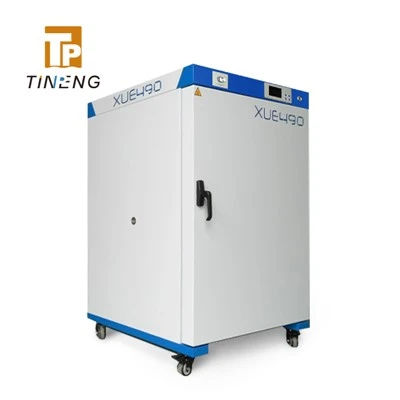
If you’re tired of equipment that derails your testing schedule, causes audit failures, or wastes your lab’s time and budget, our team can help you audit your current setup, train your staff on routine maintenance, and offer competitive pricing on new or refurbished systems that fit your lab’s needs. We work with small in-house labs, contract testing facilities, and university R&D teams, and we tailor our support to your specific testing needs.
Concrete Testing Equipment I’ve seen too many labs write off their equipment as faulty when the solution was just a 5-minute check or a simple adjustment. Don’t let frustration get in the way of accurate, reliable testing—reach out to our team to discuss your equipment needs today.
References
- ASTM International. (2022). Standard Practice for Calibration of Laboratory Weighing Equipment. ASTM E1261-22.
- International Organization for Standardization. (2020). General Requirements for the Competence of Testing and Calibration Laboratories. ISO/IEC 17025:2017.
- American Association for Clinical Chemistry. (2021). Troubleshooting Common Analytical Instrumentation Errors. Clinical Laboratory Science Journal, 74(3), 189-195.
- National Institute of Standards and Technology. (2020). Handbook 133: Calibration and Testing of Weighing and Measuring Devices. U.S. Department of Commerce.
Zhuozhou Tianpeng Imp. and Exp. Trade Co., Ltd.
Zhuozhou Tianpeng Imp. and Exp. Trade Co., Ltd. is one of the most professional physical and chemical properties testing equipment manufacturers and suppliers in China, featured by quality products and good price. Please rest assured to buy advanced physical and chemical properties testing equipment made in China here from our factory. Customized orders are welcome.
Address: Building C28, Hegu Technology Industrial Park, Development Zone, Zhuozhou, Hebei, China
E-mail: zhangdajing@testmould.com
WebSite: https://www.testmould.net/
