If you’ve ever walked the floor of a port, a lumber yard, or a heavy manufacturing plant, you know that heavy duty forklifts aren’t just pieces of equipment—they’re the backbone of operations that move millions of tons of raw materials, finished goods, and equipment every single day. For over a decade, I’ve run a heavy duty forklift supply business, and in that time, I’ve fielded one question more than any other: “Are there any eco-friendly heavy duty forklifts on the market that can actually keep up with my 12-hour shifts, 80,000-pound load capacities, and rough terrain yards?” Heavy Duty Forklift
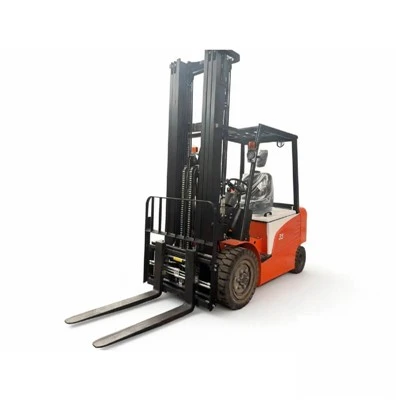
It’s a fair question. For too long, the heavy equipment sector has clung to diesel-powered behemoths, and for good reason: diesel delivers the torque and endurance you need for heavy duty work. But the cost of diesel isn’t just at the pump. From rising fuel prices to tightening emissions regulations in places like the EU, California, and large industrial hubs in China, fleet managers are staring down two big problems at once: how to cut their carbon footprint without slowing down their most critical workhorses.
Let’s get the facts straight first. A standard diesel heavy duty forklift (think models rated for 15,000 pounds or more) puts out roughly 6.6 metric tons of CO2 per year, if it works a standard 2,000 hours annually, per data from the U.S. Environmental Protection Agency (EPA). That’s comparable to the annual emissions of two average passenger cars. Multiply that by a fleet of 10, 50, or 100 forklifts, and you’re looking at a carbon impact that’s hard to ignore. Add in the cost of maintenance—diesel engines have hundreds of moving parts that need regular servicing, and particulate filters that need replacement every few years—and the math starts to shift.
So, what’s actually available right now? I’m not talking about small, 5,000-pound electric forklifts that only work in climate-controlled warehouses. I’m talking about the heavy duty models you’d see moving steel beams off a rail car or stacking shipping containers at a distribution center. Over the last five years, the market has grown from a handful of niche prototypes to actual, production-ready units that check all the boxes for heavy duty work.
First up are lithium-ion battery electric heavy duty forklifts. For a long time, the biggest knock on electric forklifts was battery life. You’d run one for four hours, have to swap a 2,000-pound battery, and lose 15 to 20 minutes of productive time. That’s not a problem anymore. New lithium-ion models for heavy duty use have energy densities up to 150 kWh, which is enough for 8 to 12 hours of continuous operation on a single charge. Even better, most of these models support opportunity charging—plug them into a standard 480V outlet during a 30-minute lunch break, and you get an extra 3 to 4 hours of runtime. That’s a game-changer for 24/7 operations.
I recently supplied a fleet of these lithium-ion forklifts to a construction company in the Pacific Northwest that was previously running 12 diesel forklifts moving pre-fabricated building components. Within six months, their fuel costs dropped by 70%, and they eliminated the cost of diesel engine oil changes and particulate filter replacements. The best part? Their operators didn’t complain—they said the electric models were quieter, had smoother acceleration, and required less effort to operate. The only adjustment was training their maintenance team to check battery connections instead of engine filters, which is a lot simpler work.
But lithium-ion isn’t the only electric option. There are also lead-acid electric heavy duty forklifts, though these are mostly for indoor use, since their batteries take 8 to 10 hours to fully charge and don’t hold up as well to extreme cold or outdoor vibration. For companies that need outdoor heavy duty capacity, lithium-ion is the clear winner right now.
Next, there are hydrogen fuel cell heavy duty forklifts. This is the tech that’s been getting a lot of hype in port operations, and for good reason. Hydrogen fuel cells produce electricity by combining hydrogen and oxygen, with only water vapor as a byproduct. Refueling a hydrogen forklift takes about 15 minutes—faster than swapping a battery—and the runtime is comparable to diesel, around 10 to 12 hours for most heavy duty models.
A few of the largest ports in the U.S. and Europe have already switched their entire container moving fleets to hydrogen forklifts. The Port of Los Angeles, for example, launched a program in 2021 that put 50 hydrogen heavy duty forklifts into operation, and they’ve reported a 90% reduction in emissions compared to diesel models. The catch with hydrogen right now is infrastructure: you need a hydrogen refueling station on-site, which can cost anywhere from $500,000 to $2 million to install. That makes it a big upfront investment for smaller companies, but for large operations with 50+ forklifts, the long-term savings on fuel and emissions compliance often add up.
Then there’s the middle ground: renewable diesel and biogas-powered heavy duty forklifts. These are for companies that can’t make the switch to full electric or hydrogen right now, either because of infrastructure constraints or budget limits. Renewable diesel is made from organic waste like cooking oil, agricultural residues, and animal fat, and it works exactly like petroleum diesel—you don’t have to modify your existing forklifts or change how you refuel. When it burns, it produces up to 80% less greenhouse gas emissions than standard diesel, and it’s already available at most major fueling stations that serve industrial fleets.
Biogas is similar, but it’s made from methane captured from landfills or wastewater treatment plants. A friend of mine runs a waste management company in the Midwest that uses biogas-powered heavy duty forklifts to move roll-off dumpsters and large waste containers. He told me that the biogas costs about 10% less than diesel, and his fleet now has a negative carbon footprint for forklift operations—because the biogas is made from waste that would otherwise release methane into the atmosphere. It’s not zero-emission, but it’s a huge step up from traditional diesel, and it works with the forklifts you already own.
Now, let’s be honest—no tech is perfect, and none of these eco-friendly heavy duty forklifts are going to work for every single operation. If you’re a small lumber yard that only runs forklifts for 4 hours a day, a basic lead-acid electric model might be more than enough, and cheaper upfront. If you’re a 24/7 distribution center moving 100,000-pound loads, a hydrogen model could save you more money in the long run than a lithium-ion one, depending on your refueling infrastructure. And if you’re not ready to replace your entire diesel fleet, switching to renewable diesel is a quick, low-risk way to cut emissions right away.
The biggest barrier I see for most companies isn’t the tech itself—it’s the upfront cost. A diesel heavy duty forklift might cost $80,000 to $120,000, while a comparable lithium-ion model can run $120,000 to $180,000. That’s a steep difference, and I get it—when you’re running a tight budget, every dollar matters. But I’ve seen the numbers add up over three to five years. Let’s do the math: a diesel forklift uses about $40,000 worth of fuel every year (at current prices), plus $5,000 in maintenance. A lithium-ion forklift uses $10,000 worth of electricity a year, plus $1,000 in maintenance. That’s a $34,000 annual savings per forklift. Over five years, that’s $170,000 in savings—enough to cover the higher cost of the electric model twice over.
There are also government incentives that are making these models more affordable. In the U.S., the Inflation Reduction Act offers tax credits of up to $7,500 for commercial zero-emission equipment, including forklifts. The EU’s Green Deal has similar incentives for heavy equipment, and many state and local governments offer additional rebates for businesses that reduce their emissions. I help my customers navigate these incentives all the time—last year, a manufacturing client of mine got a $25,000 rebate on a lithium-ion forklift fleet, cutting the upfront cost gap by almost half.
Another thing I want to talk about is durability. For years, people assumed electric heavy duty equipment was flimsy, not built for the rough conditions of construction yards or ports. That’s no longer true. The lithium-ion forklifts I supply are built with the same heavy-duty frame and axles as diesel models, with sealed battery packs that can handle dust, rain, and even occasional submersion in shallow water—perfect for loading docks that flood occasionally. Some of the new models are also designed to last longer than diesel forklifts, since electric motors have fewer moving parts and don’t wear out the same way diesel engines do.
I also hear a lot of concerns about downtime. What if the battery dies mid-shift? What if the hydrogen refueling station breaks? With lithium-ion, most fleets have enough forklifts to cover shifts while a unit is charging, and opportunity charging means you never have to wait for a full charge to get back to work. For hydrogen, most operations keep a small reserve of fuel on-site, and refueling times are so fast that downtime is rarely an issue. I’ve had customers who’ve run their lithium-ion fleets for 18 months with zero unplanned downtime related to the electric system—way better than the average diesel fleet, which has a few engine breakdowns every quarter.
So, to answer the question: yes, there are more eco-friendly heavy duty forklifts on the market than ever before, and they’re not just for small warehouses. The right one for your operation depends on your load capacity, shift schedule, terrain, and budget, but there’s definitely an option that will work for you.

If you’re still on the fence, let’s talk. I’ve spent 12 years working with heavy duty forklifts, and I’ve helped hundreds of fleet managers find the right eco-friendly solution that fits their needs. Whether you want to switch fully to zero-emission, take advantage of renewable diesel to cut emissions, or just want to compare your current options, I can walk you through the numbers, the incentives, and the models that will work best for your operation. Don’t let emissions regulations or high fuel costs eat into your profits—let’s find a heavy duty forklift that’s good for your business and good for the planet.
Heavy Duty Forklift References
EPA. (2022). Heavy-Duty Diesel Engine Emissions and Control Technologies. U.S. Environmental Protection Agency.
Port of Los Angeles. (2021). Zero-Emission Forklift Fleet Implementation Report. Port of Los Angeles Sustainability Division.
International Energy Agency. (2023). Heavy-Duty Electric Equipment Market Report. IEA Clean Energy Transitions Programme.
OSHA. (2022). Lithium-Ion Battery Safety Guidelines for Commercial Equipment. Occupational Safety and Health Administration.
Propolift Machinery Co., Ltd.
Propolift Machinery Co., Ltd. is one of the most professional heavy duty forklift manufacturers and suppliers in China, featured by quality products and good price. Please rest assured to buy durable heavy duty forklift made in China here from our factory. Welcome to contact us for custom service and OEM service.
Address: No.271, Hardware Industrial Park, Quanzhou, China
E-mail: info@propolift.com
WebSite: https://www.propolift.com/
