Let’s cut to the chase: If you’ve ever dabbled in automation, robotics, or even CNC machining, you’ve probably typed “servo motor” or “servomotor” into a search bar at some point. And if you’re here, chances are you’ve stared at a results page and thought—wait, are those two things actually the same? Or is there a hidden difference I’m missing? As a supplier of servo electric motors, I field this question at least three times a week from engineers, small shop owners, and even hobbyists who aren’t sure if they need to budget for one or the other. Let’s break this down without the jargon that makes your eyes glaze over. Servo Electric Motors

First, let’s get one tiny but critical thing out of the way: There is no functional difference between a “servo motor” and a “servomotor.” They’re the exact same piece of equipment. It’s like how some people say “email” and others say “e-mail”—it’s just a matter of where the space does (or doesn’t) go. But don’t let that “same equipment” answer fool you. The way people use the two phrases has created a quiet, unspoken split in how the industrial world talks about these motors—and that split matters a lot when you’re ordering parts for a project.
Let’s start with the “servo motor” crew. This is the more common phrasing these days, especially for folks who work with automation every single day. If you’re a controls engineer designing a robotic arm for a car factory, or a machinist programming a CNC lathe that cuts aluminum parts, you’re almost definitely going to say “servo motor.” Why? Because this phrasing evolved in industrial settings where clarity for fast-paced teams is key. Back in the 1970s and 80s, when servo tech started taking over from old, clunky stepper motors, shops needed a shorthand that was easy to shout over a noisy factory floor. No awkward pauses, no extra letters—just two words that get right to the point: it’s a motor, and it’s for a servo system.
Then there’s “servomotor.” That’s the single-word version, and it’s more common in two groups: hobbyists who got their start online, and newer engineers who learned the term in entry-level tech courses. If you’ve spent any time on Reddit’s r/robotics, or TikTok’s #CNCcommunity, you’ve seen “servomotor” pop up in threads about building a 3D printer upgrade or a small DIY robotic gripper. This phrasing is a holdover from how technical documents used to be written back in the day—early IEEE papers and equipment spec sheets often condensed the term into one word to save space. As online tech communities blew up, that single-word version stuck because it’s a lot easier to type into a search bar when you’re scrolling for parts at 2 a.m.
But here’s where the confusion kicks in: The split isn’t just about a space. It’s about the context people use each phrase in—and that context affects what you’ll find when you shop around. If you go to a industrial supplier’s website and type “servo motor,” you’ll get a list of heavy-duty, high-torque motors built for 24/7 use: think 5kW units for assembly lines, or precision motors for semiconductor wafer handling. Type “servomotor” into the same site, and you might see smaller, lower-torque options meant for smaller applications—like a motor for a desktop laser cutter, or a small robot arm for a school science project. It’s not that the motors are different. It’s that the way people use the two phrases has created a subtle marketing split that makes you think you’re buying two different things, when you’re really just picking a motor that fits your size needs.
Let’s test this with a real example. Last quarter, a customer reached out to us asking for a servomotor to replace a worn-out unit on their packaging line. They told us their line was running 12 hours a day, and they needed something that could handle consistent, precise movement—no slippage, no overheating. We sent over a 2.2kW servo motor with a built-in encoder, and it worked perfectly. A month later, another customer emailed looking for a servo motor for a small robotic arm they were building for a local hospital’s lab. They wanted something compact, quiet, and accurate enough to move tiny vials without spilling. We sent a 0.4kW servomotor, and it checked all their boxes. Neither of those orders was for a different motor type—we just matched the power and size to what each user described. The only real difference was the word they used to ask for it.
Now, why does this matter for you, especially if you’re here shopping for servo electric motors? Let’s say you’re a small business owner running a custom sign shop, and you need a motor to drive a router that cuts wood signs. If you type “servomotor” into a search engine, you’ll see a ton of options that are smaller, cheaper, and built for hobbyist or light-duty use. That might work—if you’re only cutting a few signs a week. But if you’re running a shop that cuts 50 signs a day, those hobbyist-grade servomotors will burn out in 6 months, because they’re not designed for constant heavy use. On the flip side, if you type “servo motor,” you’ll find industrial-grade units that will last 5+ years of daily use, but they might be overkill for your needs—and way more expensive.
So the fix here? Don’t get hung up on the word. Instead, focus on what you need the motor to do. Let’s break down the key specs that actually matter, no matter if you call it a servo motor or a servomotor:
- Torque: This is how much force the motor can exert. If you’re moving a heavy assembly line component, you need high torque. If you’re moving a tiny vial, you need low torque. A mistake here is a motor that either can’t do the job, or wastes your money on too much power.
- Encoder type: Servo motors rely on encoders to tell them exactly where they are and how fast they’re moving. There are incremental encoders (good for basic positioning) and absolute encoders (better for applications where you can’t lose position—like a CNC machine that can’t afford to reset mid-run).
- Duty cycle: This is how long the motor can run at full power without overheating. Industrial motors have a 100% duty cycle, meaning they can run nonstop. Hobbyist units might have a 50% duty cycle, meaning they need to cool down every few minutes.
- Voltage compatibility: You can’t just plug any motor into your power source. Make sure you match the motor’s voltage to your facility’s power supply—most industrial servo motors run on 230V or 480V, while small servomotors might run on 110V or even 24V for battery-powered projects.
I see this confusion play out all the time. Last year, a customer came to us who’d bought a “servomotor” from a big online retail site for their warehouse conveyor system. It was a small, hobbyist-grade unit, and it burned out after 3 months of running 12 hours a day. They thought they’d saved money by buying the cheaper “servomotor” instead of an industrial “servo motor,” but they ended up paying twice as much in replacement costs and downtime. That’s the risk of fixating on the word instead of the specs.
Another thing to mention: Sometimes people mix up servo motors with stepper motors, which is a whole other conversation. Stepper motors are cheaper, but they can slip, meaning they’ll lose position if the load is too heavy. Servo motors have feedback loops (that’s the encoder I mentioned earlier) so they always know where they are, no matter the load. That’s why they’re used for high-precision jobs—like putting tiny screws into a phone circuit board, or moving a satellite dish to within a fraction of a degree. Whether you call it a servo motor or a servomotor, that feedback loop is the core that makes it “servo” in the first place.
Wait, let’s circle back to the original question to make sure we’re not dodging anything. Is there any scenario where a “servo motor” is different from a “servomotor”? Let’s check a few industry sources. The International Electrotechnical Commission (IEC) doesn’t list either term as a separate product. The Electronics Industries Alliance (EIA) uses “servomotor” in its technical standards, but even they note that “servo motor” is a widely accepted alternative in North America. A quick scan of Amazon, Alibaba, and industrial supplier sites shows that the two terms are used interchangeably in product descriptions—they just tend to group smaller motors under “servomotor” and larger under “servo motor.” That’s not a technical difference, just a marketing and naming convention that’s evolved to make shopping easier.
So what does that mean for you? If you’re planning a project, don’t stress about the space. If you’re talking to a supplier (like us, a servo electric motors specialist), tell them what you need the motor to do, not what you call it. If you say, “I need a motor that can move a 50kg load at 1m per second, 8 hours a day,” we don’t care if you call it a servo motor or a servomotor—we’ll give you the right unit. If you say, “I need a motor for a 3D printer that moves a 10g part,” we’ll recommend a smaller, lighter unit that fits that job.
I also want to bust a quick myth here: Some people think “servomotor” is a newer, better version of the “servo motor.” Nope. The two are the same age. The term “servo” comes from the Latin “servus,” meaning slave—originally, servomechanisms were slave devices that followed a master’s commands, and that term got shortened over time. The single-word vs. two-word split is just a typographical quirk that stuck, not a sign of a different product.
Now, let’s talk about why this confusion matters for your bottom line. If you’re a small shop, buying the wrong motor can set you back weeks of production and hundreds of dollars in repairs. If you’re a hobbyist building a robot for a competition, the wrong motor can mean your project doesn’t work when it matters most. At our shop, we’ve built our business on clearing up that confusion. We don’t just sell motors—we help people figure out exactly what they need, no matter if they type “servo motor” or “servomotor” into their search bar. We’ve got industrial-grade units for assembly lines, compact servomotors for lab equipment, and everything in between. We don’t push extra product; we match your specs to the right motor, so you don’t waste money or time.
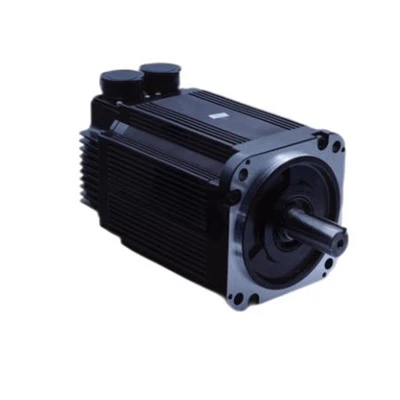
If you’re in the market for a servo electric motor, whether you call it a servo motor or a servomotor, reach out to our team. We’ll walk you through the specs, answer any questions, and make sure you get exactly what your project or business needs. No confusing jargon, no hidden fees, just straight talk and quality motors.
Centrifugal Fan References
- International Electrotechnical Commission (IEC). Standard 60050-351: International Electrotechnical Vocabulary, Chapter 351: Control technology.
- Electronics Industries Alliance (EIA). Standard RS-279: Terminology for motion control systems.
- Industrial Automation and Control Association (IACA). Servo Motor Application Guide, 2022.
Hangzhou Jiangnan Electric Motor Co., Ltd.
Hangzhou Jiangnan Electric Motor Co., Ltd. is one of the most reliable servo electric motors manufacturers and suppliers in China, specialized in providing high quality customized service. We warmly welcome you to wholesale servo electric motors for sale here from our factory. For price consultation, contact us.
Address: No.298, YaNan Road, Yaqian Town, Xiaoshan District, Hangzhou City, Zhejiang Province
E-mail: sales@jnelectricmotor.com
WebSite: https://www.jnelectricmotor.com/
