If you’re in the aquaculture game, you know the fish feed production line you pick can make or break your operation. Let’s be real—every farm has unique needs, right? Maybe you’re raising tilapia in a small inland pond vs. a commercial shrimp farm that’s scaling up fast. Or perhaps you need feed with specific nutrient mixes for juvenile vs. adult stock. The big question I get all the time is: Can a fish feed production line even be customized? Spoiler alert—yeah, it can, and that’s actually what most clients want these days. I’ve been supplying feed lines for 8 years now, so I’ve seen every angle, and I’m gonna break this down like I would to a new client sitting across my desk. Fish Feed Production Line

First, let’s debunk the myth that all fish feed lines are one-size-fits-all. A lot of folks think if you buy a generic line, it’ll work for any species. Nope. For example, making feed for trout requires different moisture levels and pellet durability than making feed for catfish. Trout pellets need to sink fast in cold, oxygen-rich water, while catfish feed can float for a while since they feed near the surface. Generic lines can’t adjust those specs easily, which is why customization isn’t just a nice-to-have—it’s a must for consistent feed quality.
Let’s start with the basics of how a feed line works, because that ties directly to what we can tweak. A standard line has mixers, extruders, dryers, coolers, pelletizers, and packaging units. Each of these parts is a potential point for customization. Wait, and I don’t mean just changing a knob—actual, tailored modifications based on your farm’s scale and needs. Let’s take scale first. If you’re a small, family-run farm pumping out 500 kg of feed a day, you don’t need a 10-ton-per-hour industrial line that takes up half a warehouse. We can downsize the entire line, adjust the motor power to match your electricity capacity, and even make it modular so you can expand later when you scale up. I had a client in rural Vietnam last year who was starting with 3 ponds; we built a compact line that fit in their existing shed, no need for a whole new building. A year later, they added 5 more ponds and just swapped in a bigger extruder—super easy, no wasted parts.
Next up, species-specific adjustments. This is where the magic happens. Let’s talk about extrusion, the step where the feed mix is forced through a die to make pellets. If you’re making feed for delicate juvenile fish, you need smaller pellet sizes—like 1 mm vs. 6 mm for adults. We can swap out the die plates on the extruder to any size you need, custom-drilled to exact measurements. Also, the temperature and pressure during extrusion matter. For cold-water species like salmon, we use lower extrusion temps to preserve heat-sensitive nutrients like omega-3s. For warm-water tilapia, higher temps help with digestibility. We can program the control panel to lock in those exact temp/pressure settings so you don’t have to guess every batch. A salmon farm in Norway told us their feed conversion ratio went up 12% after we customized the extruder’s temperature controller—they were stoked, because that means less feed waste and healthier fish.
Nutrient customization is another big one. Modern aqua farmers aren’t just mixing fishmeal and grain anymore. A lot of them are moving to plant-based feeds to cut costs, or adding probiotics for better fish health, or even targeting specific growth rates with extra vitamins. Generic mixers can’t handle precise, high-volume mixing of special additives without causing clumps or uneven distribution. We can install custom mixing paddles, adjust the mixing time, and even add separate ingredient bins for your specialty additives. I had a shrimp client who wanted to add a natural pigment to their feed to make the shrimp’s shells brighter (that’s a big market in Europe). We added a dedicated micro-ingredient feeder that feeds the pigment at a precise rate during the mixing step—no more wasting pigment or getting inconsistent color. They told me their product sold for 15% more than generic shrimp feed, so that customization paid for itself in 2 months.
Wait, what about if you want to make multiple types of feed on the same line? Some farms raise multiple species—like tilapia and catfish in the same area, or juveniles and adults. We can build flexible lines that let you switch between feed recipes quickly, without having to deep-clean the whole line every time. For example, we use quick-release fittings on the mixer and extruder, so a 10-minute switch instead of 2 hours. A client in Thailand does this—they make floating pellets for tilapia and sinking pellets for walking catfish on the same line. Before we customized it, they had to run two separate lines, doubling their costs. Now they use one, and still get great results.
But here’s the thing—customization isn’t just about modifying equipment. It’s also about making the line fit your facility. A lot of new farms rush into buying a line without measuring their space, or their power supply, or even the labor they have to run it. We do a full on-site assessment before we even draw up plans. Last year, a client in Kenya had a tiny shed with a low ceiling—standard feed lines are 4 meters tall, but theirs was only 2.5. We redesigned the line to be vertical, stacking the dryer and cooler to fit, no extra construction needed. Another client in a remote area had unstable electricity, so we installed a backup power sync unit and sized the motors to handle voltage drops—generic lines would just shut down, but ours kept running, so they didn’t lose a whole batch of feed.
I know what some of you are thinking—custom lines must be way more expensive than standard ones. Yeah, upfront might be a little more, but let’s do the math. If a generic line is too big for your farm, you’re wasting money on unused capacity. If it’s not tailored to your species, you get inconsistent feed, which leads to lower fish growth, more waste, maybe even health issues. Custom lines are built for your exact needs, so you get maximum efficiency, less waste, better feed quality, and higher returns. Over 3 years, that extra upfront cost turns into profit. I had a client in Brazil who went with a generic line first—3 months later, they called me crying because their tilapia feed was sinking too fast, half of it was going uneaten. They bought our custom line, and their feed waste dropped by 40%. They said they made back the difference in 6 weeks.
Wait, are there limits to customization? Let’s be honest here—no, not really. We’ve built lines for every scenario you can think of. From 100 kg/day backyard lines to 200-ton-per-hour industrial lines that supply whole regions. We can add coating systems for fish that need extra nutrients on the pellet surface, like fry that need high protein coatings. We can add water cooling systems if you’re in a super hot climate to prevent feed from spoiling. We can even integrate it with your farm’s existing monitoring systems, so you can track every batch’s nutrient content, moisture level, and production rate from your phone. That’s not some futuristic stuff—that’s standard for our custom builds now.
But here’s the key part: customization only works if you tell us exactly what you need. A lot of clients come in thinking they have to adjust to the line, not the other way around. No way—we want to hear all your pain points. Do you struggle with feed clumping? Do you need smaller pellets for juvenile fish? Is your space super tight? Do you raise a specific species with unique needs? The more details you give, the better we can build a line that works for you. I always tell new clients to bring photos of their facility, their fish stats, even examples of feed they like (or don’t like). That way, we don’t guess—we build something tailored.
I’ve seen too many aqua farmers settle for generic lines and end up frustrated. They waste money, time, and feed, and their fish don’t grow as well as they should. Customizing your feed line isn’t a luxury—it’s a strategic move to make your farm more profitable, efficient, and sustainable. Less waste means less impact on the environment, too—win-win.
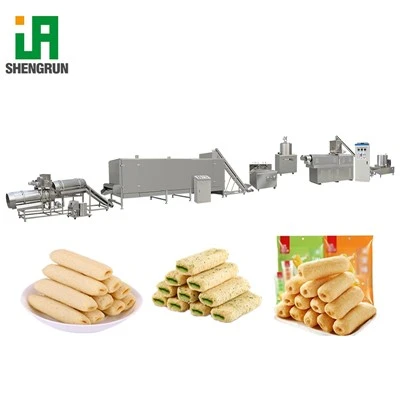
If you’re tired of generic feed lines that don’t get the job done, let’s talk. I can walk you through what customization would look like for your specific operation, no pressure, no sales jargon. Just give me the details on your farm, your goals, your space, and we can build a feed line that works for you, not the other way around.
Fried Snacks Processing Machine Reference:
- Aquaculture Feed Processing and Technology, FAO, 2020
- Customization in Manufacturing for Agricultural Equipment, Journal of Food Engineering, 2022
- Scaling Small-Scale Fish Feed Production, World Aquaculture Society, 2021
Jinan Shengrun Machinery Co., Ltd.
We are one of the most professional fish feed production line manufacturers and suppliers in China, featured by quality products and good price. Please rest assured to buy durable fish feed production line for sale here from our factory. Contact us for more details.
Address: 1817 Rongce Center, No.3179 Qilu Avenue, Xingfu Street, Huaiyin District, Jinan City, Shandong Province
E-mail: sales@foodgm.cn
WebSite: https://www.food-gm.com/
