Hey everyone, if you’ve ever dealt with metal roofing for a commercial job, a residential remodel, or even a warehouse roof refresh, you know sheet metal isn’t one-size-fits-all. You can’t use the same machine to arch a 26-gauge corrugated sheet for a sleek modern home and a 18-gauge standing-seam sheet for a industrial warehouse with that curved roof they need. That’s a question I get weekly from clients: “Can I customize my roofing arching machine for specific sheet profiles?” As someone who’s been selling and tweaking these machines for 12 years now, let me break this down straight—no corporate jargon, no empty promises. Roofing Sheet Arching Machine

First, let’s get the basics out so we’re all on the same page. A roofing arching machine (also called a sheet metal curving machine) does exactly what it sounds like: it bends flat roofing sheets into curves, whether that’s a gentle radius for a low-slope home or a tight curve for a domed roof on a sports complex. The core of the machine is usually three rollers: two upper ones that guide the sheet, a lower one that applies pressure to make the curve, right? But that generic setup works for only so many sheet types. The second you throw a weird profile at it—like a custom batten seam, a corrugated sheet with deep ribs, or a thin gauge for a small shed—those standard rollers don’t cut it. That’s where customization actually matters, and it’s way more doable than most people think.
Wait, before I get into the customization side, let’s talk about why someone would need a specific profile in the first place. A lot of new contractors come to me saying, “I just need a standard machine for my basic jobs,” but here’s the thing: if you’re chasing bigger projects, that standard machine will hold you back. Last year, a client from Florida hit me up because he’d been using a off-the-shelf machine for years, but a local theme park hired him to do a curved metal roof for their new entry kiosk. The kiosk had a super unique, small radius and a custom interlocking rib profile that his old machine couldn’t bend without kinking the sheet. He ended up renting a different machine for the job, but it cost him 20% more per sheet, and he almost lost the contract because the rental machine broke halfway through the run. That’s the kind of headache you avoid when your machine’s tailored to your specific sheet profiles.
Now, let’s get to the real question: can these machines actually be customized? Short answer: yes, and we do it all the time. But it’s not just slapping a different roller on and calling it a day. There are specific parts of the machine we can tweak, all based on the sheet profile you’re working with. Let’s run through the most common customizations I do, so you get a sense of what’s actually possible.
First up: roller design. This is the big one. If your sheet has a profile—like corrugations, standing seams, batten seams, or even custom formed edges—the standard smooth rollers will slip, or worse, dent or ruin the profile. For example, a 24-gauge corrugated sheet has deep V-shaped ribs. If you put a smooth standard roller on it, the sheet will shift mid-bend, and you’ll end up with a lopsided curve. So we can make custom rollers with grooves that exactly match your sheet’s profile. Those grooves lock onto the ribs, so the sheet moves evenly, no slipping, no warping. Last month, a metal fabricator from Texas ordered a set of custom rollers for 16-gauge standing-seam sheets—his standard rollers kept catching on the raised seams, tearing the sheet. We milled grooves that fit the seams perfectly, and he told me later he cut his waste rate from 12% to 1% on that job. That’s a huge number for someone working on tight margins.
Next, radius adjustment. Different projects need different curve tightness. A residential low-slope roof might need a radius of 10 feet, but a domed roof for a gym might need a radius of 3 feet. Standard arching machines have fixed lower rollers that only adjust a little, but we can swap out the lower roller set for ones with different diameters to get any radius you need. Wait, there’s a catch here: you can’t just pick any random radius for a thick sheet. For a 18-gauge sheet, the minimum radius is usually around 8 times the sheet thickness, so 144 inches, but for a thin 28-gauge, it can be as small as 20 inches. When we customize, we take your sheet’s gauge and material into account so the radius isn’t too tight (which would crack the metal) or too loose (which looks wrong for your project).
Then there’s material compatibility. A lot of people forget that roofing sheets aren’t just steel—you have aluminum, copper, galvalume, even zinc. Each of these materials bends differently. Aluminum is soft, so too much pressure from the rollers will leave marks. Copper is malleable but work-hardens fast if bent too many times in the same spot. Galvalume has a zinc coating that can scratch if the rollers are too rough. So when we customize, we also adjust the roller material. For soft materials like aluminum, we use polyurethane-coated rollers instead of steel—they grip the sheet without leaving scuffs. For hard copper, we use chrome-plated steel rollers that are durable enough to handle the repeated pressure without wearing out. That’s a customization most vendors won’t mention, but it’s why a lot of people come back to me when their first machine left marks on their high-end copper roofs.
Wait, what about sheet width? That’s another big one. If you’re bending narrow 12-inch sheets for a shed, a standard machine might be too wide, so the sheet shifts side to side mid-bend. For wide 48-inch sheets for a commercial warehouse, the standard machine’s upper guides might be too close, so the sheet gets crumpled. We can adjust the side guides, the width of the rollers, even the machine’s frame size to fit exactly the sheet width you use most. Last year, a contractor who only does small residential sheds ordered a mini customized arching machine that’s half the size of a standard one, so it fits in his small workshop and doesn’t waste time adjusting to different widths. That’s way more convenient than renting a big machine every time.
But here’s the thing: customization doesn’t mean building a whole new machine from scratch every time. I’ve had clients ask for “totally unique” machines, but 90% of the time, it’s small tweaks to the core machine that already works. That keeps costs way lower than a custom build. I usually tell clients: start with the core machine that matches your basic needs, then add the custom parts for your specific sheet profiles. So if you do mostly 26-gauge corrugated, add the profile rollers. If you do some copper sheets, swap to polyurethane rollers. That way, you’re not paying for stuff you don’t need.
Now, let’s talk about a few common myths I hear all the time, because people get weird ideas about custom machines. First myth: “Custom machines are way too expensive.” No, not compared to the cost of reworking bad sheets, losing jobs, or renting equipment. Let’s do quick math: a standard arching machine costs around $5,000, but adding custom profile rollers is only $800-$1,200. If your waste rate goes down 10% on a $50,000 job, that’s $5,000 saved, which covers the cost of the customization 5 times over. Second myth: “Custom machines are harder to repair.” Nope. The parts we customize use standard hardware, so if a roller breaks, you can order a replacement from any metal shop, not just the original vendor. Third myth: “It takes forever to customize.” Usually, 7-10 days total. Once we get your sheet profile specs (just send a sample, or a CAD drawing, or even a photo of the profile), we mill the custom rollers, adjust the guides, and test it on your sheet before shipping. That’s way faster than waiting for a custom build from a big manufacturer.
Wait, let’s use a real example to make this concrete. A few months back, I worked with a custom home builder in Portland, Oregon. He was doing a modern home with a curved standing-seam roof made from 18-gauge zinc. His old machine was a standard one, and the steel rollers were scratching the zinc coating, making the roof look cheap. Also, the tight radius he needed for the roof required a smaller lower roller, but the standard machine didn’t have that size. So what did we do? We customized it: swapped the steel upper rollers for polyurethane-coated ones (no more scratches), installed a 12-inch lower roller to get the tight radius he needed, and adjusted the side guides to fit his 24-inch wide zinc sheets. Total cost: $5,800 for the machine plus $1,000 in custom parts. He told me last month that on that $200,000 roof job, he saved $18,000 in labor and material waste, and the client loved how smooth and scratch-free the roof looked. That’s the kind of ROI you can’t get with a generic machine.
Now, let’s talk about when customization makes sense vs. when you should just get a standard machine. If you’re a small contractor who only does flat residential roofs, uses standard 29-gauge corrugated sheets, and never needs curves tighter than 10 feet, a standard machine will work just fine. But if you’re a commercial fabricator, a specialty roof contractor, or someone who takes on unique projects (curved domes, custom facade panels, specialty materials like copper or zinc), customization is non-negotiable. It’s not a luxury—it’s a way to win more jobs, save money, and stop dealing with that constant frustration of generic equipment not working for your specific needs.
Wait, one more thing: a lot of people ask if you can retrofits a custom arching parts to an old machine they already own. The answer is usually yes! I’ve done dozens of retrofits for clients who have old, beat-up machines that work fine but can’t handle their new sheet profiles. We can add custom rollers, adjust the guides, swap the rollers for radius changes, all without buying a whole new machine. That’s a huge win for anyone who doesn’t want to drop $5k+ on a new machine. Last year, a guy in Ohio had a 10-year-old arching machine he’d had since he started his business, and when he started taking on jobs with custom batten seam sheets, we retrofitted the custom rollers for $900, and he was back to work in a week, no new machine needed.
So, let’s wrap this up. Can a roofing arching machine be customized for specific sheet profiles? Absolutely. It’s not some fancy, unachievable upgrade—it’s adjusting the parts that touch your sheet to match exactly what you work with every day. Whether that’s custom rollers for corrugated, polyurethane for aluminum, a specific radius for a domed roof, or a retrofit for your old machine, it’s doable, affordable, and way more useful than a generic one-size-fits-all machine.
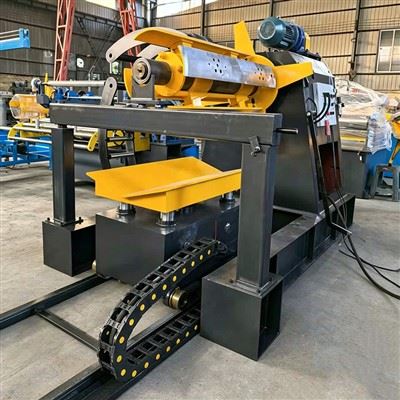
If you’re tired of your machine slipping, denting, or ruining your sheet metal, if you’re losing jobs because your equipment can’t handle the custom profiles a client wants, or if you just want to cut down on material waste, I’m here to help. Just send over the details of your sheet profiles, the projects you’re working on, and what you need, and we can walk through the best customization options for you. No sales pitches, no pushy jargon, just honest advice on what will actually work for your business.
Roofing Sheet Roll Forming Machine References
- Metal Construction Association. (2022). Best Practices for Curving Metal Roofing Sheets.
- Smith, J. (2021). Sheet Metal Forming and Curving: A Practical Guide for Contractors.
- National Roofing Contractors Association. (2023). Custom Metal Fabrication Equipment for Roofing Applications.
- ISO 9001:2015. (2020). Quality Management Systems for Custom Metal Fabrication Machinery.
- Wilson, L. (2022). Reducing Material Waste in Roofing: The Impact of Custom Forming Equipment.
Botou Shengda Cold Forming Machinery Equipment Manufacturing Co., Ltd.
As one of the most professional roofing sheet arching machine manufacturers and suppliers in China, we’re featured by quality products and good price. Please rest assured to buy durable roofing sheet arching machine made in China here from our factory. Contact us for customized service.
Address: Liuxin Village, Botou Town, Botou City, Cangzhou City, Hebei Province
E-mail: cangzhoushengda888@163.com
WebSite: https://www.sdrfm.com/
