Hey everyone, I’m Jake with this palletizing robot supplier – and let’s cut straight to the chase, because I get asked this question all the time: “How many cases can a palletizing robot do per hour?” It’s not a one-word answer, I’ll tell you that. I’ve been around this space for 12 years, dealing with warehouses, e-commerce fulfillment centers, food and beverage plants, even 3PLs that pack and ship everything from cereal boxes to power tools. Everyone wants to know the hourly rate, and frankly, it makes sense – that number directly ties to your throughput, labor costs, and whether you can hit those crazy Amazon or Shopify delivery deadlines. Palletizing Robot

First off, let’s bust the biggest myth here. A lot of sales guys will throw out a generic “1,200 cases per hour” number without asking a single question about your setup. That’s garbage. That robot can’t do 1,200 cases an hour if you’re stacking 50lb bags of dog food, or if your conveyor line is backed up because a forklift driver took a smoke break. The real hourly count depends on three big factors: the robot type, the load it’s handling, and your integration with the rest of your line. Let’s break this down like we’re chatting at a trade show beer table, not a stuffy boardroom.
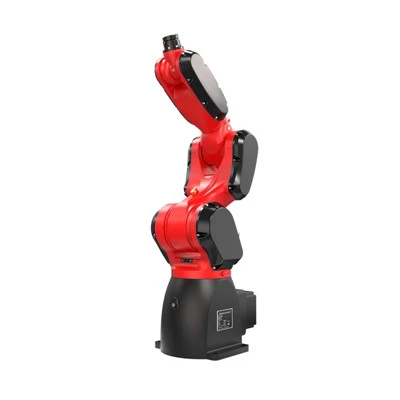
First, the robot itself. Not all palletizing robots are created equal. I see way too many companies buying cheap, six-axis robots that were never designed for heavy lifting or constant high-speed work. Those might do 600-800 cases per hour on a good day, if the parts don’t wear out after six months. Then there are the dedicated palletizing robots – the delta robots and articulated arm units that we supply most often. Those bad boys are built for 24/7 work, no breaks, no complaining. A standard articulated palletizing robot, the kind we sell for most mid-sized operations, will usually pull between 800 and 1,500 cases per hour. Wait, that’s a big range, right? Let me narrow it down.
If you’re handling small, light cases – like a 1lb box of vitamins or a 2lb bag of coffee grounds – that’s where you hit the upper end. We installed a unit last month for a specialty coffee roaster in Portland, Oregon, and it’s cranking out 1,450 cases an hour. It’s stacking three small boxes per layer, moving at full speed, no jams. The delta robots? Those are even faster for super light, uniform loads – we’ve seen delta units do up to 2,000 cases an hour for small pharmaceutical packaging, but only if the cases are identical, no weird edges or overhangs. That’s the exception, not the rule, though – most of our customers aren’t dealing with tiny, identical pharma boxes.
Now flip that to heavy loads. If you’re stacking 50lb cases of soda, or 40lb boxes of dog food, that number drops. A 50lb case is heavier, so the robot can’t move it as fast without risking injury or wear and tear on the arm. For medium to heavy cases (30-50lbs), the standard articulated robot we sell does between 600 and 1,000 cases per hour. Last year we hooked up a unit for a local soda distributor, and they’re holding steady at 850 cases an hour with 40lb 12-pack cases. They tried pushing it harder, at 1,100, but the arm started showing excess wear after three months, so they dialed it back. Makes sense – you don’t want a $100k robot breaking down because you tried to shave 20 cases an hour off the rate.
Then there’s the load size itself. Wait, that ties into weight, but also dimensions. If your cases are tiny, like 12x12x12 inches, the robot can pick and place more of them per minute. If you’re dealing with big, bulky cases – like a 48x40x40 inch pallet of washing machines, that’s a single case sometimes – obviously the number goes way down. For large, heavy cases (over 50lbs, or bigger than 2 cubic feet), you’re looking at 300 to 600 cases per hour. We installed a unit for an appliance parts supplier last quarter, and they’re at 420 cases an hour, each case being a 30lb box of dishwasher parts. That’s totally normal for that kind of load.
But here’s the thing – the robot’s maximum speed is only half the equation. The other half is your line integration. I’ve seen customers with a fancy $90k palletizing robot that only does 500 cases an hour, not because the robot is slow, but because their infeed conveyor keeps jamming. Or because their upstream packaging line can’t keep up – if your packer is only sealing 500 cases an hour, the robot can’t pull more than that, no matter how fast it is. Also, the pallet itself: if you have a worker standing there manually positioning pallets, or if the stretch wrapper is slow, that slows the whole process down. We always tell customers that the hourly rate is a system number, not just a robot number.
Let’s talk about real-world examples, because numbers on a spec sheet mean nothing without context. That Portland coffee roaster I mentioned earlier: 1,450 cases per hour. Their line is set up with two infeed conveyors, so the robot can pick from either, no downtime switching. The cases are 1lb boxes, perfectly uniform, so the robot’s vision system can grab them every time. No jams, no slow downs. They run two 10-hour shifts, five days a week, and the robot hits that number almost every time, only dropping a few when they change over to holiday packaging that’s a tiny bit irregular.
Then the soda distributor: 850 cases per hour, 40lb 12-packs. Their infeed is a single conveyor, and they have to do a layer check every so often, but the robot’s built-in sensors catch any misaligned cases before they cause a jam. They run three 8-hour shifts, six days a week, and that number holds. Last year they tried adding a second infeed to bump it up, and they’re currently at 920 cases an hour, which is a solid gain, no extra labor.
The appliance parts place: 420 cases an hour, 30lb boxes. Those cases are a bit irregular – some have extra packaging, some are a tiny bit dented – so the robot’s vision system has to adjust, which slows it down just a touch. If they switched to uniform cases, they could hit 500, but their supplier’s packaging line can only do 450, so it’s a wash.
What about common pitfalls that mess up these numbers? First, not calibrating the robot correctly when it’s installed. A lot of cheaper integrators cut corners on setup, so the robot can’t pick cases as fast, or drops them occasionally, adding downtime. We do a full calibration, plus a 48-hour stress test with your actual cases, so we know exactly what you can hit. Second, not doing regular maintenance. A robot that’s not lubricated, or has dirty sensors, will slow down by 10-15% over time. We offer annual maintenance checks for all our customers, so they keep hitting their target rate. Third, overloading the robot. We see this all the time – a customer will try to stack a case that’s 10lbs over the rated capacity, and the robot has to move slower to handle the extra weight, or it breaks prematurely. Stick to the rated load, and you’ll hit your number.
Now, let’s talk about how to calculate what’s right for your operation. First, figure out your average case weight and size. Write that down – no guessing. Then, check the robot’s rated throughput for that load. For example, if your average case is 25lbs, the standard articulated robot we sell has a rated throughput of 800-1,100 cases per hour. Next, factor in your upstream line speed. If your packer is only doing 700 cases an hour, you can’t go higher than that, so you don’t need to pay for a robot that does 1,500. That’s a waste of money. Also, consider if you need shift work. If you’re running three shifts, you’ll want a robot that’s built for constant 24/7 use, not a light-duty unit for occasional use.
Wait, let’s also mention the difference between theoretical max and real-world average. Every robot spec sheet has a theoretical max – that’s the absolute fastest it can move a single case, nonstop, no breaks, no jams. That number is almost never what you’ll actually get. Our theoretical max for standard articulated robot is 1,800, but in real life, you’re looking at 800-1,500, as I said. The delta’s theoretical max is 2,500, but real-world is 1,200-2,000 for super light loads. Don’t get tricked by the spec sheet number – always ask for real customer testimonials with loads similar to yours.
Another thing: case dimensions per layer. If you’re stacking 5 cases per layer versus 10, that affects the number too. For example, a pallet that holds 20 layers of 10 small cases is 200 cases per pallet. If the robot can pick 2 cases per cycle, that’s 100 cycles per pallet. If it takes 0.4 seconds per cycle, that’s 900 cycles per hour, which is 1,800 cases per hour – but only if the cases are small enough to pick two at a time. If you can only pick one case per cycle, that drops to 900 cases per hour for that load. That’s a key detail most sales guys skip – how many cases it can pick per cycle, and how long each cycle takes.
Let’s address a common question: is a more expensive robot worth the higher throughput? It depends on your volume. If you’re a small business with 500 cases a day, a cheaper robot that does 600 cases an hour is enough. If you’re a large distribution center with 20,000 cases a day, a $100k robot that does 1,200 cases an hour will pay for itself in a year in labor savings. We had a customer who switched from two manual palletizers (two guys, 40 hours a week) to one of our standard robots, and they went from 800 cases a day to 1,500 cases a day, with no extra labor. That’s $60k a year in labor savings, basically paying for the robot in 18 months. That’s the value of hitting the right hourly rate.
Also, let’s talk about downtime. Every minute a palletizing robot is down is money lost. The higher throughput robot usually has better build quality, so less downtime. The cheap six-axis robots I mentioned earlier have 2-3 times more downtime than our dedicated palletizing units. So even if a cheap robot has a similar hourly rate on spec, the actual working rate is lower, because it’s down more often. That’s another thing to consider – mean time between failures (MTBF). Our robots have an MTBF of over 50,000 hours, which is way higher than the cheap ones.
Wait, I should also mention what affects your rate after installation. Like, if you change your packaging, that changes the case size or weight, so you might have to adjust the robot’s settings, which could lower the rate temporarily. Or if you add new products, different cases, that affects it too. That’s why we offer training and support, so you can adjust the robot yourself without calling us every time. Last year, a customer added a new line of 3lb snack boxes, and within a day, they adjusted the robot’s pick settings and went from 800 to 1,300 cases an hour. No downtime, no extra cost.
Now, let’s wrap this up. The short answer to “how many cases can a palletizing robot do per hour” is: 300 to 2,000, depending on the robot type, case weight/size, and your line integration. For most small to medium businesses, that’s 800 to 1,200 cases per hour. For larger operations with light, uniform loads, you can hit 1,500+, and for heavy, bulky loads, it’s 300 to 600.
But here’s the thing – if you want an exact number, you can’t get it from a blog post or a spec sheet. You need to talk to someone who actually installs these robots, knows your industry, and will be honest with you about what you can realistically hit. I’m that guy. We don’t sell you a robot and ghost you – we come to your facility, look at your line, your cases, your current throughput, and give you a custom quote with a guaranteed throughput rate, no fine print. We’ve installed over 400 robots across North America, so we’ve seen every scenario, from food plants to e-commerce warehouses to appliance distributors.
Welding Robot If you’re tired of manual palletizing that’s slow, dangerous, and keeps you from hitting your delivery goals, or if you’re looking to upgrade your current system to increase throughput, hit us up. We can walk you through exactly what kind of robot you need, what real-world throughput you can expect, and how much it will save you in labor and downtime. No sales hype, no generic numbers, just straight talk from someone who’s been in this for years.
References
- Industrial Robots Association (RIA). (2023). Palletizing Robot Throughput Guidelines for Light to Medium Load Applications.
- Material Handling Industry (MHI). (2022). 2022 Palletizing Systems Benchmark Report: Hourly Rates and Operational Metrics for North American Warehouses.
- International Society of Automation (ISA). (2023). Best Practices for Integrating Palletizing Robots into Conveyor-Based Production Lines.
- End of Arm Tooling (EOAT) Manufacturers Association. (2022). Impact of End Effector Design on Palletizing Robot Throughput and Load Capacity.
Robotic Technology (GD) Co., Ltd.
As one of the most professional palletizing robot manufacturers and suppliers in China, we have world-leading production equipment and strong manufacturing capabilities. Please feel free to buy durable palletizing robot for sale here from our factory. Also, custom service is available.
Address: Room 102, No.30, Hengfeng 2nd Road, Daguo, Changping Town, Dongguan City, Guangdong, China
E-mail: admin@iroboticplus.com
WebSite: https://www.rbtic-tech.com/
