Hey everyone, Sarah here from the flexible polishing pad side, and if you’ve ever dabbled in getting parts ready for a final polish—whether it’s metal for aerospace, plastic for consumer gadgets, or even glass for lenses—you know that the pad you use is only half the story. The grit you pair with that flexible pad? That’s the secret sauce that turns a mediocre polish job into something that’s mirror-smooth, consistent, and doesn’t waste your time (or money) redoing mistakes. Flexible Polishing Pad

I chat with manufacturing folks every single week who come to me asking: “Wait, there’s more than just ‘sandpaper grit’ when it comes to polishing pads?” Yeah, I get it—if you’re used to rigid sanding discs, it’s easy to lump all abrasives into the same box. But flexible polishing pads are different. They bend to fit curved parts, contour around tiny features like screw holes or complex die-cast edges, and that means the grit has to play nice with that flexibility. You can’t just dump any old abrasive on a soft pad and expect good results; it’ll either fall out, scratch the surface too deep, or wear down in 2 seconds flat.
Today I’m breaking down exactly what grits work with flexible polishing pads, why each matters, and when you should reach for which one. No stuffy jargon, just the real talk I’ve picked up over the last 7 years working with pads and abrasives. Let’s dive in.
First off, let’s get one basic fact straight: grit for polishing pads isn’t the same as grit for a belt sander. Belt sanders use much coarser, harder abrasives because they’re grinding material off fast. Polishing pads—especially flexible ones—are for the final steps: smoothing out scratches left from a grinder, prepping for a coating, or getting that high-gloss finish. So the grits we use here are mostly in the micro-abrasive range, which is way smaller than the grit you’d see on a standard sheet of sandpaper. But not all micro-abrasives are created equal. Let’s go through the main ones we supply, and when each shines.
First up: Aluminum Oxide (Al₂O₃) Micro-Grit. This is the workhorse of the flexible polishing pad world, hands down. We use this for like 60% of the standard orders we get. Why? It’s tough, affordable, and has a nice, sharp, irregular shape that cuts gently but consistently when it’s glued to a flexible pad. The best part? Aluminum oxide micro-grit comes in sizes from 1200 grit (super fine, almost invisible) up to 600 grit (medium, great for removing deeper scuffs).
Wait, let’s talk about when to use it. If you’re working on general metal parts—like aluminum for automotive trim, mild steel for farm equipment, or even plastic for appliances—aluminum oxide is your go-to. It doesn’t scratch too deep, it doesn’t get clogged as easy as some other abrasives (even on softer materials like plastic), and it sticks really well to our flexible foam or non-woven pads. I had a customer last year who works on 3D-printed aluminum brackets—they were using silicon carbide and getting scratch lines that followed the part’s curves. Switched to our aluminum oxide micro-grit pad, and they cut their polishing time by 30% and had zero reworks. The flexible pad bent perfectly around the bracket’s support ribs, and the aluminum oxide grit wore evenly, no uneven scratches. The only downside? It doesn’t hold an edge as well as some harder abrasives, so if you’re polishing really hard materials like hardened steel or ceramics, you’ll want something else.
Next: Silicon Carbide (SiC) Micro-Grit. This is the harder cousin of aluminum oxide, so it’s for when you need a bit more bite for tough materials. Silicon carbide micro-grit is sharper and denser, so it cuts faster on hard surfaces—think stainless steel, titanium, ceramics, even glass. The grit sizes here run from 1500 grit (extra fine) down to 800 grit (coarser, for heavy pre-polish).
I’ll be honest—silicon carbide is a bit more expensive than aluminum oxide, so we only recommend it when aluminum oxide can’t cut it. For example, a aerospace customer of mine was polishing titanium turbine blades—those things are super hard, and they have tiny, tight cooling channels. A rigid disc would leave scratches on the channel edges, so they switched to a flexible polyurethane pad with silicon carbide micro-grit. It worked so well that they’ve been reordering every quarter for the last two years. The key here is that silicon carbide’s hardness lets it dig into the titanium without the pad deforming too much, and the flexible nature means it doesn’t get stuck in the tiny channel edges. The only thing to watch with SiC is that it can be a bit more abrasive on softer flexible pads, so we usually pair it with our heavier-duty closed-cell foam pads instead of the ultra-soft ones. If you use a super soft pad with SiC grit, the grit can embed a little into the pad, which reduces its lifespan.
Then there’s Zirconia Alumina (ZrO₂) Micro-Grit. This one’s the underrated gem for mid-level polishing jobs on hard metals. Zirconia alumina is a composite abrasive—part aluminum oxide, part zirconium oxide—so it’s tougher than straight aluminum oxide but not as pricey as silicon carbide. It’s got a self-sharpening property that’s super cool: as the grit wears down, the edges break off to expose new, sharp grit underneath. That means it lasts way longer than aluminum oxide or silicon carbide for consistent jobs.
We use ZrO₂ micro-grit mostly for stainless steel parts, like kitchen appliances or medical instruments. A customer who makes surgical tools came to me a while back complaining that their pads would get dull halfway through a run of 200 scalpels, and they had to re-polish a bunch because of uneven finishes. Switched to our ZrO₂-based flexible pad, and their pad lifespan tripled. The self-sharpening meant each grit particle stayed sharp longer, so the polish was consistent from the first scalpel to the last. The grit sizes here are mostly 1000 to 1800, which is perfect for getting a satin or semi-gloss finish without going too fine. The only catch? It doesn’t work great on very soft materials like plastic—its sharp edges can leave tiny scratch lines if you’re not careful. Stick to metals for ZrO₂.
Now, let’s talk about something a lot of people overlook: Diamond Micro-Grit. This is the big leagues, for when you need a mirror finish on ultra-hard materials. Diamond is the hardest substance on Earth, so it can polish literally anything—ceramics, glass, hardened steel, even sapphire for watch crystals. The grit sizes here are tiny, like 3000 grit up to 12000 grit (that’s super fine, like polishing a lens for a camera).
Obviously, diamond grit is way more expensive than the others, so we only recommend it for high-end jobs. For example, a company that makes custom motorcycle parts—they were polishing chrome-plated titanium frames, and needed a finish so smooth you could see your reflection clearly. We supplied them with a flexible felt pad with diamond micro-grit, and they were blown away. The flexible felt pad bends perfectly around the curved frame tubes, and the diamond grit cuts through the chrome without scratching the titanium underneath. The only thing to keep in mind with diamond grit is that it works best with liquid polish (not dry polishing), because the diamonds can get damaged if they rub dry against a hard surface. We always include a quick note with every diamond grit pad order about using a compatible polishing fluid, just to make sure customers get the best results.
Wait, I should also mention the “in-between” grits that aren’t pure abrasives. Like, there’s cubic boron nitride (CBN) micro-grit, which is similar to diamond but cheaper, and works on hard metals. But that’s more of a specialty grit—we only keep it in stock for customers who specifically ask for it, like tool and die makers. If you’re not doing ultra-hard metal polishing, you probably don’t need CBN, so I won’t ramble too much about it here.
Now, let’s get into the part that actually matters for picking the right grit for your flexible polishing pad: how do you match grit to the pad and the job? That’s the question I get asked most, so here’s my quick go-to guide that I send to every new customer.
First, figure out what material you’re polishing. If it’s soft stuff: aluminum, plastic, wood? Stick to aluminum oxide micro-grit, sizes 800 to 1200. It cuts fast, doesn’t scratch too deep, and is cheap enough that you can go through a few pads without breaking the bank. If it’s medium-hard: stainless steel, mild steel, bronze? Zirconia alumina is your sweet spot—sizes 1000 to 1500, lasts a long time, consistent finish. If it’s super hard: titanium, hardened steel, ceramics, glass? Silicon carbide for pre-polish (800 to 1200) and diamond for final polish (3000+).
Then, think about the pad’s flexibility. If you’re working on super curved parts, like a car wheel rim or a bottle-shaped container, you want a softer foam pad, and pair it with finer grits—1200 to 1500. Coarser grit (below 1000) on a super soft pad will dig in too much and leave uneven scratches. If you’re working on flat or mostly flat parts, like a metal sheet or a glass panel, you can use a stiffer closed-cell foam pad with coarser grits (600 to 800) to get the job done faster.
Another pro tip: don’t skip the grit size transition. A lot of people try to go from a 400 grit grinder pad straight to a 1500 grit polishing pad, and they wonder why there are still deep scratches. You need to work your way up: start with 800 grit to remove the grinder scratches, then 1200, then 1500, then 2000 if you want a mirror finish. That’s where the flexible pad really shines—each grit size works with the pad’s flexibility to smooth out the previous grit’s scratches.
Wait, let’s throw in a common mistake I see all the time. Customers will order a flexible pad with a certain grit, use it for a job, and blame the grit if the finish is bad—but it’s actually the pad’s adhesive. If the grit isn’t bonded well to the flexible pad, it will fall off mid-polish, leaving streaks. We use a high-temperature, pressure-sensitive adhesive that’s designed specifically for micro-abrasives on flexible pads, so you don’t have to worry about that. But if you’re reusing pads (which I don’t recommend, by the way—most flexible pads are single-use, because the grit wears down and gets clogged), make sure you’re not over-washing them or using harsh chemicals that can loosen the grit.
I also want to touch on environmental stuff, because that’s a big concern for manufacturing these days. All the grits we supply are non-toxic, and we make sure that the flexible pads are compatible with water-based polishing fluids, which are way better for the planet than oil-based ones. A lot of our customers have switched to water-based fluids and our aluminum oxide or zirconia grit pads, and they’ve cut their waste by almost 40% because the pads last longer and the grit doesn’t clog as easy.
At the end of the day, the grit for your flexible polishing pad isn’t a one-size-fits-all. It depends on your material, your part’s shape, the finish you need, and your budget. But if you’re not sure where to start, just reach out. That’s why I’m here. I don’t just sell pads—I help people get their polish jobs done right.
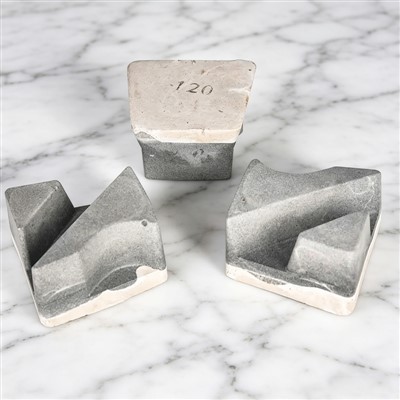
If you’re tired of pads that wear out too fast, leave uneven scratches, or cost a fortune, let’s chat. Whether you’re polishing a few small parts for a custom project or running a 24/7 production line, we can hook you up with the right grit and flexible pad combo that fits your needs. No pressure, no hard sells—just real advice from someone who’s been in the polishing game for years.
Diamond Grinding Disc References:
- Howes, M. A. (2002). Abrasives: Science and Technology. CRC Press.
- Troughton, M. J. (2008). Handbook of Plastics Joining: A Practical Guide. William Andrew Publishing.
- Koshy, P., & Tönshoff, H. K. (2003). Abrasive Machining of Materials. Marcel Dekker.
- Shaw, M. C. (1996). Principles of Abrasive Processing. Oxford University Press.
Quanzhou Cheefung New Materials Co., Ltd.
Address: Jinshan Community, Licheng District, Quanzhou City, Fujian, China
E-mail: info@prostonetools.com
WebSite: https://www.prostonetools.com/
