What’s up, everyone! If you’ve ever dabbled in electronics—whether you’re a hobbyist building a DIY dimmer switch, a tech nerd tweaking home automation, or even someone who’s just curious how your microwave turns power on and off smoothly—you’ve probably heard the word “triac” thrown around. But let’s be real: most explanations I’ve seen online make it sound like some super complicated space part, like it’s a cousin to a regular transistor that only rocket scientists understand. As a transistor supplier who’s actually on the floor talking to clients every day—from high school kids selling LED kits out of their garages to big-name appliance manufacturers—I’m here to break this down like it’s just another part we stock in our warehouse. No jargon, no confusing diagrams, just straight talk about what a triac transistor actually is, why it matters, and why you should care if you’re working with electronics. Transistor
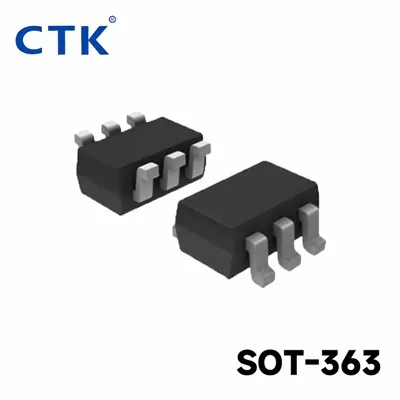
First off, let’s level the playing field. What’s a regular transistor, anyway? If you’re new to this, think of a transistor like a tiny electrical gatekeeper. It lets you control a big current with a small signal—like using your finger to turn on a garden hose by pressing a tiny button on a spray nozzle. It’s two main types, right? Bipolar junction transistors (BJTs) and MOSFETs. Those are the ones you see in everything from phone chargers to robot controllers. Now, a triac? It’s not a “different kind of transistor” in the “it’s from another planet” way, but it’s a specialized transistor built for a very specific job: handling alternating current (AC). That’s key. Regular transistors work with direct current (DC)—think batteries, solar panels, the USB cable charging your phone. AC is the power coming out of your wall, and it flips direction 50 or 60 times a second (depending on where you live). A regular transistor can handle AC, but it’s clunky. It’ll only work one way, so you’d need two of them to flip the current, and that’s messy. That’s where the triac shines.
Let’s get a little more specific (I promise, no equations). Triac stands for Triode for Alternating Current. Yeah, it’s a portmanteau, which is just a fancy word for a term someone made by smooshing two words together. Unlike a regular transistor, which has three terminals, a triac has three too—let’s call them MT1, MT2, and the gate. But here’s the magic: it’s like two transistors (actually, two thyristors, which are a type of transistor) stuck back-to-back. One of those transistors handles the positive half of the AC wave, the other handles the negative half. So when AC flips direction, the triac doesn’t need extra parts to switch—its internal design just does it automatically. That’s why it’s the go-to for anything that uses wall power: dimmers, fans, electric stovetops, even some car chargers that hook up to AC outlets.
Wait, let’s test that with a real example I see every week. Last month, a guy came in here with a busted table lamp dimmer. His old one used a potentiometer (the knob) and a triac, and it burned out because he tried to plug in a space heater—way too much power. The triac in that dimmer was rated for, say, 5 amps, and the space heater needed 10. That’s a perfect illustration of how a triac works: the gate is the trigger. When you turn the dimmer knob, you’re sending a small signal to the gate that tells the triac when to turn on during each AC cycle. Turn the knob up, the gate triggers earlier, more power gets through, the lamp gets brighter. Turn it down, trigger later, less power, dimmer light. That’s way more efficient than old dimmers that just wasted power as heat. I can’t tell you how many times I’ve told hobbyists that using the wrong triac for their project is the #1 reason their dimmer or fan dies. It’s not just a part—its rating (amps, voltage, speed) has to match what you’re powering.
Now, let’s clear up a common misconception: a triac is not a relay. A relay is a mechanical switch, right? It clicks, you can hear it, and it moves a little metal arm. A triac is solid-state—no moving parts. That means it’s quieter, faster, and way more durable. If you’re building a product that’s going to turn on and off thousands of times a day, a triac will outlast a relay by a mile. I once supplied triacs to a company that makes garage door openers—they used to use relays that failed every 2 years, now with triacs, they’re pushing 10 years and still going. That’s the kind of real-world win we see all the time, and it’s why triacs are so popular across so many industries.
But here’s the thing: triacs aren’t for every job. If you’re building a phone charger or a small solar panel circuit, a regular MOSFET is way cheaper and simpler. Triacs are overkill for low-power DC stuff. Their superpower is handling medium-to-high AC power, so they’re built for applications where reliability and power control matter. Let’s be honest—if you’re soldering a LED strip for your desk, you don’t need a triac. But if you’re wiring up 20 desk fans for a retail space, you do. That’s the line I always tell clients: if your project is touching wall power (120V/240V) and needs to control that power smoothly, a triac is the way to go. If it’s a 5V battery project, stick with a regular transistor.
As a supplier, what I see is that a lot of people sleep on triacs. They’re not as flashy as the latest fancy MOSFET or the microcontroller in your smart speaker, but they’re the unsung heroes of power control. I’ve had engineers call me panicking because their prototype dimmer kept flickering—turns out they picked a triac with too low of a current rating, so it couldn’t handle the fan’s startup surge. That’s the stuff we fix every day. We don’t just sell parts here; we help people pick the right ones. Last week, a high school robotics team came in here with a broken AC-powered motor controller for their competition bot. They had used two regular transistors, but they kept burning out because of the AC’s back-and-forth. We suggested a small triac, walked them through hooking it up, and they went from failing every test to winning their regional competition. That’s the kind of story that makes this job worth it.
Now, let’s talk about a few common triac types, because if you’re looking to buy, you’re gonna see these names thrown around. There’s the standard triac, which works for most basic dimmers and fan controls. There’s the quadriacs, which are a newer version that can handle even higher power and faster switching—good for industrial equipment. And then there’s the sensitive-gate triac, which only needs a tiny gate signal to trigger, perfect for small control circuits. As a supplier, we stock all of these, and we’ll ask you a few simple questions to point you to the right one: “What’s the maximum voltage you’re dealing with? How much power? Is this for a hobby project or a commercial product?” No gatekeeping, no confusing fine print. Just straightforward answers.
Wait, let’s address the elephant in the room: why should you trust a transistor supplier to tell you this stuff? A lot of places will just sell you the part you ask for, regardless of whether it’s right. We’re different. We’ve been doing this for years, and we’ve seen every mistake in the book. We know that a triac that works for a table lamp dimmer will blow up if you put it in an electric range. We know that hobbyists don’t need a $10 industrial triac any more than a big manufacturer needs a cheap knockoff that burns out in a month. That’s why we don’t just process orders—we consult.
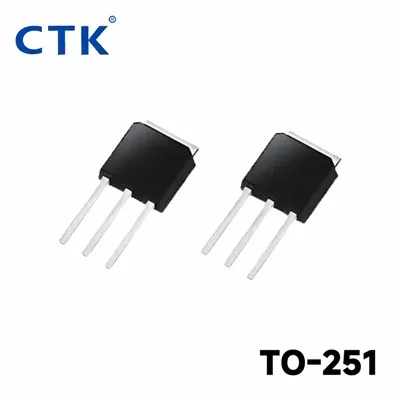
Let me wrap this up so it’s not just a list of parts. A triac transistor is a solid-state, AC-specialized transistor that controls power like a regular transistor, but for the power coming out of your wall. It’s made of two back-to-back thyristors, handles both halves of the AC wave, and is used in everything from dimmers to home appliances because it’s reliable and efficient. It’s not for every project, but when you need it, nothing else does the job as well.
Optocoupler If you’re working on a project that needs triacs, or you’re just not sure what part you need, don’t guess. We’re here to help. Whether you’re a hobbyist with a small prototype or a company scaling production, we’ve got the right triacs and transistors for your needs. Hit us up to chat through your project—no pressure, no sales pitch, just real advice from people who actually work with these parts every day.
- Neamen, D. A. (2003). Electronic Circuit Analysis and Design. McGraw-Hill.
- "Triac Basics." Electronic Design, 2022.
- Power Semiconductor Devices: Triacs and Thyristors. IEEE Xplore, 2019.
- Hobbyist Electronics Guide to Power Control Components. Make: Electronics, 2021.
Tongke Electronic Co., Ltd.
Tongke Electronic Co., Ltd. is one of the most experienced transistor manufacturers and suppliers in China, featured by quality products and low price. Please rest assured to wholesale advanced transistor made in China here from our factory. Contact us for pricelist.
Address: No.3,Chayuan Rd, Street 3, AilingKan, Dalingshan, Dongguan, Guangdong, China.
E-mail: tina@ctk-elec.com
WebSite: https://www.ctkchip.com/
