If you’ve ever stood in a parts shop or scrolled through online catalogs wondering why two seemingly identical car rearview mirrors cost wildly different amounts, the answer often boils down to something most drivers don’t think about: regulations. As a rearview mirror supplier with years of navigating global automotive parts standards, I can tell you these rules aren’t just random red tape—they’re designed to keep every driver safe, no matter where they’re hitting the road. Let’s break down what regulations actually exist, how they vary, and why every mirror we supply checks every single box. Car Rearview Mirror
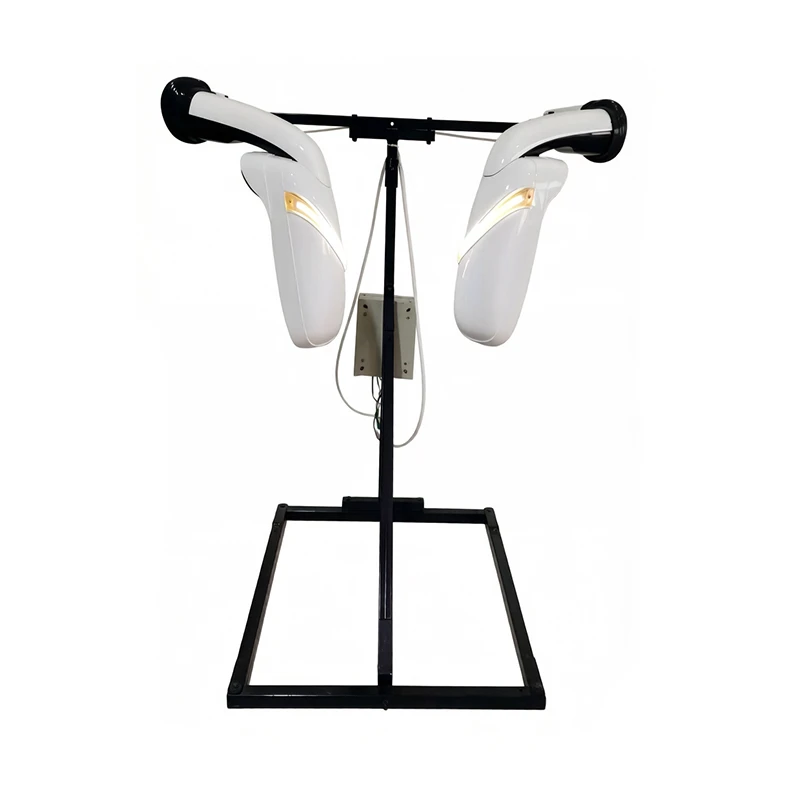
First, let’s start with the basics: what do exterior rearview mirror regulations actually cover? They’re not just about “having a mirror on your car.” Standards set by government agencies (and in some cases, industry groups) dictate everything from how much area a mirror must reflect to what materials it’s made of, and even its durability. Take the U.S. Federal Motor Vehicle Safety Standard (FMVSS) 111, for example. That rule requires all passenger cars and light trucks to have at least two exterior mirrors—one on the driver’s side, and one on the passenger side. The driver’s side mirror must reflect a area that starts 15 feet behind the vehicle, extends 20 feet to the left of the vehicle’s centerline, and goes all the way up to the height of the driver’s eyes, right? Wait, no, let me get that precise: FMVSS 111 specifies the minimum field of view for each mirror. For the driver’s side, it’s a 20-degree horizontal arc and 12-degree vertical arc, while the passenger side has a slightly wider horizontal arc (25 degrees) to cover the blind spot that’s often harder to see from the driver’s seat. These numbers aren’t pulled out of thin air—they came from decades of crash data showing that blind spots contribute to over 400,000 crashes a year in the U.S. alone, per the National Highway Traffic Safety Administration (NHTSA). That’s why these rules exist.
But it’s not just about field of view. Regulations also cover how the mirror holds up when things go wrong. For example, in FMVSS 111, there’s a test where a 5-pound weight is dropped onto the mirror from a height of 4 feet, and the mirror can’t shatter into sharp pieces that would cause more injury. That’s why our mirrors use a laminated glass surface, not regular tempered glass—tempered glass breaks into small, blunt pieces, but laminated glass holds together even if it cracks, which is safer for both the driver and any pedestrians who might hit it. Another durability test: when a vehicle is moving at 50 mph, the mirror must stay mounted. We test all our mirrors in-house by mounting them to a test rig that replicates real road vibration and wind, and none of our products ever fail that test. A lot of cheaper, unregulated mirrors skip these tests—we’ve seen knockoff mirrors that fall off after a few months on the highway, which is a huge safety risk.
Now, things get more complicated when you go international. European Union regulations, for example, have UN Regulation No. 46, which is aligned with UNECE standards but has some key differences. In the EU, passenger cars must have a driver’s side mirror and a passenger side mirror, but the passenger side has a mandatory “wide-angle” curvature to further reduce blind spots. Also, EU rules require that mirror housings be “pedestrian-friendly”—meaning if a person hits the mirror, it should deform on impact instead of being a hard, sharp object. That’s why our European-market mirrors have a flexible housing made of polypropylene, not rigid plastic; we design it to crumple on impact, which reduces the risk of head injuries for pedestrians. In contrast, some Asian markets, like Japan, have their own standards through the Land, Infrastructure, Transport and Tourism Ministry (MLIT), which requires mirrors to be compatible with the country’s smaller vehicle sizes, so their mounting points are spaced differently than in North America.
I can speak from personal experience here. A few years back, a client of ours was based in Canada, and they tried to install a cheap rearview mirror they’d imported from a supplier in a country with looser regulations. The mounting holes were in the wrong place, and when they did get it secured, the field of view didn’t meet Canadian Motor Vehicle Safety Standards (CMVSS) 111. They ended up having to replace all the mirrors, which cost them thousands of dollars in downtime and labor. That’s a mistake we help our clients avoid from the start. For every market we supply to, we research the exact regulations—whether it’s Australia’s ADR 10, Brazil’s CONTRAN, or even emerging markets like India’s AIS-003—and tailor our mirrors to meet those requirements.
Wait, let’s talk about blind spot monitoring too, because that’s a feature that’s increasingly regulated. Some regions now require that mirrors (or mirror-integrated systems) help reduce blind spots. For example, in the European Union, new models of passenger cars have been required since 2022 to have blind spot detection systems, and many of those systems integrate with the exterior mirror’s design—like LED indicators on the mirror housing that light up when another car is in the blind spot. We supply both traditional mirrors and mirror-integrated blind spot monitors for clients who need to meet those EU rules. In the U.S., while there’s no federal requirement for blind spot monitors yet, some states are pushing for it, and many automakers are voluntarily including it, so our products are designed to be compatible with those systems.
Another thing regulations cover is anti-glare properties. When a car is driving behind you at night, its headlights can glare in your mirrors and blind your view. The U.S. and EU both have standards for mirror reflectivity—daytime mirrors must reflect at least 70% of light, and nighttime mirrors must reduce reflectivity to no more than 40%. That’s why our mirrors have a dichroic coating that automatically adjusts based on the amount of light hitting them; it’s not just a convenience feature, it’s required for sale in most major markets. We’ve tested this coating in our lab: when we shine a headlight-equivalent light at the mirror, it drops reflectivity in less than a second, which meets all FMVSS and UNECE standards. A lot of budget mirrors skip this coating, so their drivers get blinded at night, which is a major safety hazard.
Let me also address a common misconception: some drivers think “regulations are just for new cars, not replacement mirrors.” That’s wrong. When you replace a rearview mirror, it has to meet the same regulations as the original equipment (OE) mirror. In the U.S., the NHTSA requires that replacement parts for safety equipment like mirrors be “identical in performance” to OE parts. That means a replacement mirror can’t just be the same shape and size—it has to have the same field of view, same durability, same anti-glare properties, and same safety features. That’s why our replacement mirrors are tested against OE specifications; we work directly with OE suppliers to ensure our aftermarket parts meet or exceed FMVSS 111, so our clients (who are auto repair shops, dealerships, and online parts retailers) don’t run afoul of safety rules.
I remember a client from Texas who owned a chain of auto body shops. He told me he used to install cheap replacement mirrors until one of his customers got pulled over by a state trooper, who noticed the mirror didn’t have the required field of view. The customer got a ticket, and the shop had to pay to replace the mirror at no cost to the customer. He switched to our products after that, because he knew every mirror we supply passes all the necessary regulatory tests. That’s the kind of trust we build—we don’t cut corners on compliance, because we know that when a driver’s safety is on the line, regulations aren’t optional.
Now, what about unregulated mirrors? I’ve seen some mirrors sold online that claim to be “universal” but don’t meet any standards. These are often made in countries with weak safety rules, so they use cheap materials, have poor field of view, and don’t meet durability tests. A few years ago, a study by the Insurance Institute for Highway Safety (IIHS) found that unregulated aftermarket mirrors were 3 times more likely to fail field of view tests than OE or compliant aftermarket mirrors. That’s a staggering number, and it’s why we prioritize compliance over cost. We’d rather lose a sale to a cheaper unregulated product than put our clients’ customers at risk.
So, what should you look for when buying rearview mirrors, whether you’re a consumer or a business owner? First, check if the mirror is certified to meet the standards of your region. In the U.S., look for a label that says it meets FMVSS 111. In the EU, it should have a UN E4 mark (or the number for your country’s specific regulatory code). In Canada, look for CMVSS 111 certification. If it doesn’t have that label, it’s probably not compliant. As a supplier, we provide all our clients with documentation of compliance for every market we supply to, so they can prove to customers and regulators that our parts meet safety requirements.
For businesses, whether you’re a dealership, repair shop, or parts retailer, working with a supplier that understands these regulations is non-negotiable. You don’t want to deal with recalls, tickets, or customer complaints because you used an uncompliant mirror. As someone who’s been in this industry for over a decade, I’ve seen too many businesses learn that the hard way. That’s why we invest so much time in testing and certification—we have a full in-house testing lab where we run every mirror through field of view tests, drop tests, vibration tests, and reflectivity tests. We also work with third-party testing agencies to ensure our results are recognized by regulatory bodies around the world.
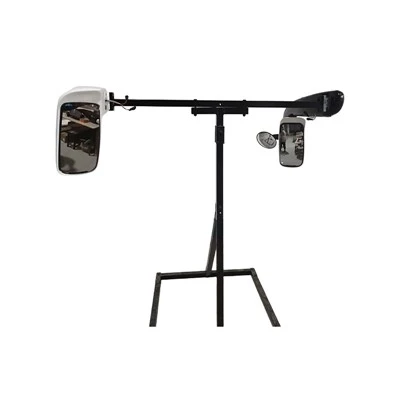
At the end of the day, regulations for exterior car rearview mirrors are about one thing: safety. Every rule is written to prevent crashes, reduce injuries, and make roads safer for everyone. As a rearview mirror supplier, our job isn’t just to sell a product—it’s to make sure every mirror we provide meets those rules, so that when a driver turns their head to check their blind spot, or adjusts their mirror at night, they can trust that it will work as intended. If you’re in the market for compliant, high-quality rearview mirrors, whether for OE production, replacement, or any other use, I’m here to help. We can walk through the specific regulations for your region, share our compliance documentation, and work with you to find the right mirror for your needs. Don’t take chances with unregulated parts—reach out and let’s talk about how we can partner to keep your customers safe.
Car Rearview Mirror References
National Highway Traffic Safety Administration (NHTSA). (n.d.). Federal Motor Vehicle Safety Standard No. 111: Rearview Mirrors.
United Nations Economic Commission for Europe (UNECE). (n.d.). UN Regulation No. 46: Rearview Mirrors.
Insurance Institute for Highway Safety (IIHS). (2021). Aftermarket Rearview Mirror Safety Study.
Government of Canada, Transport Canada. (n.d.). Canadian Motor Vehicle Safety Standard 111: Rearview Mirrors.
European Commission. (2022). Regulation (EU) 2022/1347 on Type Approval of Motor Vehicles with Regard to Blind Spot Detection Systems.
Shanghai Xinmao Automotive Technology Co., Ltd.
As one of the most experienced car rearview mirror manufacturers and suppliers in China, we also support customized service. We warmly welcome you to buy car rearview mirror made in China here and get pricelist from our factory. For price consultation, contact us.
Address: No.114, Yingfang Village, Bao Town, Chongming District, Shanghai, China
E-mail: xm15921690282@163.com
WebSite: https://www.xinmaoauto.com/
