If you’ve ever been in charge of sourcing water treatment gear for a factory, biotech lab, or pharmaceutical plant, you’ve probably fielded the same question from your finance team: “Is this EDI pure water system actually worth the upfront cost?” I get it—when you’re staring at a price tag that’s higher than the old reverse osmosis (RO) setup you’ve been running, it’s easy to hesitate. I’ve been selling and maintaining EDI systems for 12 years now, and I’ve talked to hundreds of plant managers who went from skeptical to sold once they crunched the real numbers. Let’s break this down without all the jargon, because cost-effectiveness isn’t just about the sticker price—it’s about what you save (and gain) over time. EDI Pure Water System
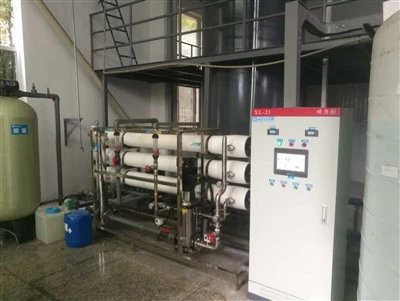
First, let’s get one thing straight: EDI stands for Electrodeionization, and it’s not a new technology. It’s been around since the 1980s, but it’s only in the last 10 years that it’s become the go-to for high-purity water needs—like the water used to make injectable drugs, semiconductor wafers, or even the boiler water that powers a food processing line. Traditional methods to get that level of purity usually involved a mix of RO plus chemical regeneration of ion exchange resins. The problem with that? Regenerating resins means stopping production, handling hazardous acid and caustic chemicals, and wasting a ton of water in the process. That’s where EDI shines, and that’s where the cost savings start to add up.
Let’s start with the big upfront vs. ongoing cost comparison. When a customer comes to me saying, “My old RO-resin setup was $15k, and your EDI system is $25k,” I don’t argue the sticker price. I ask them how much they’re spending each year on resin replacements, chemical disposals, and downtime. For a mid-sized pharmaceutical plant, I’ve seen numbers where resin alone costs $8k a year, chemical disposal is another $3k, and unplanned downtime from resin exhaustion runs $10k a month if a batch of drugs has to be tossed because the water purity is off. Multiply that out: over three years, that’s $8k x 3 + $3k x 3 + ($10k x 12) = $135k. And that’s not even counting the labor hours their team spends ordering resin, mixing chemicals, and cleaning up spills. Our EDI system? No resin, no chemicals, almost no downtime. That $25k upfront starts to look like a bargain when you avoid that $135k in three years.
Wait, I know what you’re thinking: “EDI uses electricity, right? Isn’t that going to spike my utility bill?” Yeah, it does use a little power—roughly 0.5 to 1 kWh per 1,000 gallons of pure water. But let’s do the math on a 10,000-gallon daily need. That’s 5 to 10 kWh a day, which at a typical US industrial rate of $0.12 per kWh is $0.60 to $1.20 a day. That’s peanuts compared to the chemical and resin costs we talked about. Plus, modern EDI units are way more efficient than the older models I installed back in 2011. We’ve tweaked the design to cut power use by 30% over the last five years, so the electricity cost is even lower now. I had a customer last year who switched from resin to EDI, and their utility bill only went up $20 a month. That’s it.
Another hidden cost people miss: water waste. Traditional RO-resin systems waste a lot of water during regeneration. When you clean the resins with acid and caustic, you have to flush them multiple times, and that water is contaminated, so it goes down the drain. For every gallon of pure water you make, you’re wasting 3 to 5 gallons of feed water with the old setup. EDI systems? Their waste ratio is usually 1.5 to 2 gallons of feed water per gallon of pure water. Let’s say that same 10,000 gallons a day: old setup wastes 30k to 50k gallons a day, EDI wastes 15k to 20k. If industrial water costs $3 per 1,000 gallons, that’s $90 to $150 a day saved on water bills. Multiply that by 30 days, and that’s $2,700 to $4,500 a month. That’s way more than the extra electricity cost.
But wait, is EDI only for big plants? What if you’re a small biotech lab that only needs 500 gallons a day? I get that, too. I’ve installed EDI units for labs that are just a 1,000-square-foot space with 5 employees. Let’s do their numbers: resin for a small lab is about $1,200 a year, chemical disposal is $500, and downtime if the resin runs out could mean waiting a week for a replacement resin order—costing them a few thousand in delayed experiments or batch runs. For a small lab, a basic EDI system might be $8k upfront. Their annual operating costs: $150 in electricity, $300 in water waste savings. That’s way less than the $1,700 they were spending on resin and chemicals. Even for small operations, it pays off in four years, and then all the savings go straight to their bottom line.
Now, let’s talk about quality and compliance—because that’s a huge cost factor too, especially in regulated industries like pharma or semis. If your water purity drops even a little, you can get hit with FDA fines, ISO non-compliance, or a product recall. Traditional RO-resin systems can have variability in purity if the resin isn’t changed on time. Miss a resin replacement by a week, and suddenly your water has more ions than it should, which means your drug batch is invalid, or your semiconductor wafers get contaminated and have to be scrapped. EDI systems produce consistent, pure water every single time—no surprises. The unit monitors itself, sends alerts when it needs a tune-up, and the purity is stable within 0.1 microsiemens, which is way tighter than most regulations require. I’ve had customers tell me that since switching to EDI, they haven’t had a single failed audit related to water purity. That’s worth more than any cost calculation—avoiding fines or product losses can run into six figures fast.
But I’m not here to say EDI is perfect. There are times when it’s not the right fit. If you only need low-purity water for things like washing equipment or irrigation, it’s overkill. If your feed water has a ton of sediment or iron that would clog the EDI membranes before they even run for a year, you’d have to add pre-filtration, which adds to the cost. But for anyone needing high-purity water (type 1 or type 2, if you know the terminology), EDI is basically the only game in town now. And even with pre-filtration, you still come out ahead.
Let’s wrap this up with a real example from a customer I worked with last year. A specialty food company that makes organic baby formula—they were using RO plus resin, spending $12k a year on resin, $4k on chemicals, and $5k a month on downtime when resin would run out during a production run. They upgraded to an EDI system for $28k. Now, their annual operating costs are $2k for water, $300 for electricity, and $0 for resin or chemicals. They saved $16k in the first year, and $20k a year after that. In 18 months, they paid off the upfront cost, and every month after that is pure savings. That’s the kind of return on investment that makes the finance team stop hesitating.
If you’re still on the fence, here’s a quick checklist to see if EDI makes sense for you: Do you need water purity above 10 megohms/cm? Do you have to comply with FDA, ISO, or other regulations? Are you tired of handling hazardous chemicals and replacing resin every 1-2 years? If you answered yes to any of those, it’s worth getting a free assessment. I can walk through your specific numbers, show you exactly what you’d save, and even let you test a small EDI unit for a month to see how it works with your water supply.
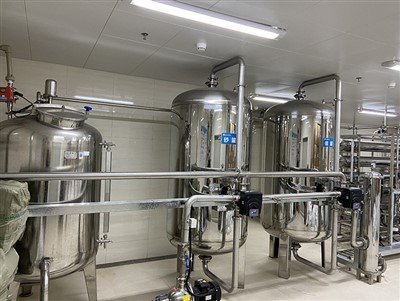
At the end of the day, cost-effectiveness isn’t just about how much you pay upfront—it’s about how much you don’t pay later. No more emergency resin orders at 2 a.m., no more chemical spills, no more failed audits, no more wasted water. EDI systems are built to last 10-15 years, so once that upfront cost is covered, you’re looking at a decade of low-cost, hassle-free pure water. If you’re ready to stop throwing money at old, inefficient water systems and start making a smart investment that saves you cash long-term, reach out to us to set up a time to talk through your needs. We don’t do pushy sales—just straight numbers and advice that works for your operation.
Deionized Water System References
- American Water Works Association. (2022). Electrodeionization: Trends and Cost-Benefit Analysis for Industrial Water Treatment.
- International Society for Pharmaceutical Engineering. (2021). High-Purity Water Systems Compliance and Operational Costs.
- U.S. Environmental Protection Agency. (2020). Water Waste Reduction in Ion Exchange vs. Electrodeionization Systems.
- Water Technology Magazine. (2023). Industrial EDI System Efficiency and Long-Term Cost Savings.
Shenzhen Jkon Environmental Protection Technology Co., Ltd.
As one of the most professional edi pure water system manufacturers and suppliers in China, we’re featured by quality products and good service. Please rest assured to buy customized edi pure water system made in China here from our factory. Contact us for more details.
Address: Shanghenglang Industrial park, Daloang Street, Longhua District, Shenzhen, China
E-mail: sales@jkontech.com
WebSite: https://www.jkontech.com/
