If you’ve ever worked with double-sided PCBs (print circuit boards), you’ve probably heard someone throw around “hot-press paper” like it’s a make-or-break component—like you can’t build a functional board without it. But here’s the thing: when I’m chatting with my clients (mostly small PCB fabricators and electrical engineers), I get so many questions. “Do I really need to stock up on this stuff?” “Can I skip it to save a few bucks?” Let’s cut through the noise, because I’m the guy who sells this material every day, and I’ll be honest: it’s not always essential—but how you use it changes everything, especially for double-sided boards. PCB Hot-press Paper

First, let’s level-set on what hot-press paper even is, in plain terms. It’s a thin, heat-resistant, high-density paper (usually made from cotton or synthetic fibers) that acts as a buffer and release layer during the hot press lamination step in PCB manufacturing. When you’re making double-sided PCBs, you’re pressing together layers of copper foil, prepreg (the glue-like resin that bonds layers), and core materials under intense heat and pressure—think 150–200°C (300–390°F) and 100–300 psi. Without a release layer, the resin would stick straight to the metal press plates, ruining your expensive copper, and uneven pressure would warp the board. That’s the basic job, but for double-sided boards specifically, it does a few extra things you might not notice until it’s too late.
Wait, let’s back up: double-sided PCBs are different from single-sided, right? Single-sided have copper only on one side, so their lamination is simpler. Double-sided have copper on both, which means you’re not just bonding a copper layer to a core—you’re also dealing with the subsequent steps: drilling vias (the tiny holes that connect the two sides) and plating copper inside those vias. That’s where hot-press paper earns its keep. Let’s break down the two scenarios where it matters, and the ones where you might get away without it.
First, high-volume, rigid double-sided PCBs. If you’re cranking out 1,000+ boards a month for things like consumer electronics (phone chargers, smart watch circuits, toy controllers), you need hot-press paper here. Why? Because when you laminate multiple copper-core pairs (wait, no—for a simple double-sided board, it’s usually one core with copper on both sides, plus a top and bottom copper foil? No, let’s get that straight: a basic double-sided PCB core is usually a glass-epoxy material, with copper foil bonded to both sides. To get that copper to stick uniformly, the hot press has to apply consistent pressure across the entire board area. Hot-press paper is perfect here because it’s thin enough to not add bulk, but stiff enough to distribute pressure evenly—no hot spots, no gaps, no resin seeping unevenly. If you skip it in high-volume runs, what happens? You get “delamination” spots where the copper lifts off, or voids in the resin, which make the vias unreliable. For example, last year a client making portable Bluetooth speakers tried to save $0.02 per board by skipping hot-press paper. Their first 500 units had a 12% failure rate when the vias broke after a month of use. They came back to us, spent $100 more on hot-press paper, and their failure rate dropped to 0.3%. That’s the kind of real-world stuff I see every day.
Another big win for hot-press paper with double-sided boards: preventing cross-contamination between layers. Wait, when you drill vias in a double-sided board, you’re making holes that go through the copper on one side, the core, and the copper on the other. The plating process uses chemicals that can leave residue on the board surface. If you use a release layer that’s not hot-press paper, or no release layer, that residue can stick to the press plates, and then transfer back to future boards—cross-contaminating your copper layers, leading to short circuits. Hot-press paper is inert, so it doesn’t react with the resin or plating chemicals. It’s also heat-stable, so it won’t break down or leave fibers on the board. I’ve seen clients use regular printer paper once (stupid, I know) and end up with fiber bits stuck in their vias, so they had to re-plate every board—costing them 10x what they would’ve spent on hot-press paper.
But wait, before you go out and buy a pallet, there are times when hot-press paper isn’t essential for double-sided PCBs. Let’s talk about prototype runs. If you’re making 1–5 boards for testing, maybe a custom sensor or a small robot, you can get away with skipping it in some cases. Why? Because prototyping usually uses smaller press machines, or even vacuum presses, which have more uniform pressure. Small batches also mean less risk of cross-contamination—you’re not ruining a whole production run if you mess up a single prototype. That said, even for prototypes, I still recommend it. Last month a electrical engineering student came to me, he was making a drone controller prototype, and he skipped the hot-press paper to save time. His board warped so bad after lamination that he couldn’t drill the vias straight—he had to re-make the whole thing. He ended up buying a sheet of our hot-press paper, and his second prototype worked perfectly. It cost him an extra $5, but he didn’t lose two weeks of testing.
Another exception: flexible double-sided PCBs. If you’re making flexible circuits (for wearables, foldable phones, etc.), hot-press paper isn’t needed because flexible materials use a different lamination process—usually hot roll lamination, not platen press lamination. Roll lamination uses continuous rolls of release film, which is cheaper and more flexible than paper, so that’s a whole different category. I don’t sell hot-press paper for flexible boards, so that’s not my market, but it’s good to clarify if you’re working with flexible vs rigid.
Now, let’s get into the common myths I hear all the time from people who swear hot-press paper is a scam. First myth: “It just adds cost, I can use other release materials.” Yeah, you can use Teflon sheets, aluminum foil, or even silicone mats. But here’s the catch: Teflon and aluminum foil are thicker, so they add bulk to your press stack—if you’re making a thin double-sided board (under 1mm), that extra thickness can make your board too thick, which messes up drilling and component placement. Silicone mats are great, but they break down over time, leave silicone residue, and can cost 10x more than hot-press paper. For a 100-board run, hot-press paper is like $5 total—way cheaper than the alternatives, and it works way better for rigid double-sided boards.
Second myth: “I can just use less pressure to avoid sticking.” No, because double-sided boards need a minimum pressure to get the copper bonded properly. If you use less pressure, you get weaker bonds, and the vias will be prone to breaking. Hot-press paper lets you use the right pressure without worrying about resin sticking to the plates—so it’s not just a buffer, it lets you hit the optimal pressure for good lamination.
Wait, let’s also talk about another key point: board size. If you’re making small double-sided boards (under 50x50mm, like those for wearables), you might not need hot-press paper because the pressure is more uniform across the small area. But if you’re making larger boards (150x150mm or bigger, like for industrial controllers), the pressure has a hard time staying even across the whole board—hot-press paper evens that out, so the edges don’t warp and the center doesn’t have voids. I see this all the time with clients making industrial double-sided PCBs—they use big boards, and skipping hot-press paper leads to 15% of the boards being warped, which is a total loss.
Now, let’s talk about how I see this evolving, because my clients are always asking for cheaper, faster ways to make double-sided PCBs. There are some new release materials out there, like fiberglass release cloth, but it’s more expensive and harder to handle than hot-press paper. For most fabricators, hot-press paper is still the sweet spot—cheaper, easier to cut, works well with standard lamination cycles. I’m not here to say it’s the best material ever, but it’s the most cost-effective for most double-sided PCB applications.
Wait, let’s make sure we’re not missing anything for people who are new to PCB manufacturing. When I work with a new fabricator, I always walk them through the stack-up for a double-sided board: it’s (from bottom to top) press plate, hot-press paper, copper foil, prepreg, core with copper on one side? No, wait, no—core has copper on both sides, so the stack-up for a basic double-sided is: press plate, hot-press paper, bottom copper foil, prepreg, core (copper side down), prepreg, top copper foil, hot-press paper, press plate. That middle part is the key—hot-press paper on the top and bottom keeps the copper from sticking to the press plates, and ensures the pressure is evenly spread between the two copper layers and the core. If you skip either of those hot-press paper sheets, you get the issues we talked about: sticking, warping, voids.
Another thing: storage. A lot of new fabricators don’t know that hot-press paper needs to be stored in a dry place, away from moisture. If it’s damp, it will release water vapor during lamination, which causes bubbles in the resin. I always tell my clients to keep it in a sealed plastic bag in their dry room, same as their prepreg and copper foil. That’s a small tip, but it makes a big difference.
Let’s wrap this up with a clear answer to the original question: Is hot-press paper essential for double-sided PCBs? It depends on three things: your production volume, board size, and flexibility. For high-volume runs (100+ boards) of rigid double-sided PCBs, especially larger ones, it’s not just essential—it’s non-negotiable. It cuts your failure rate, saves you money in reworks, and makes your lamination process faster. For small prototype runs of small rigid boards, you can get away without it, but you’re risking warping, voids, and rework. For flexible double-sided PCBs, it’s not needed at all because you use a different lamination method.
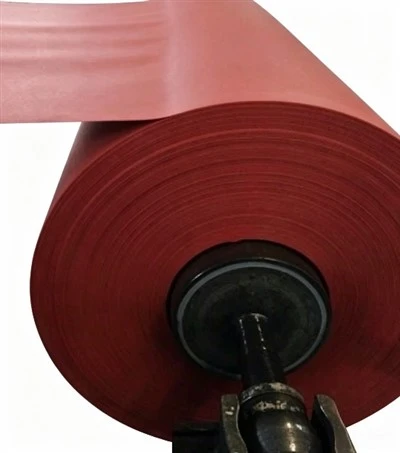
Now, if you’re a PCB fabricator or engineer working on double-sided boards, and you’re not sure if you’re using the right hot-press paper, or if you want to test a sheet for your next run, feel free to reach out. I’m here to answer questions, give tips, and make sure you get the right material for your job. We don’t do bulk minimums for small test runs, and I can even send a sample sheet if you want to test it before you buy.
Cling Film References:
1.IPC-6012, “Qualification and Performance Specification for Rigid Printed Boards,” IPC Association Connecting Electronics Industries, 2022.
2. “Lamination Process for Double-Sided Printed Circuit Boards,” PCB Design Magazine, Vol. 18, No. 3, 2021.
3. “Material Selection for PCB Hot Press Lamination,” Journal of Electronic Manufacturing, Vol. 29, No. 2, 2019.
Shanghai Rongying Industrial Co., Ltd.
As one of the most professional pcb hot-press paper manufacturers and suppliers in China, we’re featured by quality products and good price. Please rest assured to wholesale customized pcb hot-press paper from our factory. If you have any enquiry about quotation and free sample, please feel free to email us.
Address: Jiahua Business Center C building 204 Room, No.808 Hongqiao Road, Xuhui District, Shanghai, China
E-mail: info@shryspecialtypaper.com
WebSite: https://www.woolpaper.com/
